Artwork
Pêcher
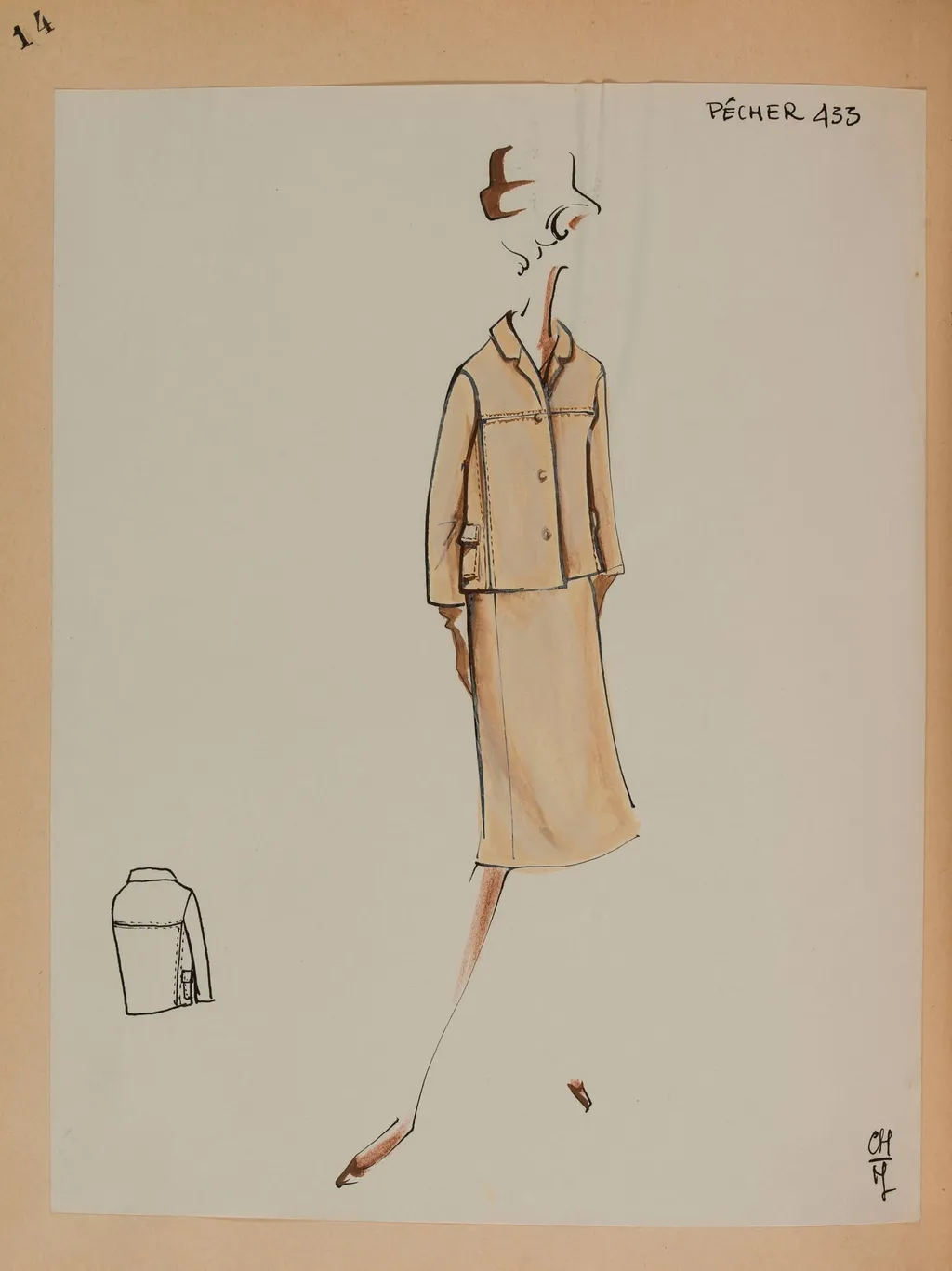
Pêcher is a drawing by Marie-Louise Carven. It dates from 1963 and is held in the collection of the Palais Galliera - Musée de la Mode de la Ville de Paris.
About this work
Overview
The image belongs to the Museum of Ethnography’s collection and exemplifies Carven’s approach to fashion illustration as a tool for design communication.
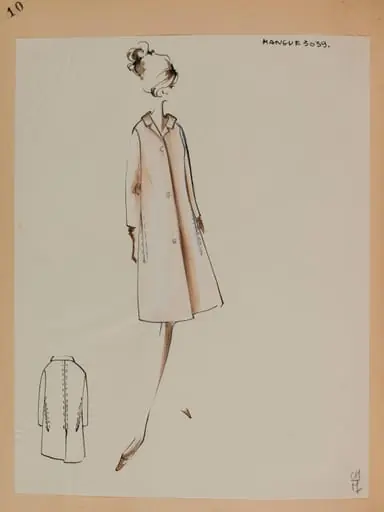
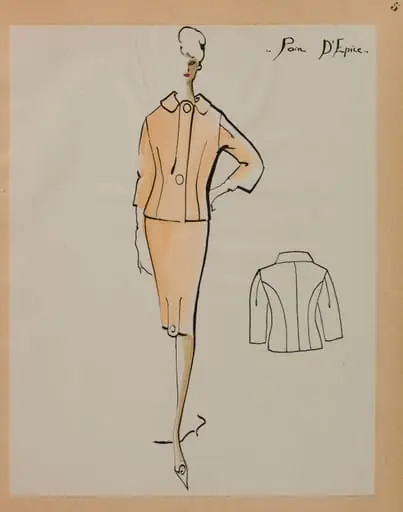
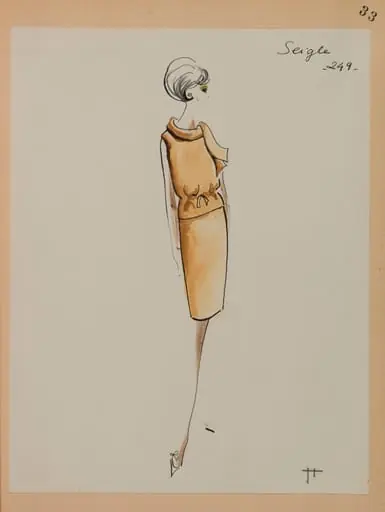
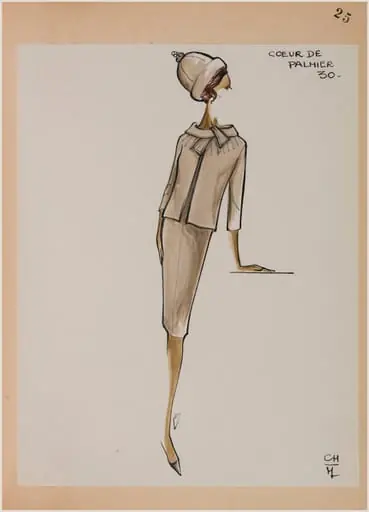
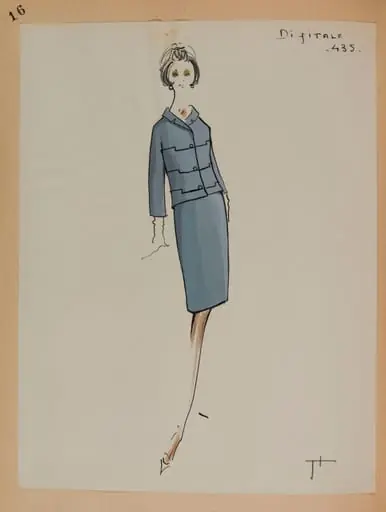
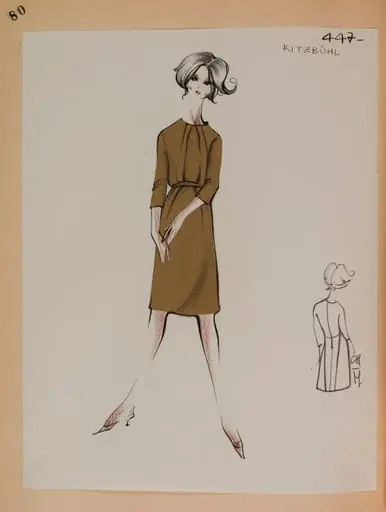
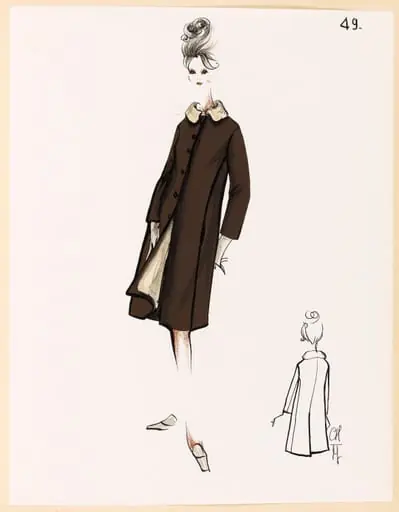
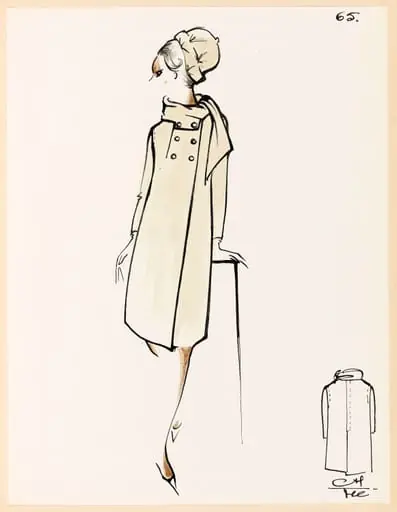
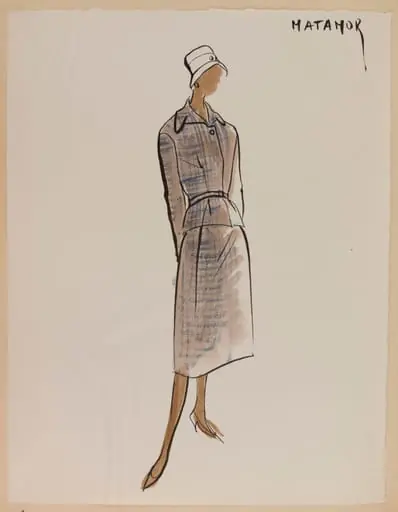
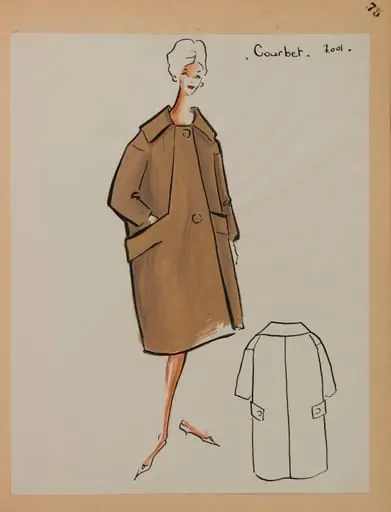
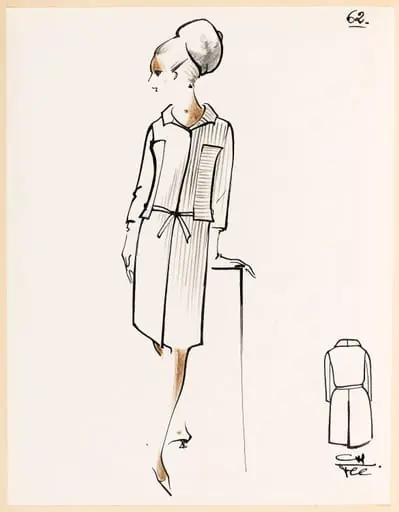
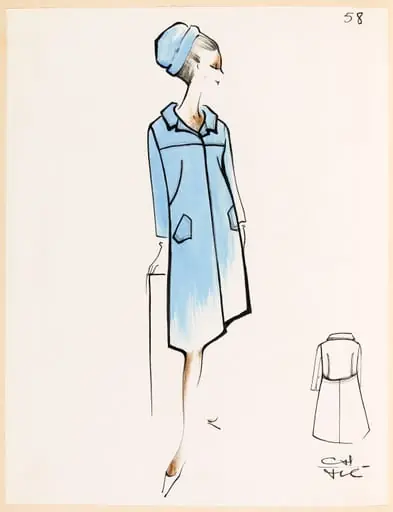
Pêcher is a line drawing from approximately 1963, attributed to French designer Marie-Louise Carven. It depicts a woman in profile wearing a coordinated beige skirt, jacket, and hat. Rendered with minimal detail and no facial features, the figure is captured mid-stride, one leg extended. A small schematic of the jacket’s back, showing a central fastening, appears beside her. The image belongs to the Museum of Ethnography’s collection and exemplifies Carven’s approach to fashion illustration as a tool for design communication.
Subject & Meaning
The figure in Pêcher embodies Carven’s focus on the petite female form and graceful movement. By omitting the face and emphasizing posture, the drawing shifts attention to silhouette and proportion rather than identity. The extended leg suggests motion, reinforcing the practicality and livability of her designs. The inclusion of the jacket’s fastening detail indicates an interest in functional construction, aligning with Carven’s broader commitment to wearable, well-engineered clothing for everyday life.
Technique & Style
Pêcher employs a restrained linear style, using clean, unshaded contours to define form. The palette is limited to monochrome, enhancing clarity and reducing visual noise. The illustration avoids texture or modeling, relying instead on precise outlines to convey structure. The supplementary sketch of the jacket’s back demonstrates a technical precision typical of design drafts, blending aesthetic simplicity with functional annotation. This approach reflects Carven’s preference for understated elegance over ornamental flourish.
History & Provenance
Created around 1963, Pêcher originates from Carven’s atelier during the height of her influence in Parisian fashion. It entered the collection of the Museum of Ethnography as part of a broader effort to document the evolution of modern dress. While not a finished garment, the drawing serves as a record of Carven’s design process and her role in transitioning couture into accessible ready-to-wear. Its preservation underscores its value as a cultural artifact of mid-century fashion practice.
Context
In the early 1960s, Parisian fashion was shifting toward democratized styles, and Carven was among the first to establish a successful prêt-à-porter line. Her designs emphasized light fabrics, delicate details, and proportions suited to smaller frames. Pêcher reflects this philosophy, capturing the quiet refinement of her aesthetic amid a broader cultural move toward practical, modern wardrobes. The drawing aligns with contemporaneous design documentation practices that prioritized clarity and wearability over theatrical presentation.
Legacy
Pêcher stands as a quiet testament to Carven’s influence on accessible fashion design. Her integration of couture sensibilities into ready-to-wear helped redefine women’s clothing for postwar society. Though not widely exhibited, such drawings preserve the intellectual rigor behind her work. The piece contributes to the historical record of how fashion was conceived, communicated, and refined outside the runway, offering insight into the quiet labor of design innovation.
Artist & collection
Artist
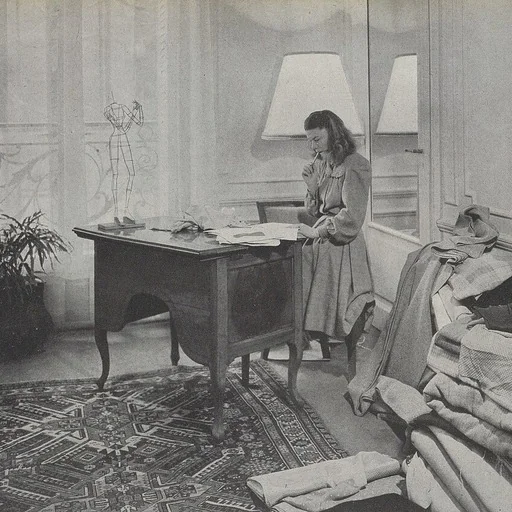
Marie-Louise Carven (31 August 1909 – 8 June 2015), born Carmen de Tommaso, was a French fashion designer who founded the house of Carven in 1945.
Museum
Palais Galliera - Musée de la Mode de la Ville de Paris
Continue through works from the same source collection.
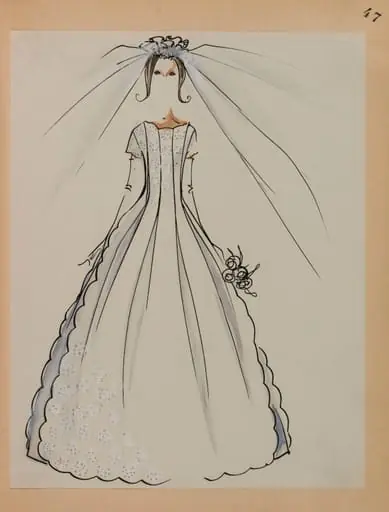 Robe de mariée festonnée et son voile
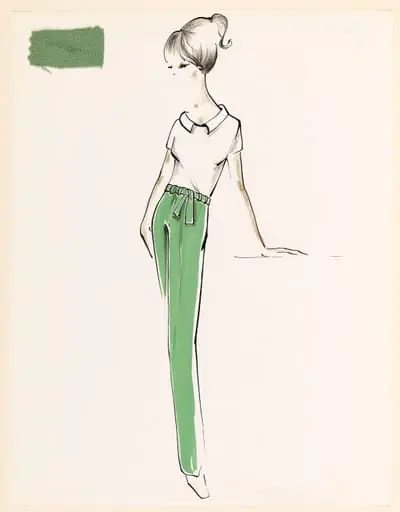 Haut blanc à manches courtes et pantalon vert à ceinture nouée
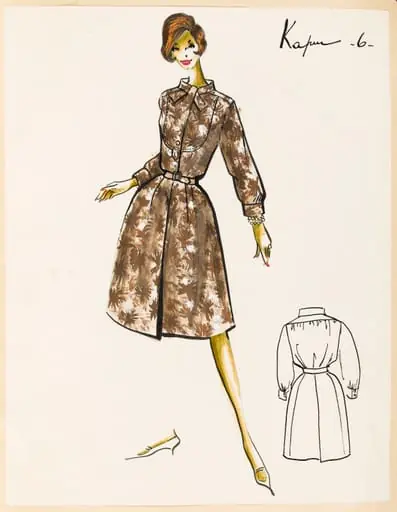 Kapur
Kapur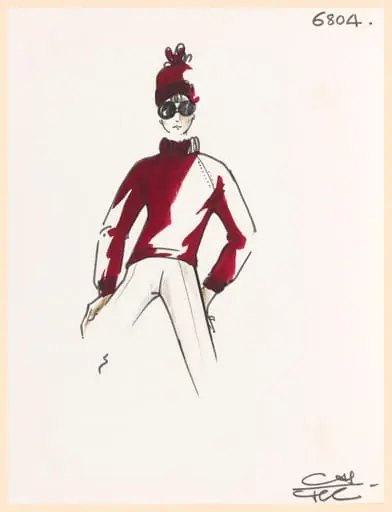 Pull-over à manches longues pourpre, bonnet assorti, pantalon et lunettes de soleil
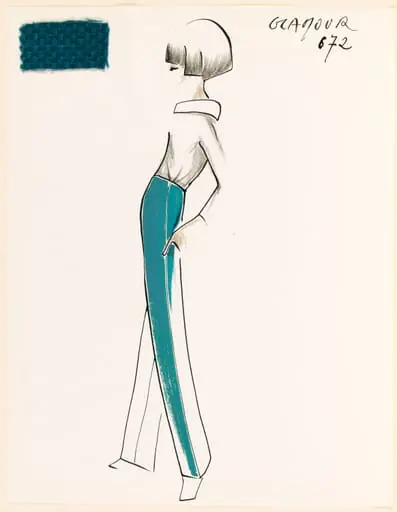 GLAMOUR
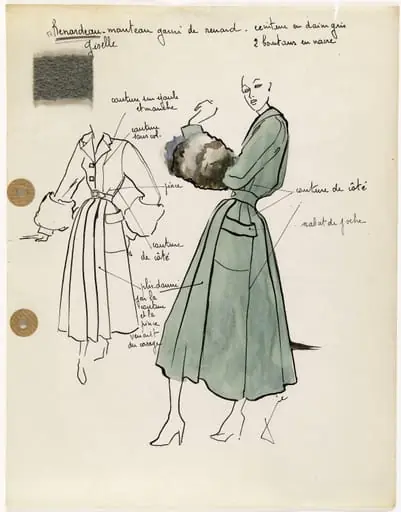 'Renardeau'
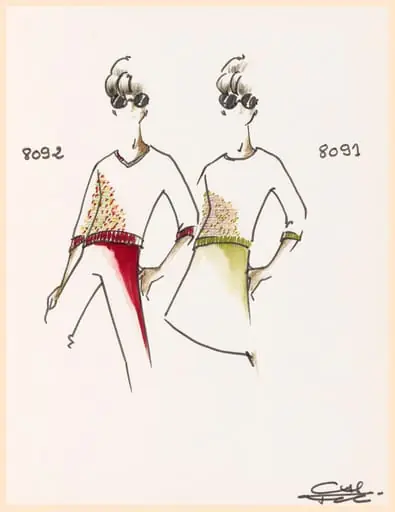 Pull-over à manches trois quarts et à encolure V à motifs multicolores, pantalon cerise et lunettes de soleil
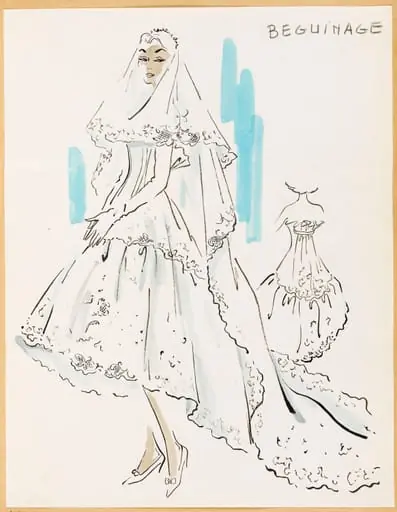 Béguinage