Parochialstrasse in Berlin by Eduard Gaertner
View the artwork: Parochialstrasse in Berlin →
Eduard Gaertner painted 'Parochialstrasse in Berlin' in 1831, making three almost identical versions of this view down a specific street toward the city's oldest church. One was destroyed in World War II. One is in the Nationalgalerie in Berlin. This one is at the Metropolitan Museum of Art.
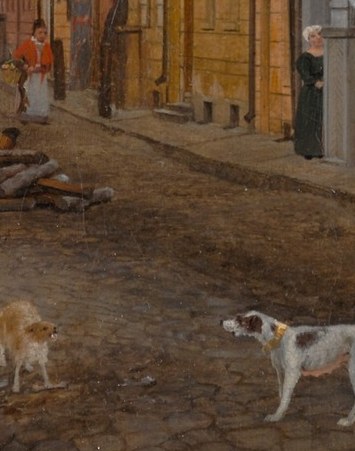
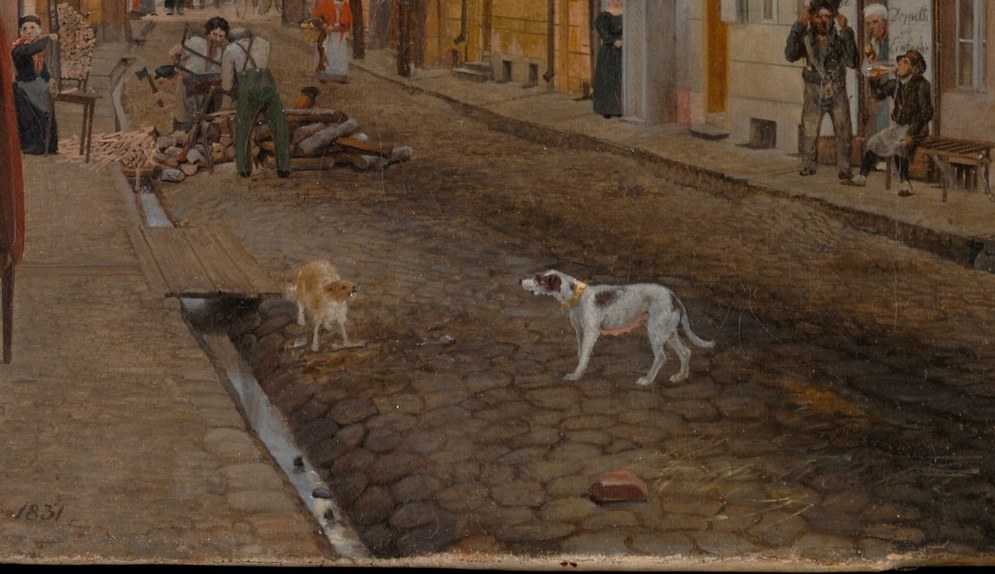
The dirt and cobble in the foreground is the first thing to notice. Berlin in the 1830s was racing toward industrialization, but the road surface here is still rough and unimproved. The figures are middle-class Berliners in Biedermeier dress, and the white stray dog in the foreground is a recurring motif in Gaertner's Berlin series, his way of anchoring a grand architectural view in unidealized street reality.
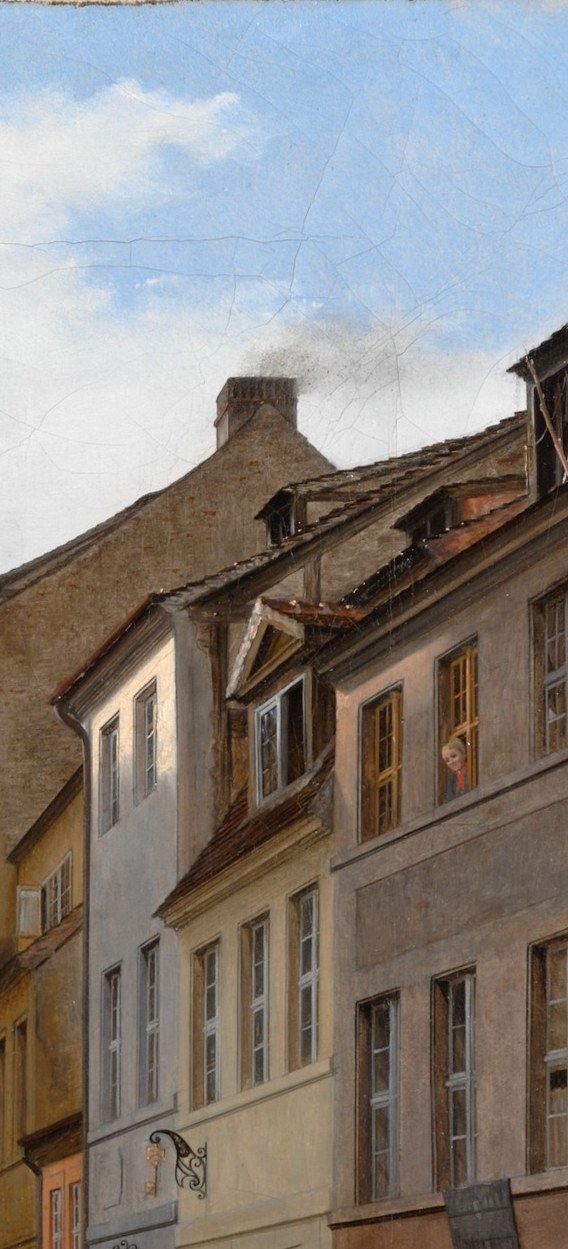
Gaertner trained as a topographer and worked like one: the windows, the shadows, the steeple of the Nikolaikirche are all rendered with near-architectural precision. He placed the church at the vanishing point so that the whole modern streetscape points toward the medieval city. The painting is a document of a city that was about to change entirely, made by an artist who knew it was worth recording.
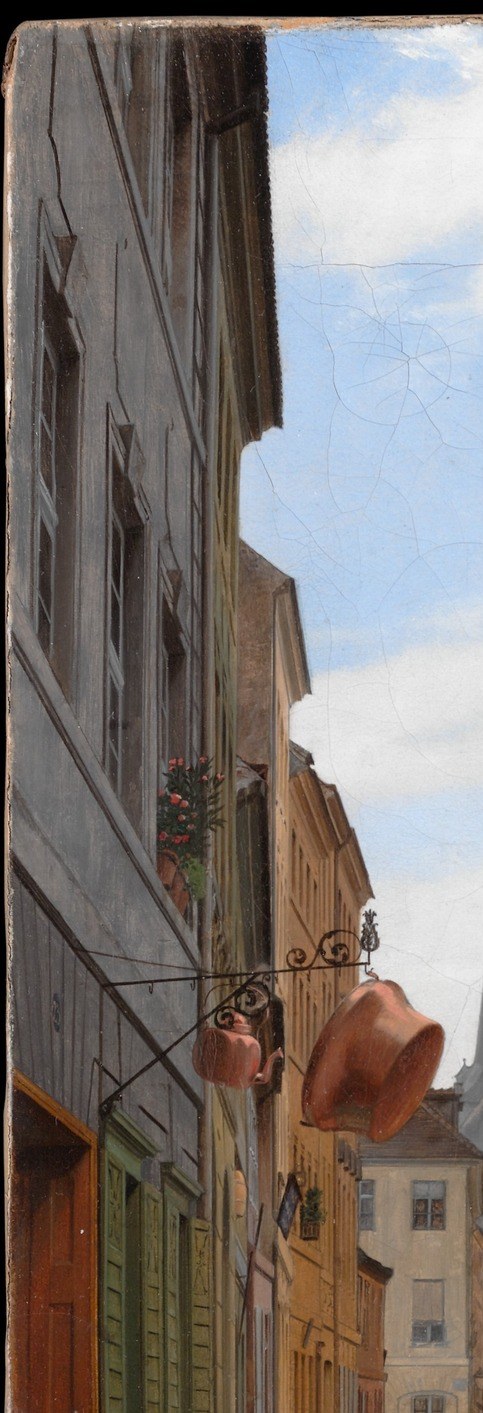
A second version of this exact view burned in the bombing of Berlin. When you look at the deep shadow cutting across the left side of the canvas, you are looking at a record of light that fell in 1831 and a painting that survived what the other one did not.
#arthistory #eduardgaertner #berlin
Details
Transcript
Three almost identical paintings of this street once existed. Painted in 1831, each was a precise map of a changing city. The rough, unpaved road records the pre-industrial capital. The church at the end is Nikolaikirche, Berlin's oldest. Gaertner aligned the street so the new city points directly to its medieval heart. A second version of this painting was destroyed in World War II. The bombs that burned Berlin took the canvas with it. This one survived. The record of a morning in 1831, still here.