Wall painting from Room H of the Villa of P. Fannius Synistor at Boscoreale by http://www.wikidata.org/.well-known/genid/3e3940b8c9c01ce0b15500a1a74964e1
View the artwork: Wall painting from Room H of the Villa of P. Fannius Synistor at Boscoreale →
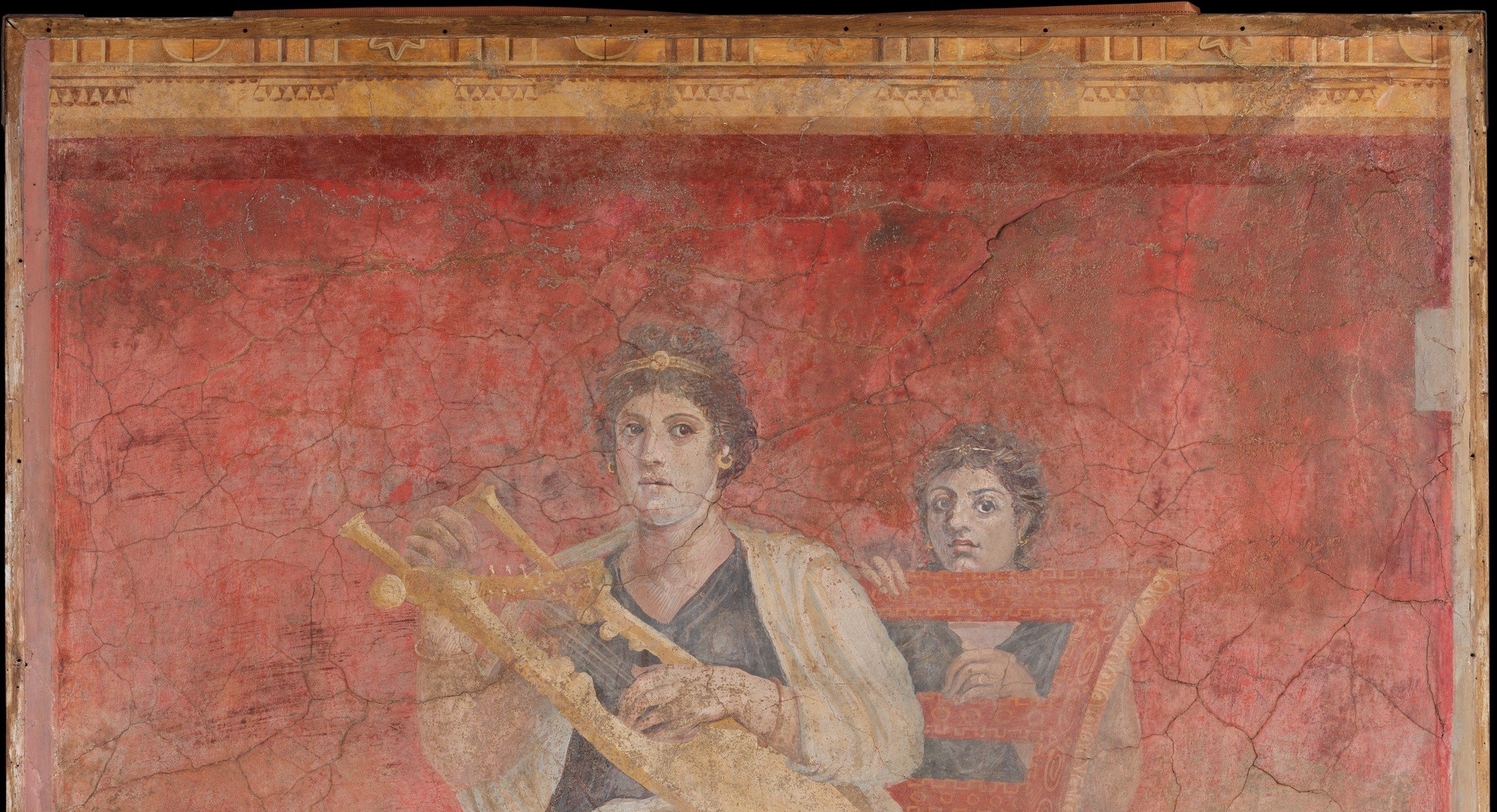
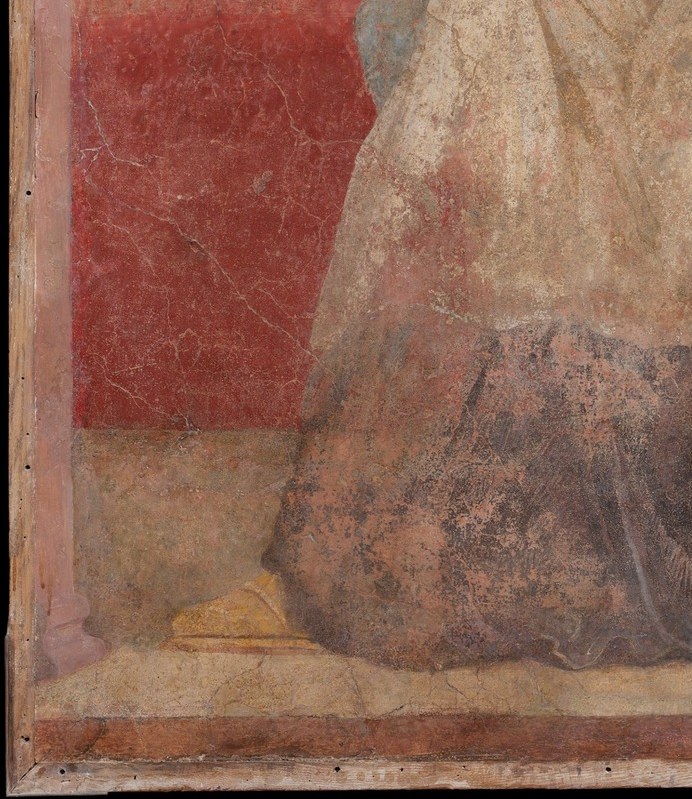
This is a fresco from a grand reception hall in the Villa of P. Fannius Synistor at Boscoreale, near Pompeii. Painted around 50-40 BCE, it was buried by the eruption of Mount Vesuvius in 79 CE. Rediscovered in 1900 and acquired by The Metropolitan Museum of Art in 1903.
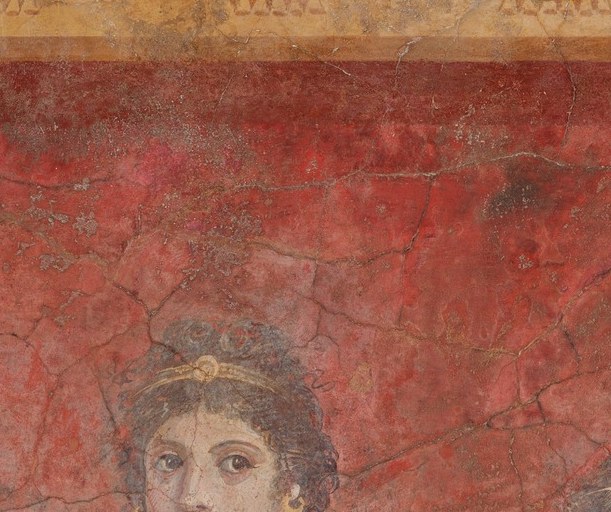
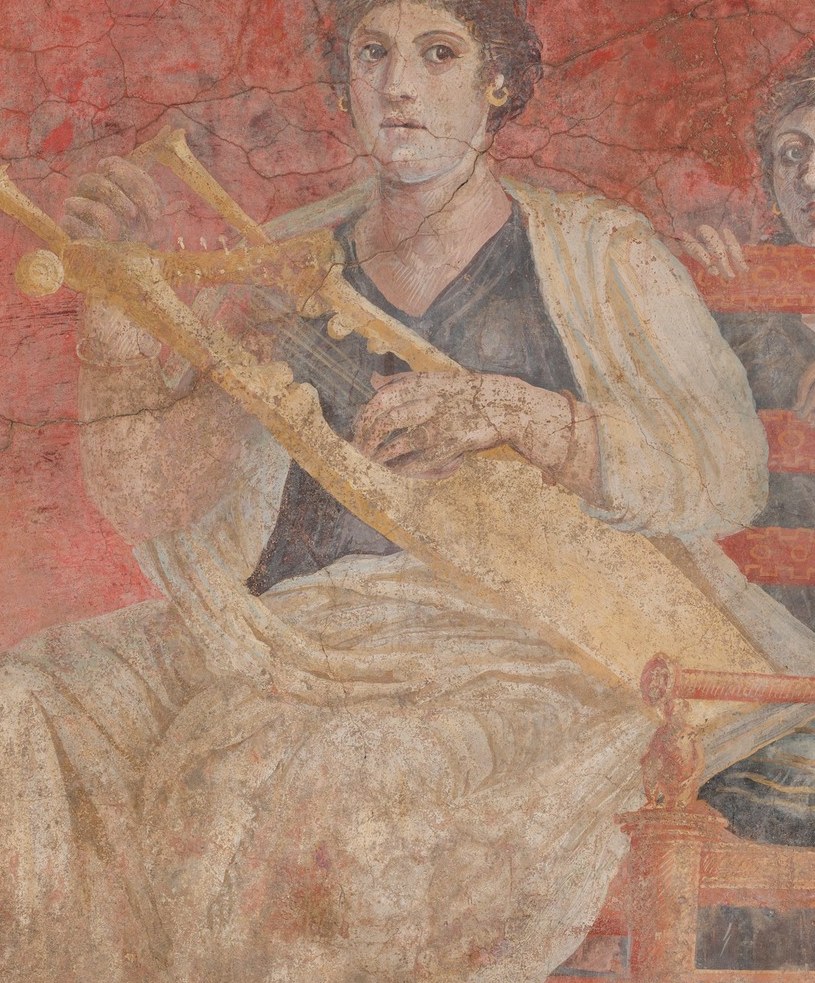
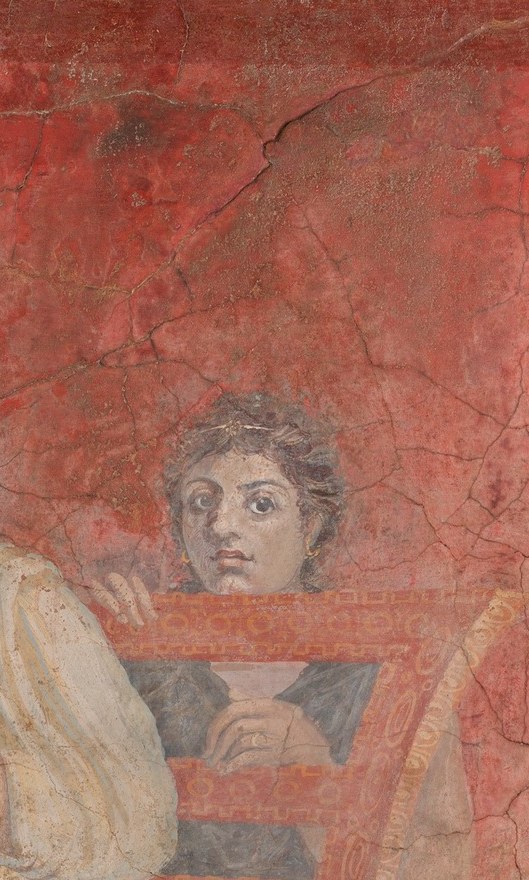
The seated woman wears a gold diadem and plays a gilded kithara from an ornate throne. But the real key is the young girl standing behind her, looking directly outward. Her gaze connects us to the larger story.
This panel was one of three on the east wall. Scholars believe they are Roman copies of early Hellenistic paintings celebrating a dynastic marriage in a Macedonian royal court. The central panel shows the wedded couple, and the right panel shows a prophetess holding a shield that reflects a vision of a male heir.
The girl’s outward stare was designed to draw viewers into that prophecy across two millennia. What do you think she sees?
#arthistory #ancientrome #metmuseum
Details
Transcript
She looks like a musician. But her instrument is a throne. A gold diadem. A gilded kithara. The emblems of a Hellenistic queen. Behind her, a young girl stands and stares out at us. She is the clue. This is not a concert. It is a dynastic marriage. The missing panels show the royal couple and a prophetess foretelling a male heir. The girl’s outward look was meant to include you in the prophecy.