The Fifteen Mysteries and the Virgin of the Rosary by http://www.wikidata.org/.well-known/genid/b6a076a01f9f2a538b05b21665a80eb2
View the artwork: The Fifteen Mysteries and the Virgin of the Rosary →
This is a 16th-century altarpiece made not for a grand cathedral, but for a single person's private meditation. The Fifteen Mysteries and the Virgin of the Rosary was painted by a Netherlandish artist around 1517, and it once belonged to someone intimately connected to the most powerful court in Europe. You can see it today at The Metropolitan Museum of Art.
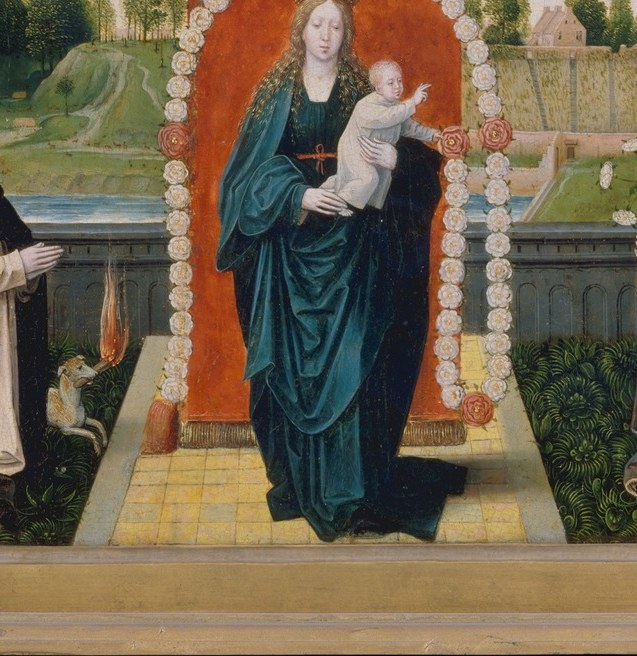
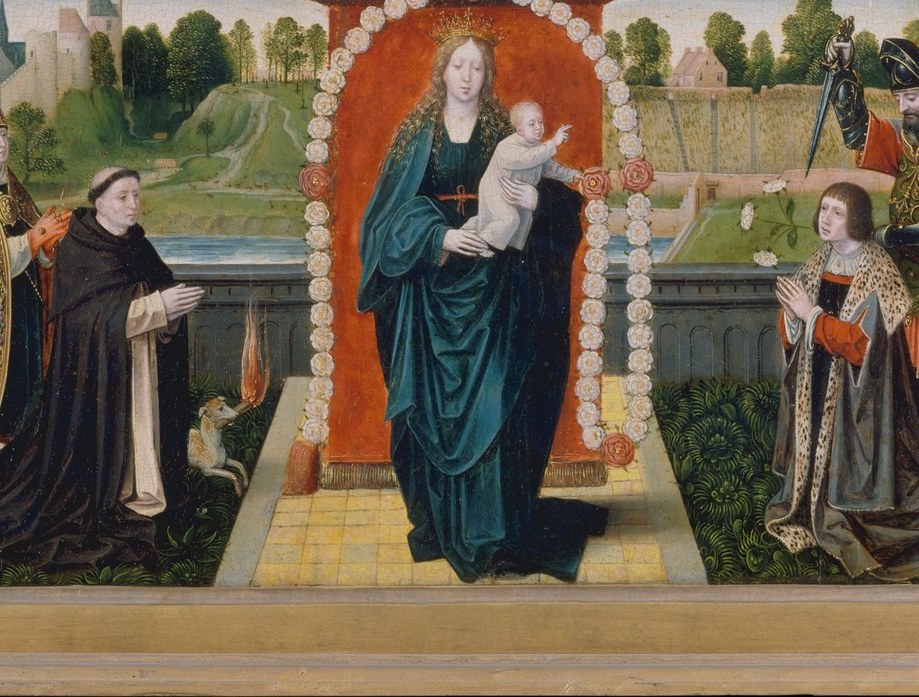
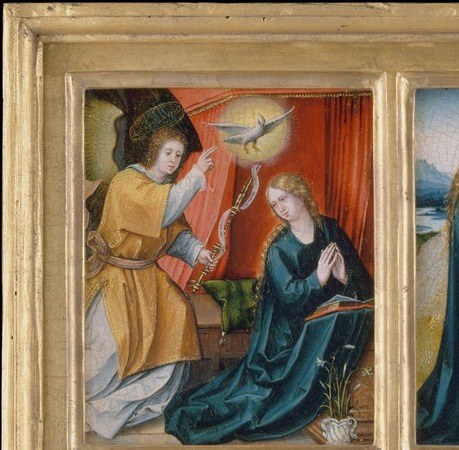
The painting is structured like a rosary itself. The small, intricate scenes in the upper registers are the fifteen Mysteries, meant to be followed in sequence. Below, the Virgin and Child are framed by an enormous garland of red and white roses, a living rosary. Every bloom is a prayer given form, meant to guide the owner's eye and touch.
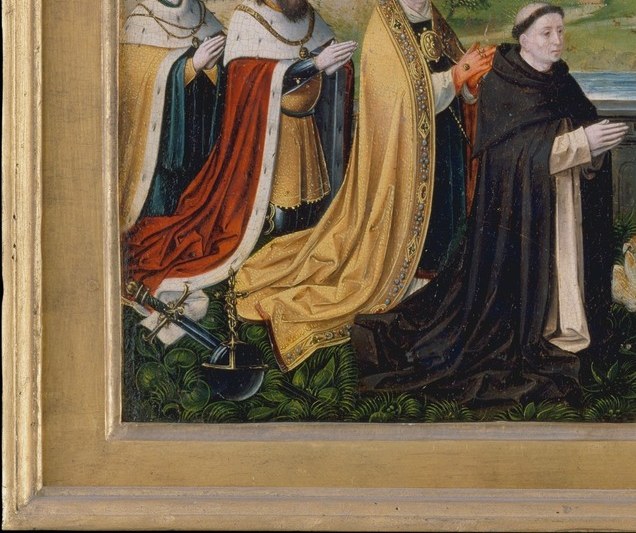
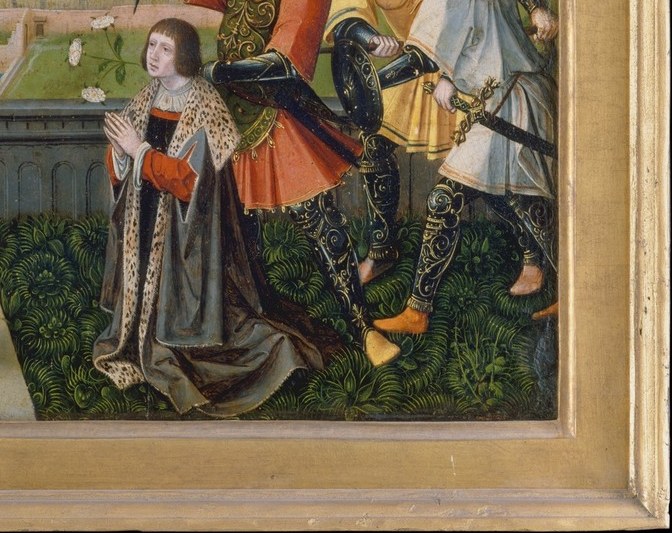
Behind the Virgin, a detailed landscape shows the Coudenberg Palace in Brussels, the seat of the Habsburg court. This isn't just a backdrop; it's a statement. The patron who commissioned this didn't just want a holy image. They wanted their entire world, their political identity, wrapped into their act of personal devotion. It's a portrait of a soul, framed by its place in the world.
It's a rare and moving combination: the noise of a glittering empire, and a single, silent circle of faith.
#arthistory #northernrenaissance #metmuseum
Details
Transcript
Brussels, around 1517. The Habsburg court is at its peak. This altarpiece was made for one person's private prayer. Behind the Virgin, you can see the palace where they lived. The patron literally placed their world at Mary's feet. Every single rose in this garland is a prayer made visible. Fifteen mysteries, painted as beads to guide the fingers and the mind. A vast, noisy world of power, and a quiet circle of devotion.