Study for "Catskill Creek" by Cole, Thomas
View the artwork: Study for "Catskill Creek" →
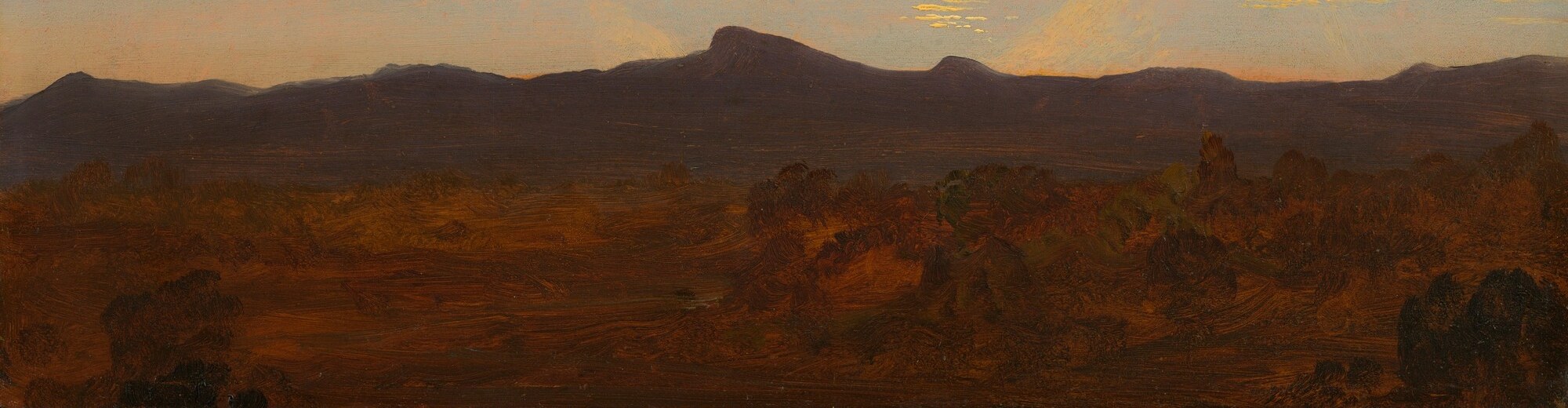
This is Study for "Catskill Creek" by Thomas Cole, painted around 1844 or 1845. It was never meant to be a finished painting. Cole used small wood panels like this one to test compositions before scaling them up, and this particular study was a rehearsal for a sky.
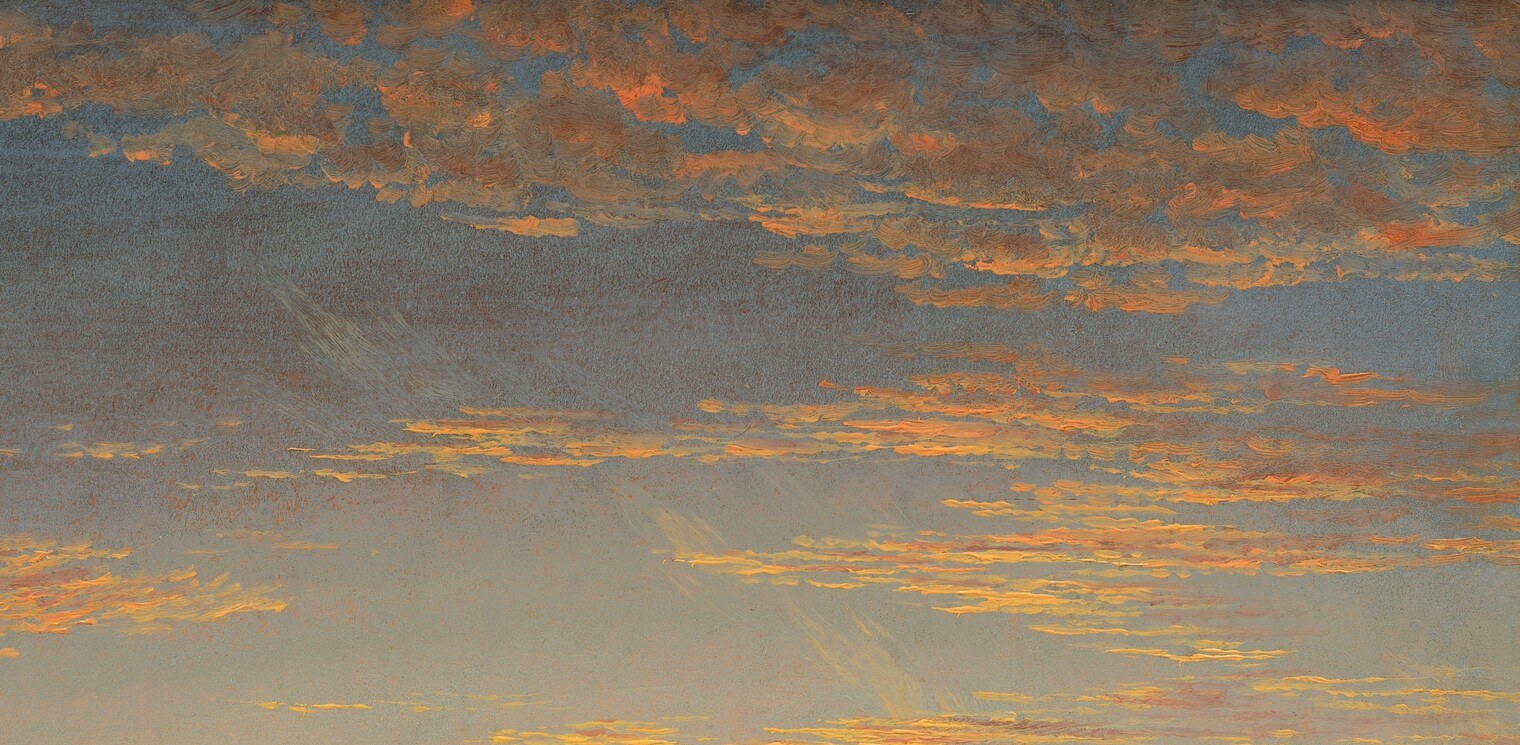
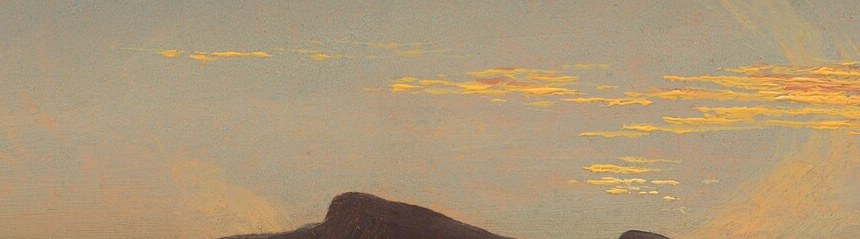
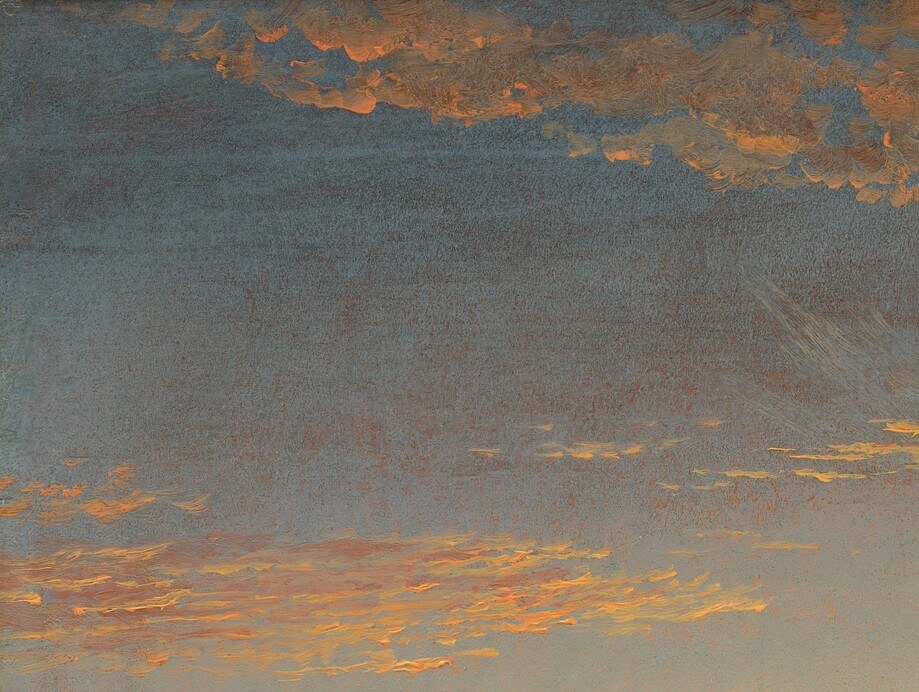
Look at the upper left, where a cool blue-gray zone presses against the warm cumulus mass on the right. Cole is testing how far he can push that temperature contrast without breaking the image. The brightest passage is near the upper center: the moment where backlit cloud edges dissolve into the light source itself. Below it, a thin amber band at the mountain base traps a sliver of atmosphere between land and cloud, and the foreground falls away into near-black shadow to anchor the whole thing.
The finished canvas, "Catskill Creek," is held in a private collection and is seldom exhibited. But this preparatory panel found its way into the National Gallery of Art in Washington, D.C. In an odd reversal, the throwaway study became the more publicly beloved work. Cole died just a few years after painting it, at age 47, in Catskill, New York. One of his sky tests outlasted his final version. That's a rare thing in any century.
Have you ever seen a study that you preferred to the finished piece?
#arthistory #hudsonriverschool #thomascole
Details

Transcript
It began as a test, never meant for public view. Cole worked out his skies on wood panels before committing to canvas. The warm clouds sit against a cool blue-gray zone in the upper left. That temperature clash creates the whole painting's tension. The peak brightness is here: cloud edges dissolving into light. The final canvas, Catskill Creek, hangs in a private collection, rarely seen. This study outshone it. It now belongs to the National Gallery of Art.