Alpine Mastiffs Reanimating a Distressed Traveler by Landseer, Edwin, Sir
View the artwork: Alpine Mastiffs Reanimating a Distressed Traveler →
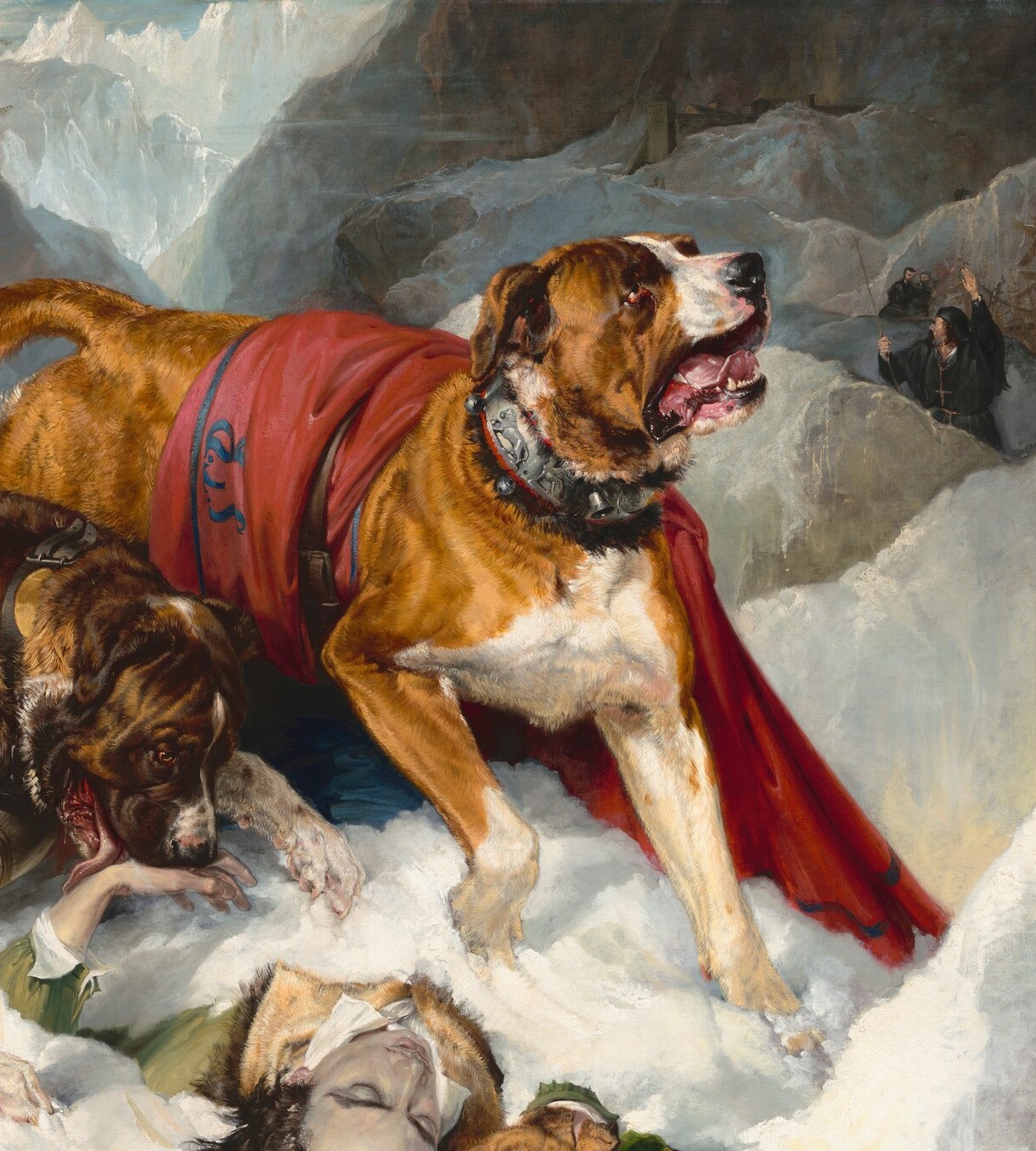
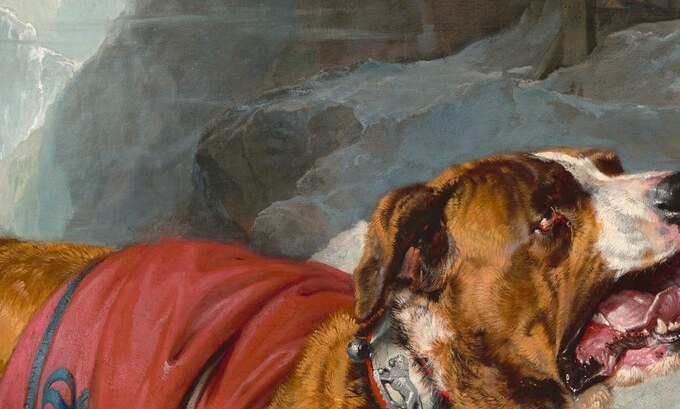
This is Alpine Mastiffs Reanimating a Distressed Traveler, painted by Sir Edwin Landseer in 1820. It is one of the earliest visual records of the St. Bernard as a rescue dog, painted decades before formal alpine rescue teams existed. The artist built his reputation on the startling emotional depth he could give animals, and this painting is the template. The dogs are not supporting players, they are the actors, competent and urgent, working over a human being who is entirely passive in the snow.
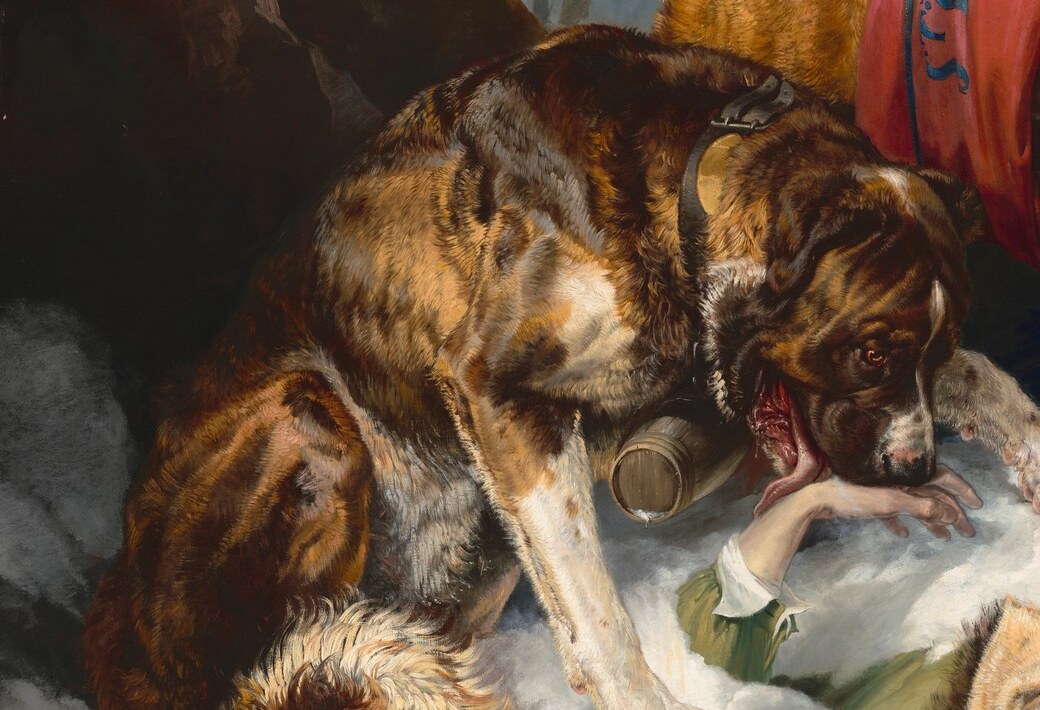
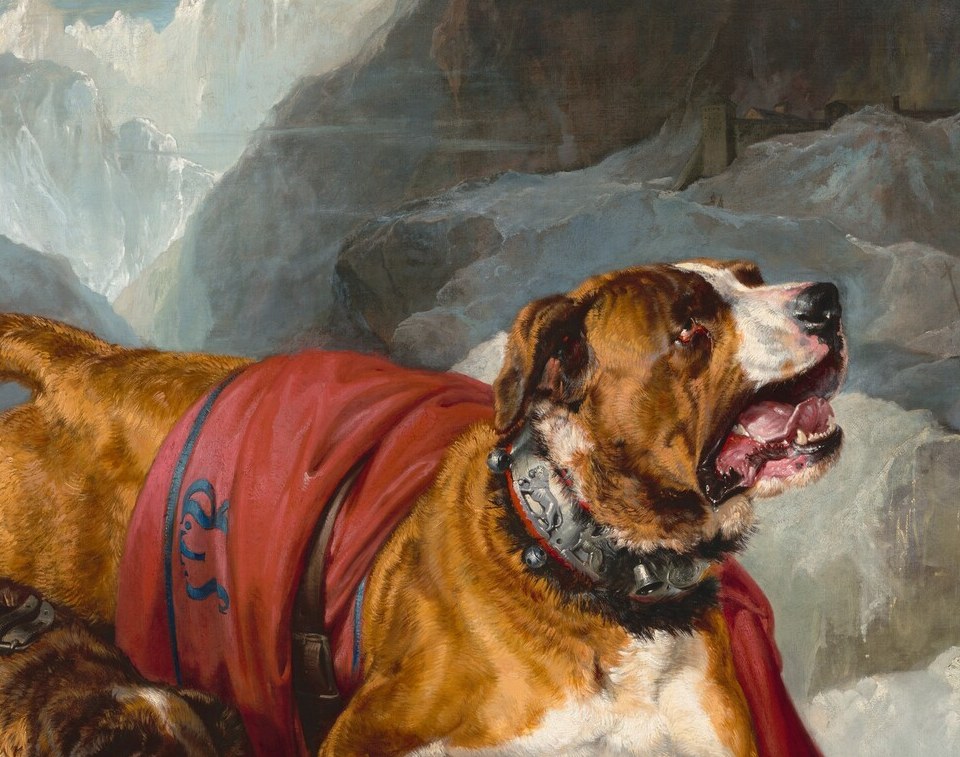
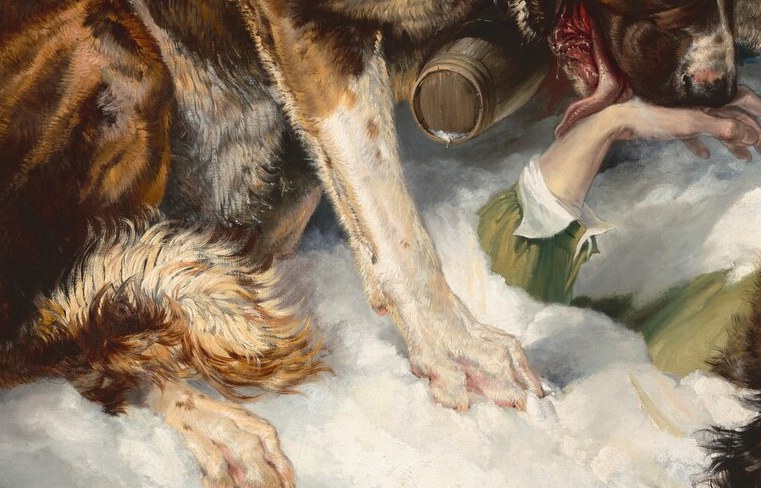
Watch where the camera lands. The standing dog wears a red blanket that Landseer makes the only warm color in the whole cold palette, it reads like a heraldic banner, elevating the animal to something knightly. The second dog has placed his front paw squarely on the traveler's chest. That single diagnostic gesture, paw on torso, is the moment of rescue. And then, nearly lost in the white foreground, a small wooden keg. That keg is the fountainhead of a legend.
The hospice of the Great St. Bernard Pass, high in the Alps, had kept large working dogs since the late 1600s. By Landseer's time, the monks and their dogs were famous for finding travelers lost in storms. The small barrel you see here was not standard equipment, the iconic brandy-keg image was actually popularized by Victorian painters, especially Landseer himself, after a single mention in travelers' accounts struck the public imagination. The painting invented the visual cliché, not the other way around.
The next time you see a Saint Bernard in a film or cartoon wearing a tiny barrel, you are looking at the direct descendant of this canvas. Landseer painted rescue into the culture, one brushstroke at a time.
#arthistory #landseer #saintbernard
Details
Transcript
Two dogs work over a body in the snow. The standing dog wears a rescue blanket, bright red against the storm. This was painted in 1820, decades before organized alpine rescue existed. Look at the second dog. His paw rests on the traveler's chest. Now look below his chest, there is a small wooden keg in the snow. Travelers in the Alps carried brandy in such kegs for warmth. The dogs of the Great St. Bernard Hospice carried them too.