The Crucifixion with Saints and a Donor by Joos van Cleve
View the artwork: The Crucifixion with Saints and a Donor →
Here is a man whose name we have forgotten. He was a merchant in Antwerp around 1520, and he had enough money to commission one of the city's leading painters, Joos van Cleve, to make him an altarpiece. He wanted a Crucifixion scene. And he wanted himself in it.
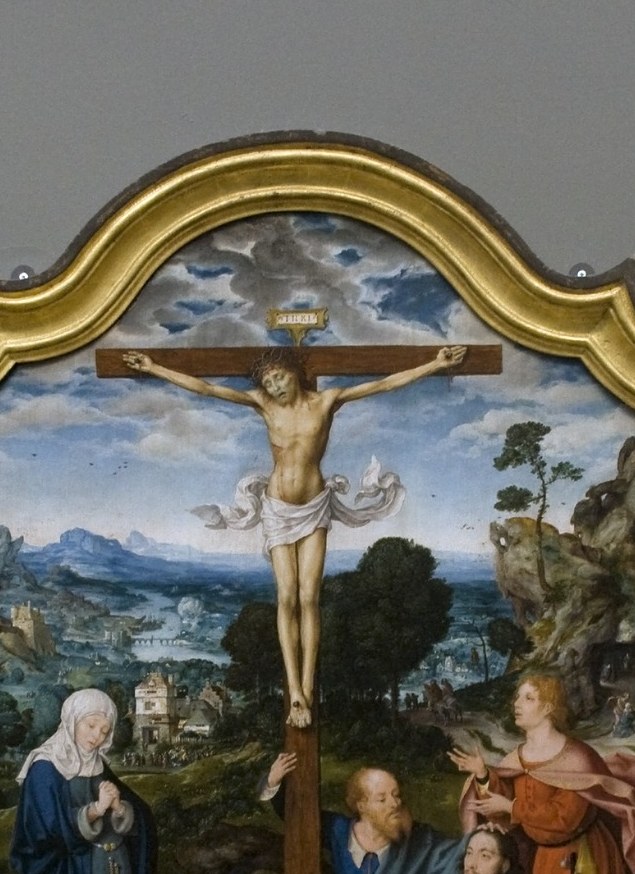
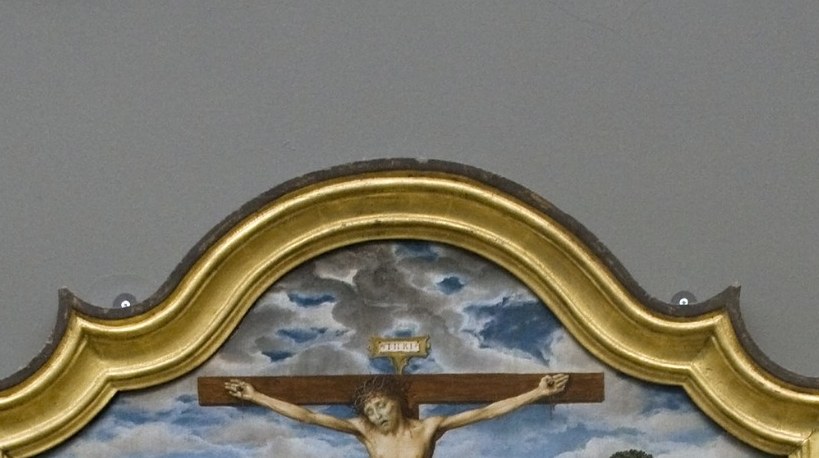
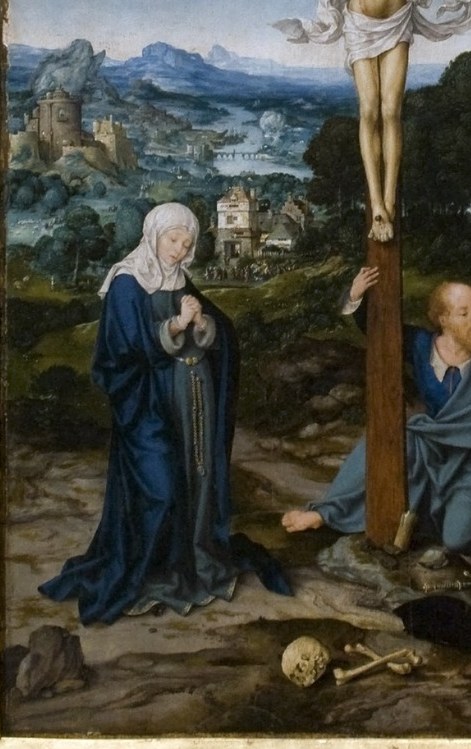
The painting is brutal and intimate. Christ hangs at the center, head inclined, body broken. At his feet lies a skull, Golgotha, the place of the skull, where tradition said Adam was buried. Christ's blood falls directly onto it. The theological claim is visual and immediate: the new Adam redeems the old. Beneath that transaction kneels our merchant, hands clasped, face tilted upward. He is not a witness to history. He has inserted himself into eternity.
Look at the landscape behind him. Jerusalem has become a tidy Flemish town with hills and a palm tree, as though the Crucifixion were happening just outside Antwerp's walls. This was deliberate. Northern Renaissance painters domesticated sacred geography so viewers would feel the Passion occurring in their own world, in their own time. The merchant kneeling there is not remembering Christ's death. He is present at it.
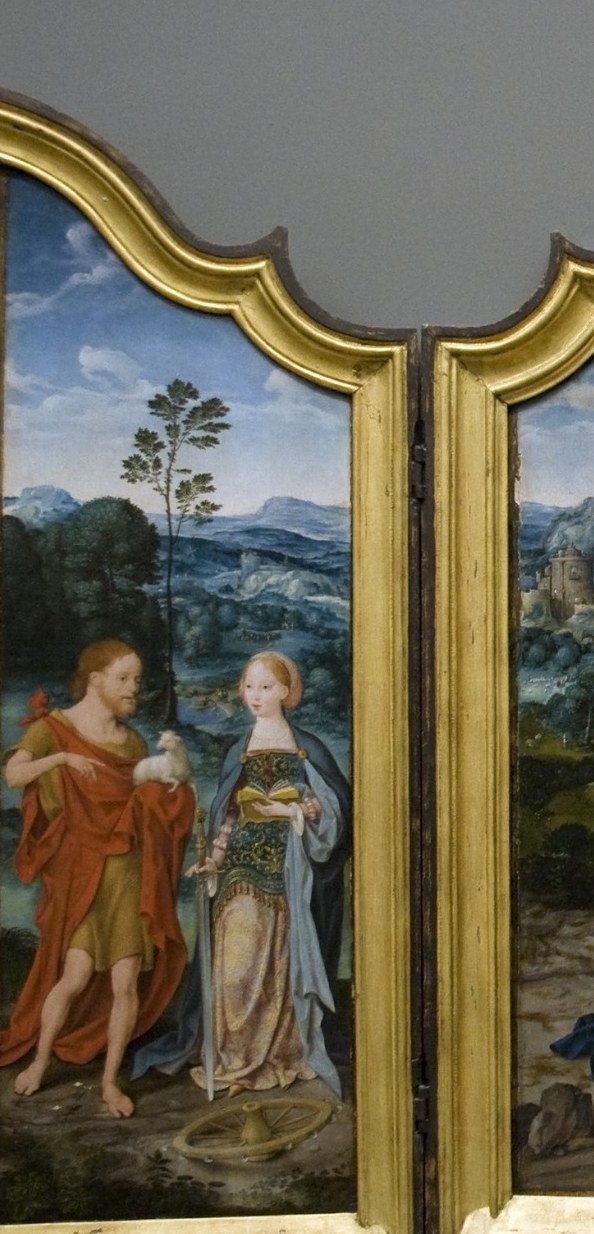
Joos van Cleve was a master of this kind of affective painting. He ran a large workshop in Antwerp, served as co-deacon of the Guild of Saint Luke, and was known for giving sacred figures a psychological presence that earlier Flemish painters rarely attempted. Here, the Virgin's grief in her ultramarine blue, the balanced saints on either wing, the turbulent sky, all of it frames one quiet man who wanted, more than anything, to be seen at the foot of the cross. And he still is.
What would it mean to commission yourself into the one moment you believed could save you?
#arthistory #flemishart #joosvancleve
Details
Transcript
Look at his face. He is not a saint. He is a merchant from Antwerp, around 1520. He paid to put himself here. Now raise your eyes to the cross. Christ's blood drips down onto a human skull. For 500 years, that merchant has knelt beneath the same promise.