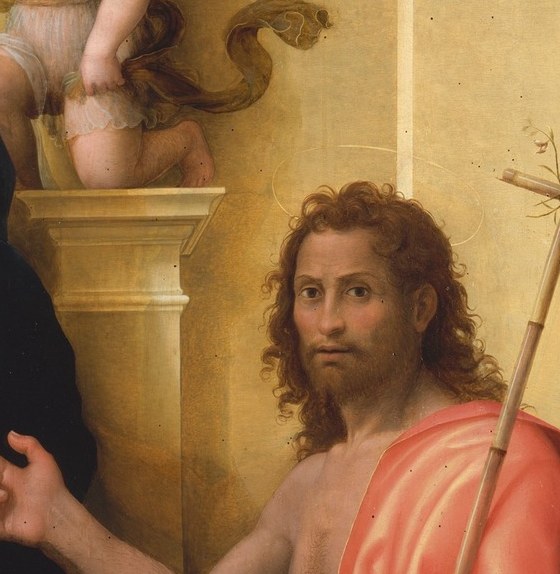
Madonna and Child Enthroned with Saints Mary Magdalen and John the Baptist by Giuliano Bugiardini
View the artwork: Madonna and Child Enthroned with Saints Mary Magdalen and John the Baptist →
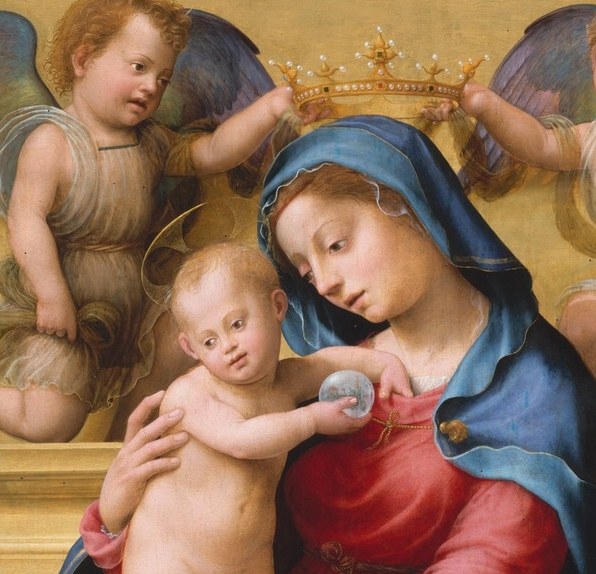
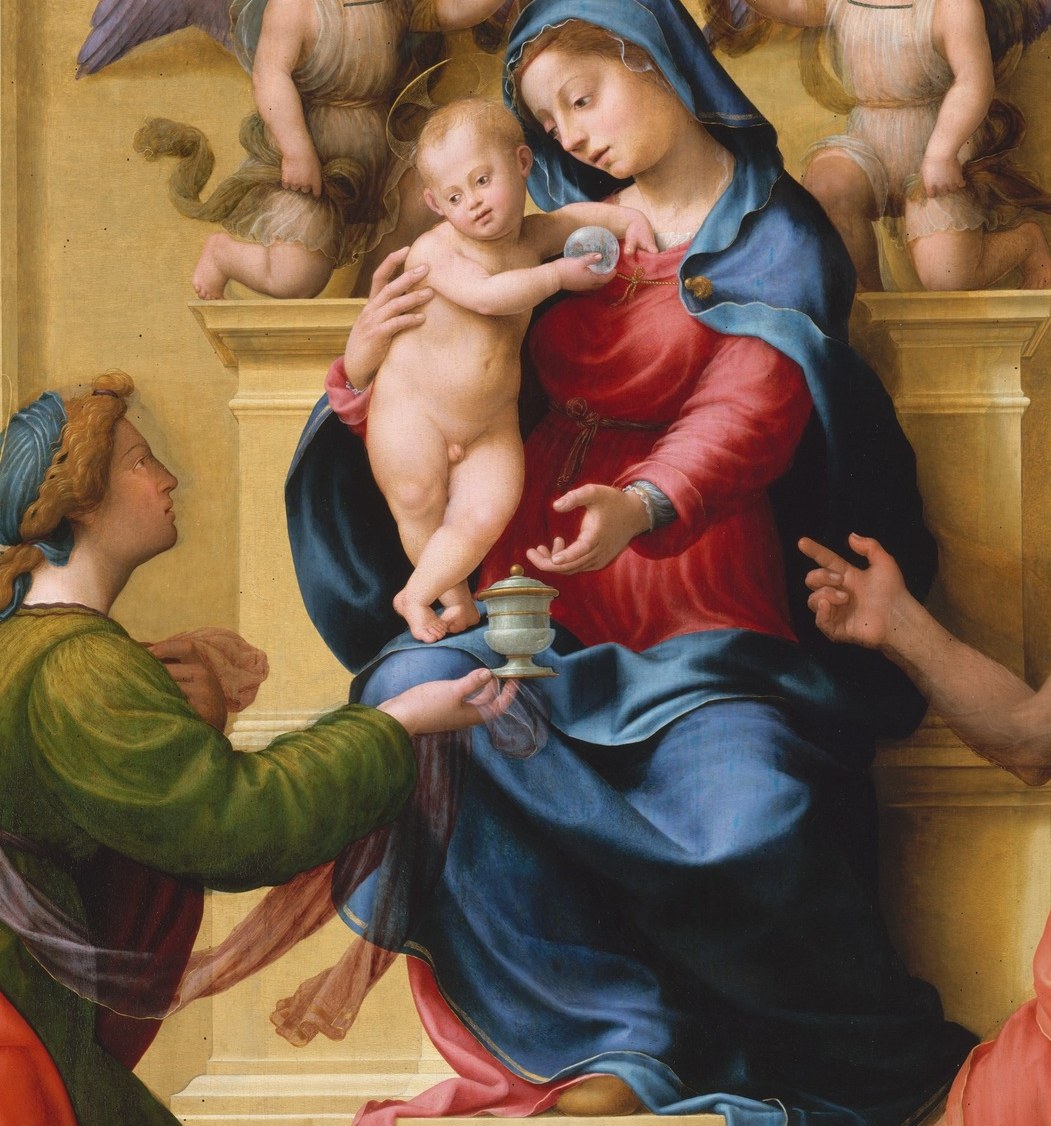
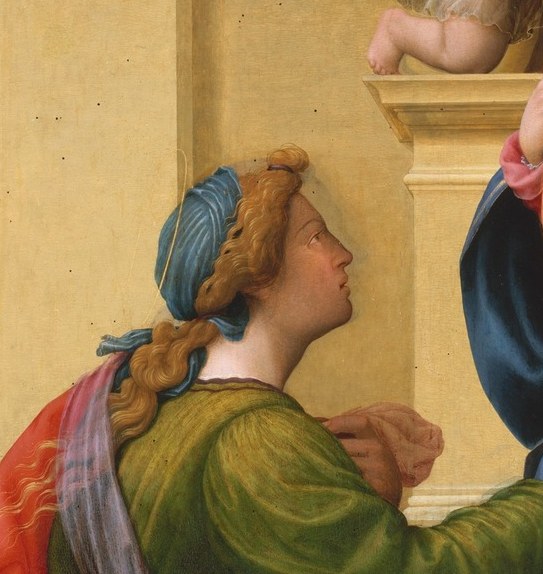
Giuliano Bugiardini painted "Madonna and Child Enthroned with Saints Mary Magdalen and John the Baptist" around 1523, and it hangs today in the Metropolitan Museum of Art. The entire composition builds toward a quiet, otherworldly authority, but the painting's most astonishing trick is hidden in plain sight: the Virgin's ultramarine mantle.
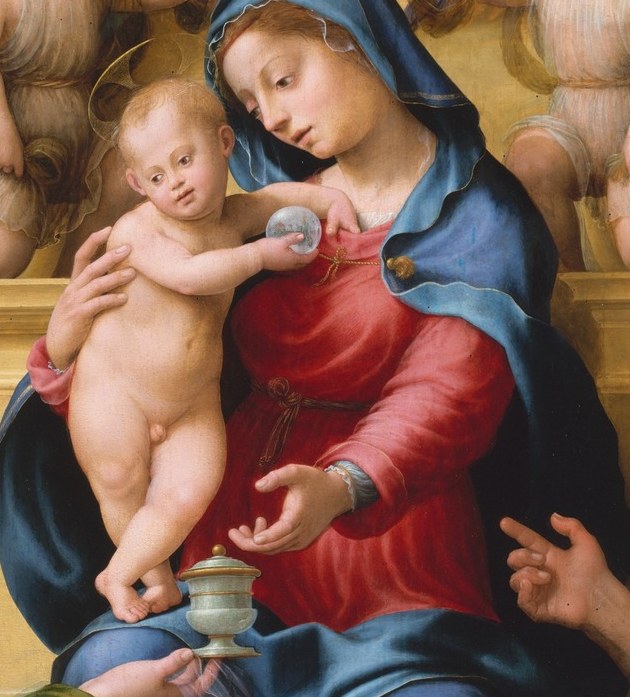
Look at the deep blue drapery. The brightest ridges seem to emit light rather than just reflect it, while the folds fall away into a darkness so deep you feel you could reach into it. Bugiardini achieved this by glazing, applying thin, translucent layers of oil paint over one another so light passed through and bounced back from the white ground beneath.
The pigment itself was lapis lazuli, imported from a single remote mine in Afghanistan. In 16th-century Florence, its cost exceeded that of gold leaf. Patrons paid for it by the brushstroke. Bugiardini's ability to spread such a costly material into soft, glowing passages across the entire throne speaks to the ambition behind this altarpiece.
A trick of physics disguised as a miracle. Some materials are so rare and a technique so patient that the result really does look like something beyond this world. Next time you see a blue in Renaissance painting, ask whether it feels like paint, or like light trapped in stone.
#arthistory #renaissance #florentinepainting
Details
Transcript
She seems to glow from within. But the real miracle is the paint itself. This blue is made from lapis lazuli, ground stone by stone. It cost more than gold. Bugiardini applied it in thin, layered glazes. Light passes through each layer and bounces back, creating a depth no single color can match. See how the ridge catches pure light while the fold falls into darkness. This is oil paint performing an optical illusion.