Summer Flowers by Jerome B. Thompson
View the artwork: Summer Flowers →
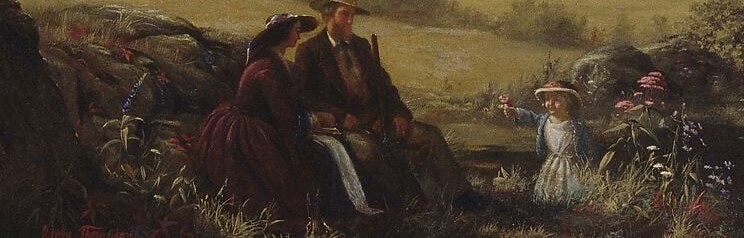
Jerome B. Thompson's 'Summer Flowers' (1859) is a painting that ended a career. Now in a private collection, this quiet vision of a rural American afternoon was met with open contempt when it first appeared. The art establishment of the mid-19th century wanted heroic narratives and moral grandeur. What Thompson offered instead was a boy holding wildflowers in a sun-drenched field, and the critics could not forgive him for it.
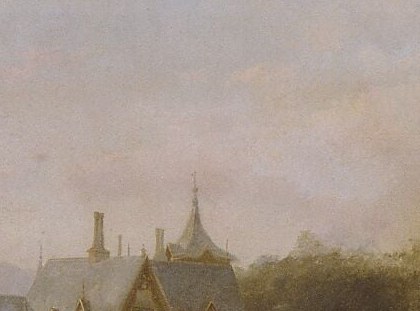
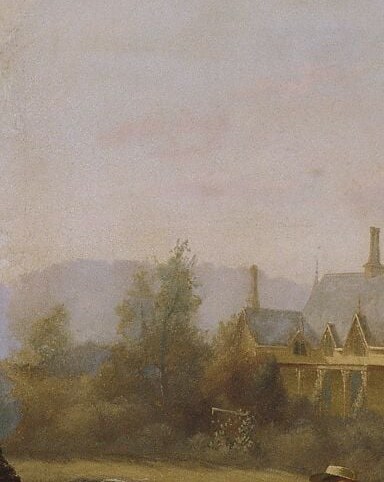
Look past the boy and his companion toward the middle ground. A couple approaches the distant white farmhouse, a secondary narrative you only find by slowing down. Thompson hides the arrival in plain sight, letting it play out behind the gentle slope of wildflower-dotted grass. The real protagonist, though, is the diffuse afternoon light itself, pooling in the sky and catching the facade of the estate.
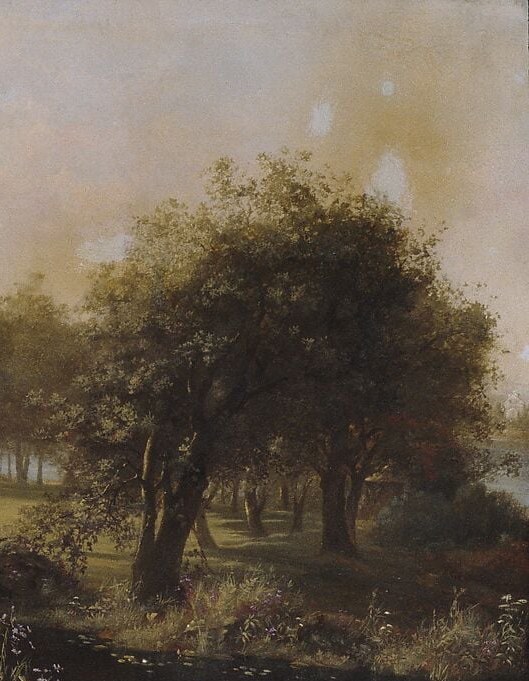
The painting's softness was a direct challenge to academic precision. Thompson built the atmosphere by handling the treetop silhouette with a feathered, almost hesitant brushwork, a passage that critics dismissed as unfinished. In an 1859 art world dominated by the grandiose historical compositions of painters like Emanuel Leutze, this devotion to an unheroic, fleeting moment was seen not as a stylistic choice but as a failure of ambition. The attacks on the subject matter were so sustained that Thompson's reputation never recovered, and his later work largely disappeared from public view.
An artist today can build a following on the beauty of the ordinary. Thompson was born too early for that world. The next time you see a painting of a simple, light-filled moment, think of the painter who was told, forcefully, that it wasn't enough.
#arthistory #americanart #jeromethompson
Details

Transcript
What would you give to hold a summer day? America, 1859. Grand history paintings ruled the art world. Then this arrived: no battle, no myth. Just a boy with wildflowers. The critics were merciless. Called the subject trivial, a mistake. Look at that light. He painted the exact weight of an August afternoon. The brushwork here, at the edge of the leaves, was seen as too soft. Unfinished. But the quiet ruined him. Demand for his work dried up. He never recovered. He painted an ordinary moment and paid for it with his career.