Final study for "La Grande Jatte" by Georges Seurat
View the artwork: Final study for "La Grande Jatte" →
In 1919, Adolph Lewisohn paid less than 500 dollars for this oil study. It was a quiet purchase of a preparatory work for a painting that had not yet sold, Georges Seurat's monumental 'A Sunday on La Grande Jatte.' Today, the study hangs in the Metropolitan Museum of Art, a gift from the Lewisohn collection since 1951. It is a priceless record of the single most transformative moment in Seurat's short career.
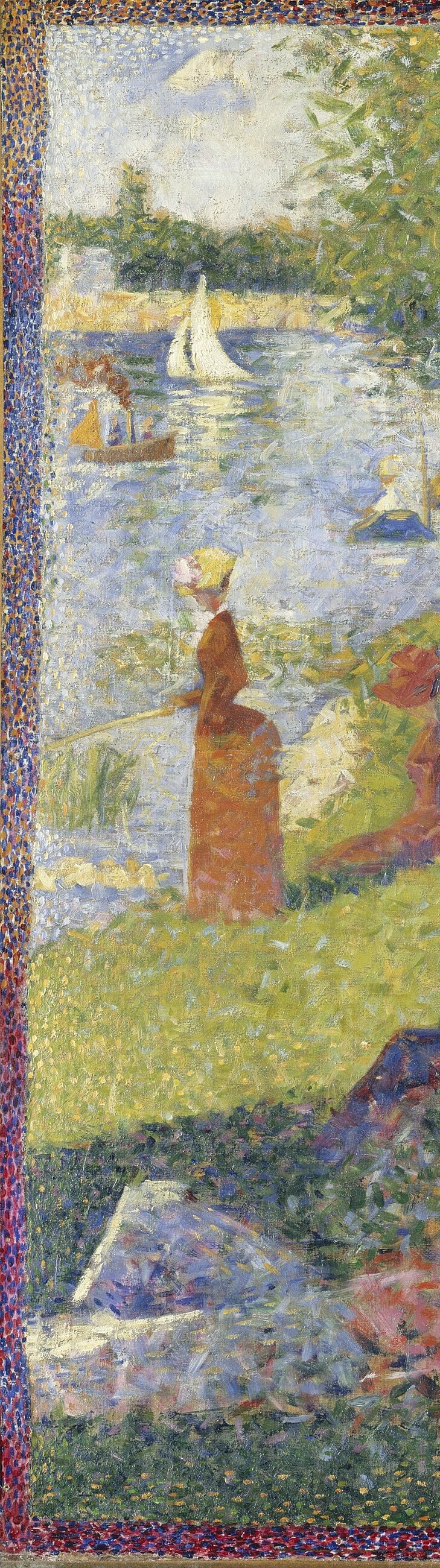
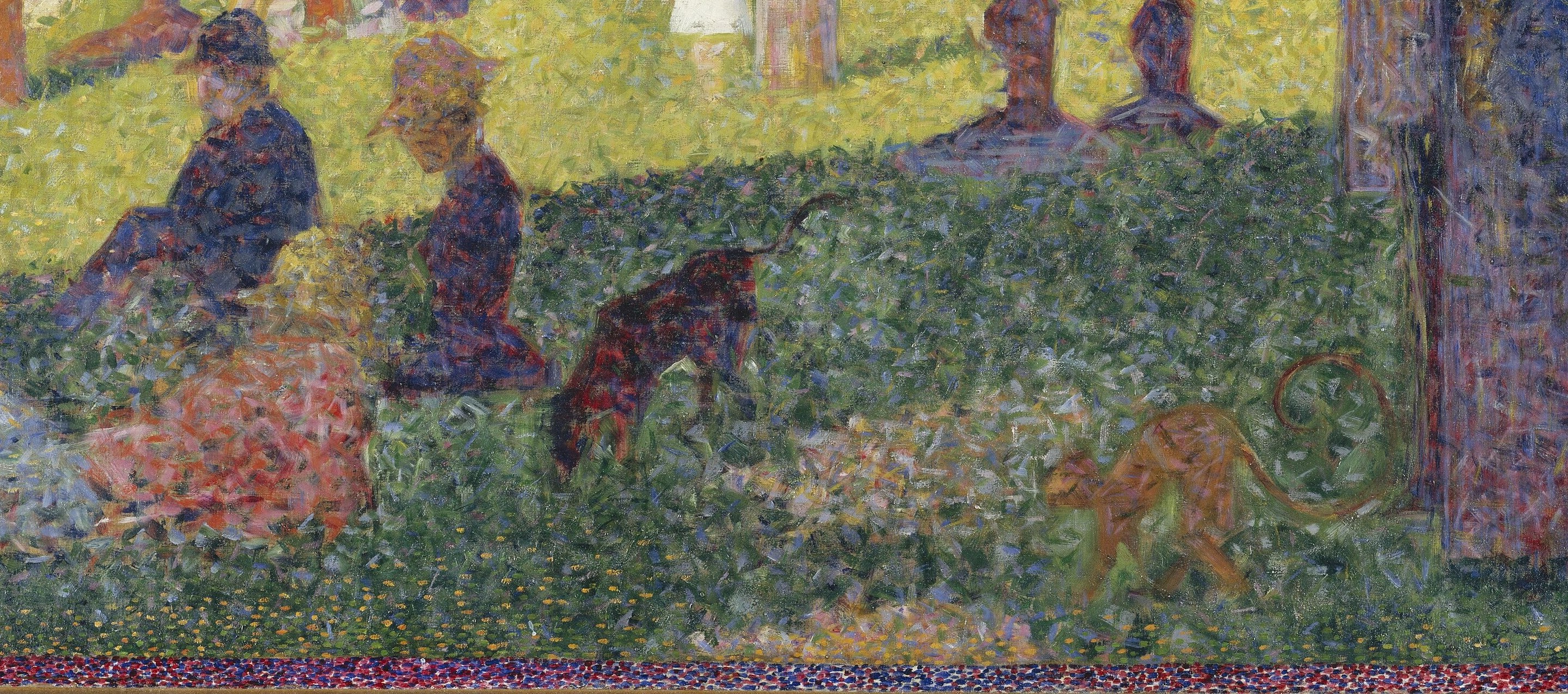
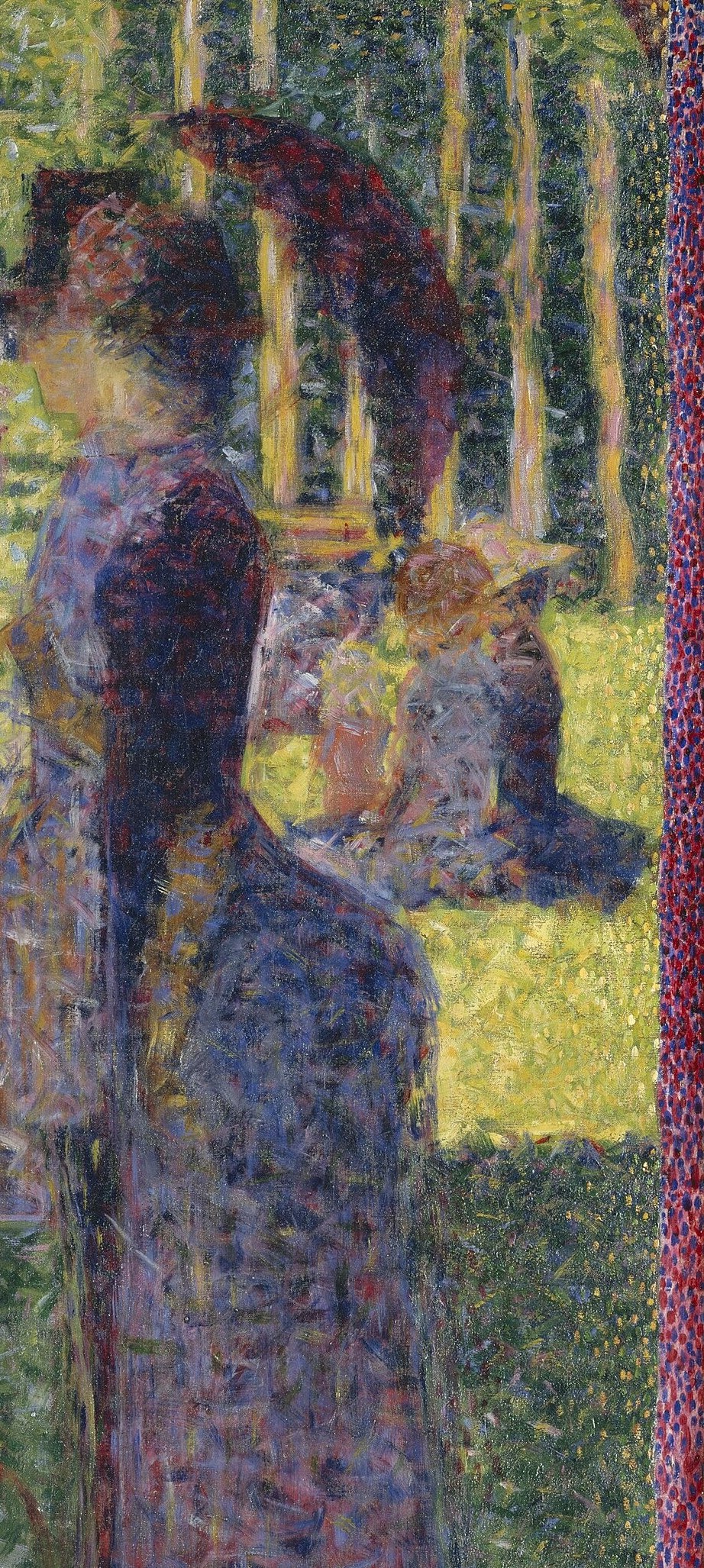
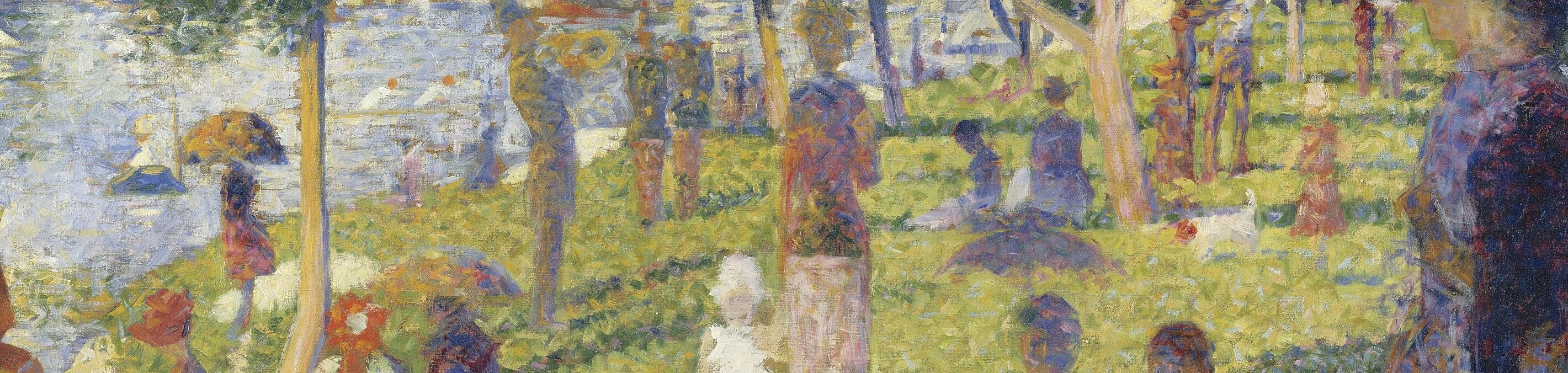
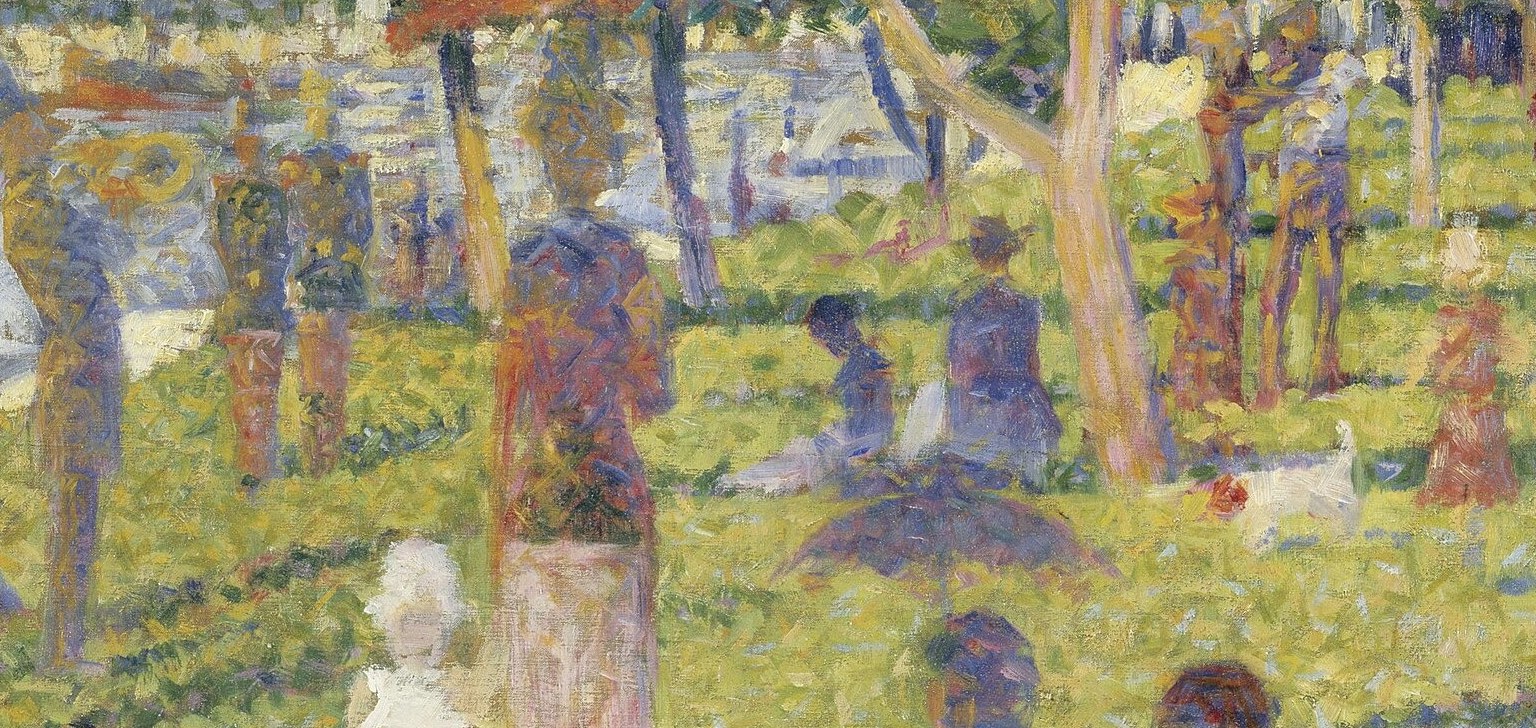
This is the last study before the final Chicago canvas. The composition is locked in: the dark tree trunk anchoring the left, the rigidly upright bourgeoisie, the distant sailboats on the Seine. But look closely at the lawn, the paint does not use the uniform dots Seurat would become famous for. Instead, the strokes are diagonal slashes, interlocking in a technique one historian memorably called 'chopped straw.' You are watching Divisionism being born in real time.
The Île de la Grande Jatte was a Sunday destination for Paris's rising middle class, a narrow island in the Seine northwest of the city. Seurat spent two years on the project, building a canvas that would debut at the eighth and final Impressionist exhibition in 1886 and effectively end the movement by launching Neo-Impressionism. The study passed from Seurat's brother-in-law to the critic Félix Fénéon, then to New York dealer Stephan Bourgeois before Lewisohn acquired it. The final painting was bought by the Art Institute of Chicago in 1926 for a sum that would have been unimaginable just seven years earlier.
Less than five hundred dollars to priceless in a single generation. What do you think this study would fetch if the Met ever let it go?
#arthistory #georgesseurat #pointillism
Details
Transcript
In 1919, an American collector bought this for less than 500 dollars. It was just a study. The real painting hadn't been sold yet. Look at the grass. Not dots, diagonal slashes. Scholars call it 'chopped straw.' It was Seurat's bridge to Pointillism. The red parasol is the thermal heart of the whole picture. Seurat never sold the final 'Grande Jatte.' He kept it until he died at 31. This 'study' now sits in the Metropolitan Museum. The price is unstated.