Madonna and Child by Giovanni Bellini
View the artwork: Madonna and Child →
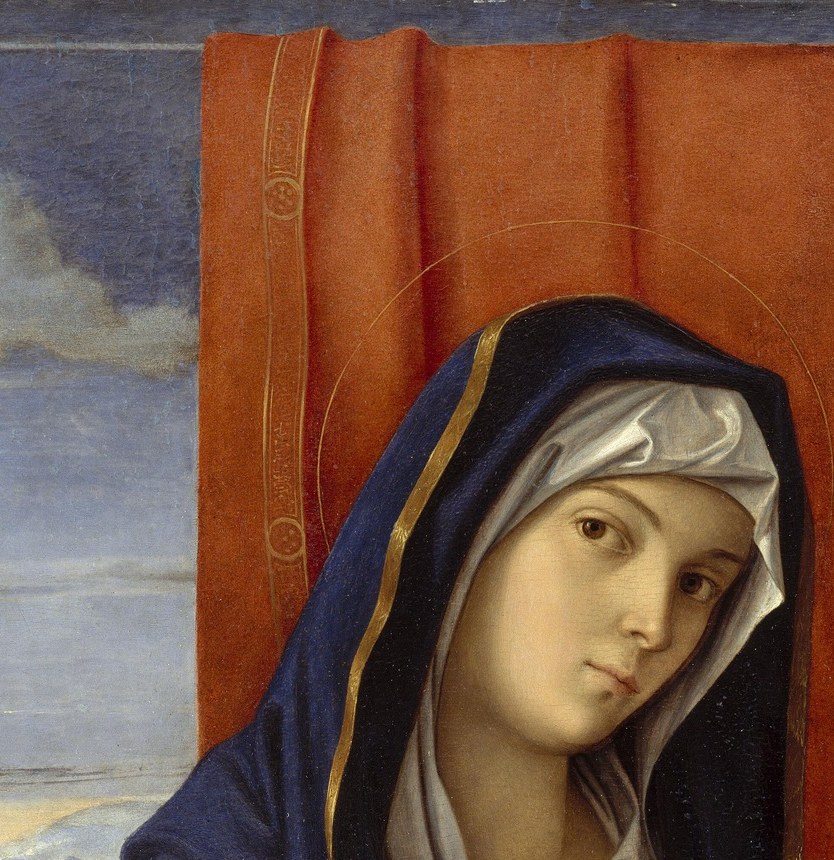
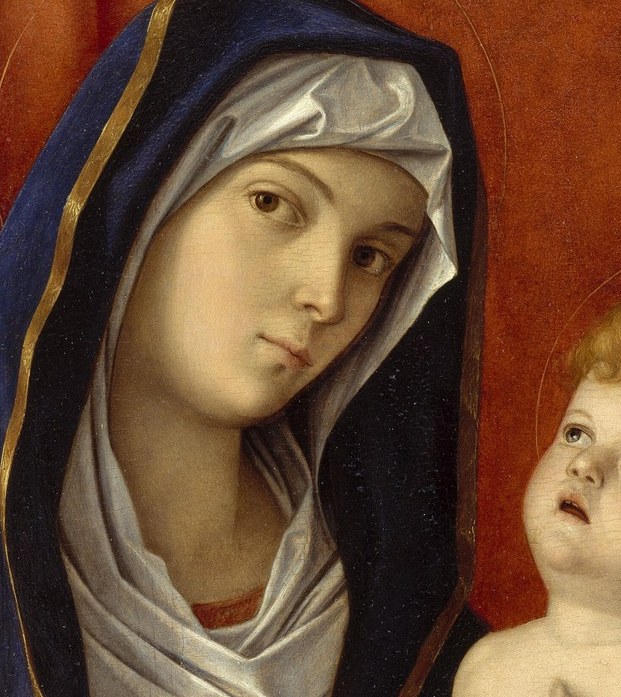
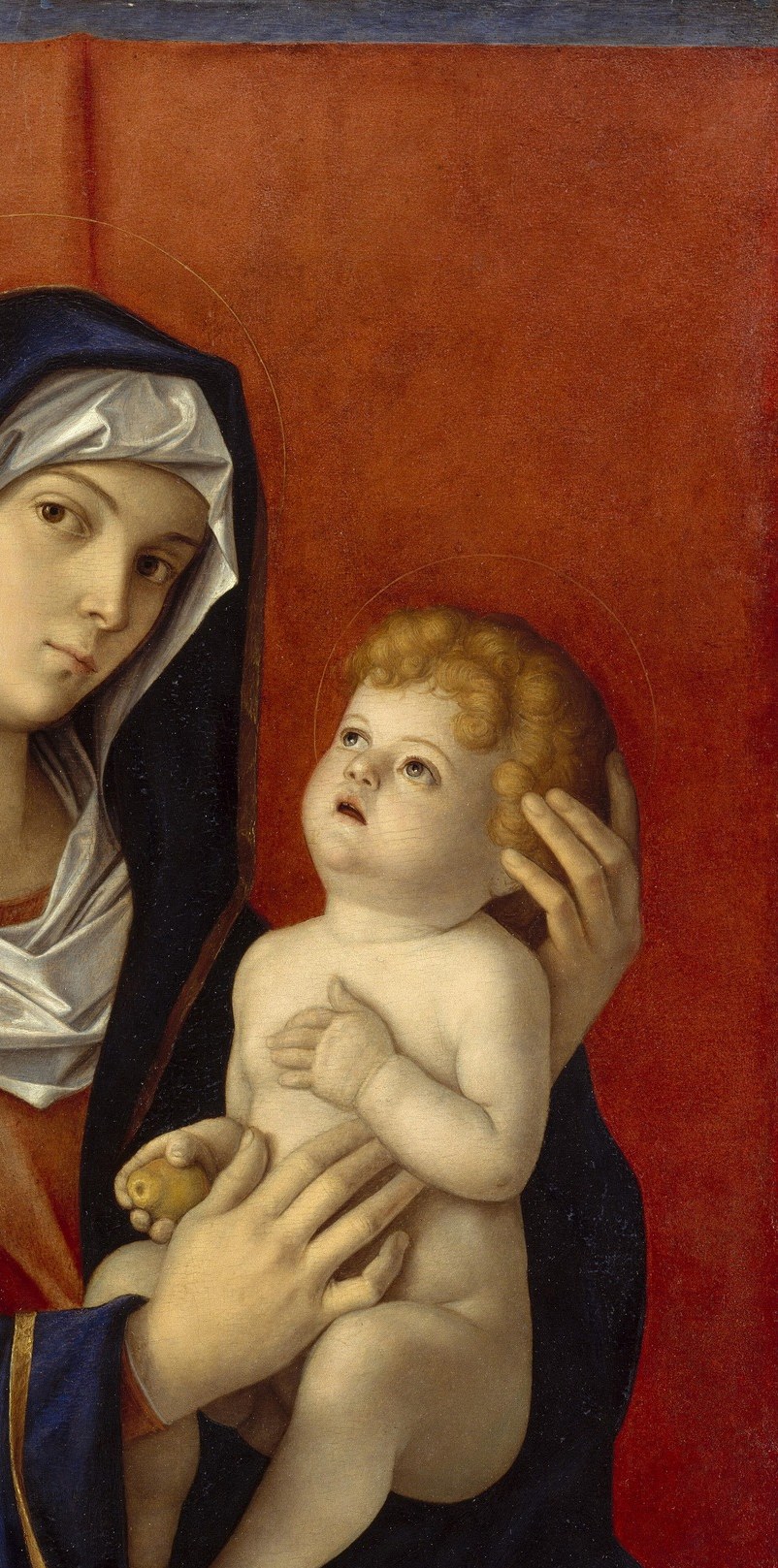
Giovanni Bellini's "Madonna and Child," painted around 1488, hangs in the Metropolitan Museum of Art in New York. The most immediate thing about it is how the Virgin looks straight out of the canvas at you. In an era when sacred figures usually gazed downward or into the middle distance, that directness was an invitation, almost a gentle command, to stop and pay attention.
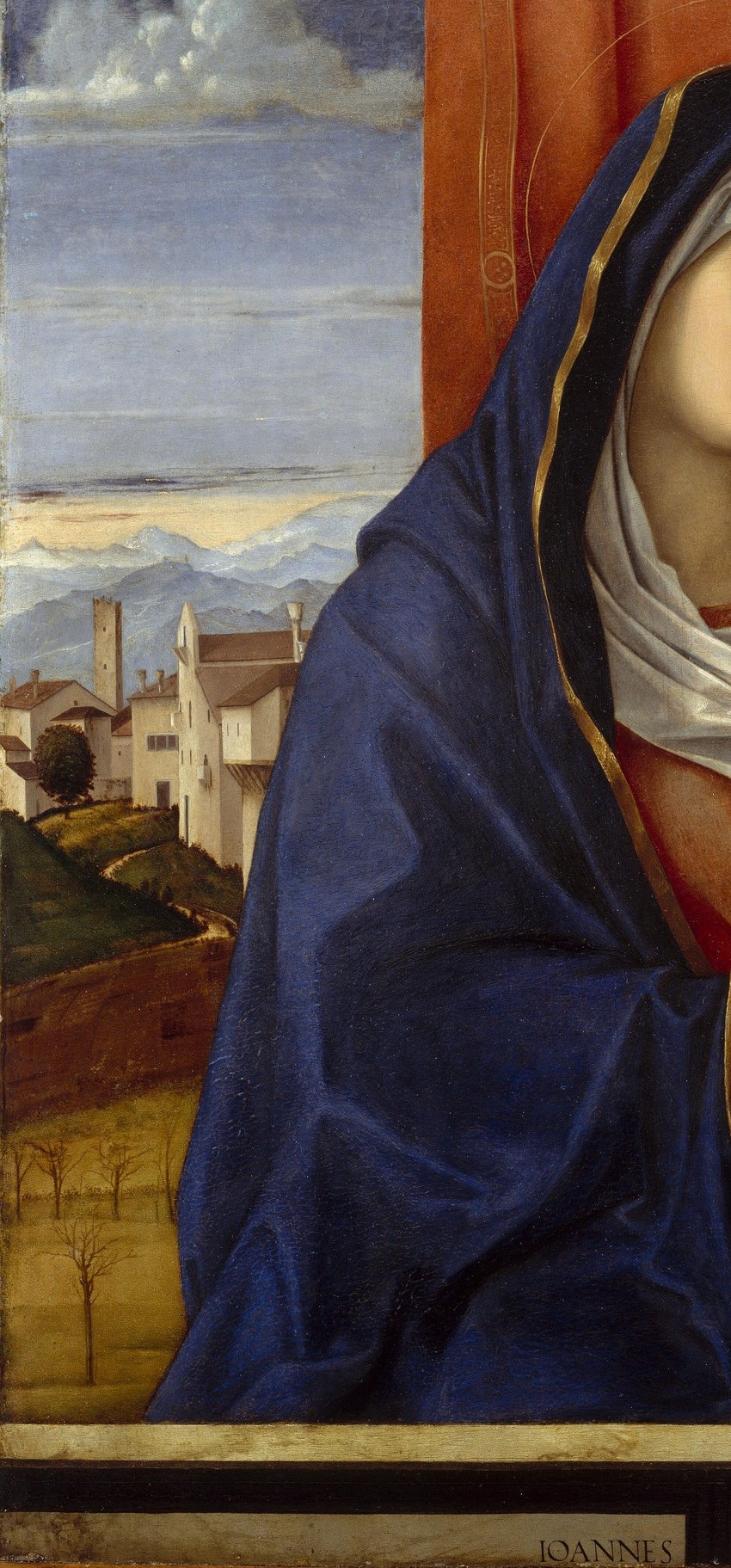
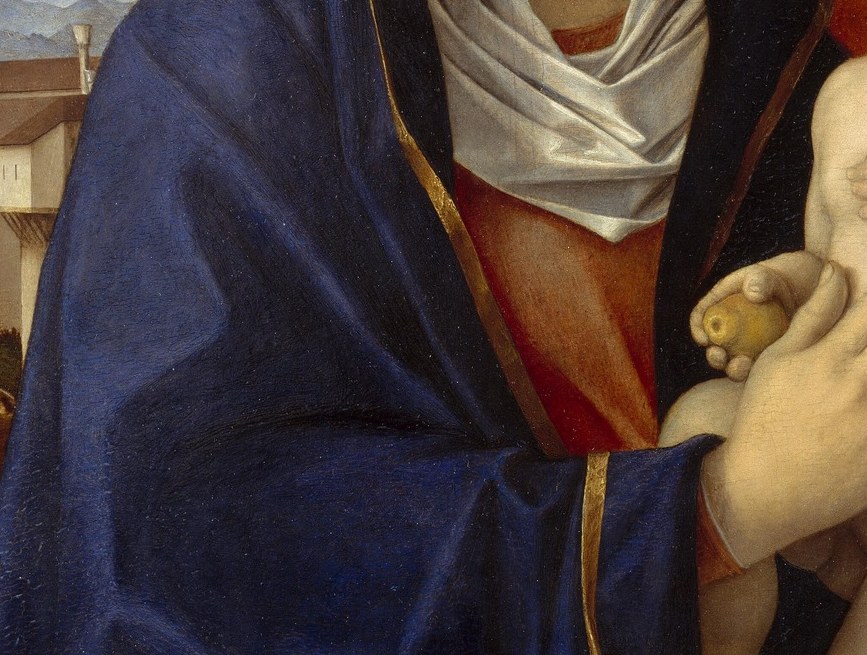
Once you meet her eyes, look past her shoulder. Bellini has drawn back a deep red curtain to reveal a landscape. The curtain itself is traditional, a symbol of royalty and the Passion. But what it frames is startlingly real. You see the Veneto countryside: a stretch of barren hills that transitions into a living, green townscape with tiny towers and rooftops.
That landscape is not just a metaphor for death and resurrection, though it works perfectly as one. It is also a true document. Bellini lived and worked in Venice and the surrounding Veneto region his whole life. Those buildings are what the countryside looked like to a man walking through it in the 1480s. The painting catches the world outside his studio at a specific moment.
What else do you notice in the far background once the figures stop holding your gaze?
#arthistory #italianrenaissance #giovannibellini
Details
Transcript
She does not look away from you. Her direct gaze was a new kind of intimacy in 1488. The curtain’s crimson signaled royalty and sacrifice. Pull it back, and Bellini shows you the real Veneto. Barren brown hills give way to a green townscape. Those towers and rooftops stood in the 1480s. A glimpse of the world Bellini walked through.