Summer Afternoon by Asher Brown Durand
View the artwork: Summer Afternoon →
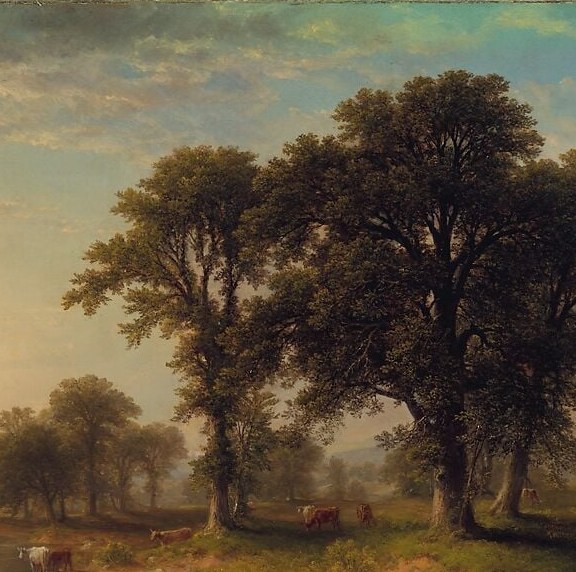
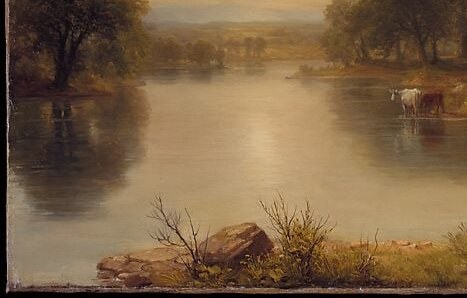
Asher Brown Durand's "Summer Afternoon" (1865) has lived a far more eventful life than its serene pastoral scene suggests. The painting sits today in the Metropolitan Museum of Art, but it spent parts of the 1970s and 1980s in the hands of art thieves.
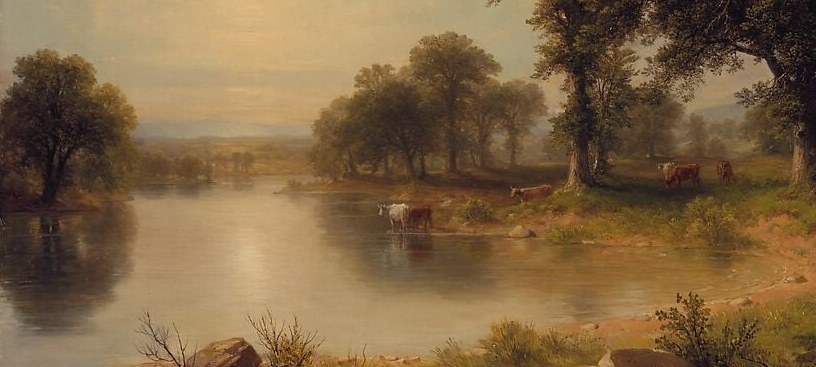
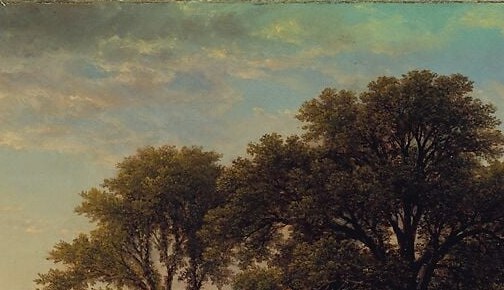
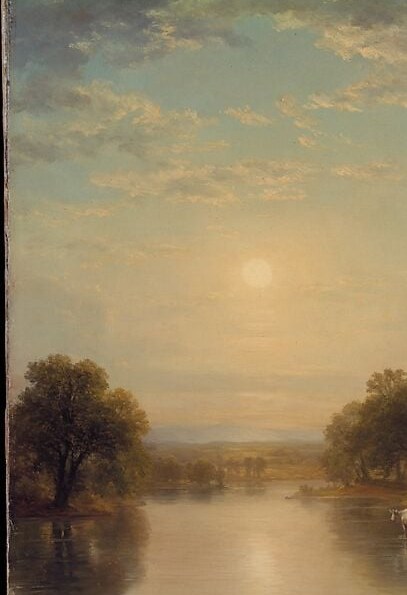
Look closely at the stream and the cattle. Durand began his career as an engraver, carving fine lines into metal plates for banknotes and illustrations. When he turned to oil painting in his 40s, that engraver's precision came with him. Every ripple in the water, every patch of hide on those cows, is built from tiny, almost obsessive strokes. The dappled light filtering through the central oak canopy is his signature: air you can almost feel.
The painting was commissioned by Morris K. Jesup, a railroad financier and philanthropist whose widow bequeathed it to the Met in 1914. In 1975, someone cut the canvas from its stretcher and simply carried it out of the museum. It was found months later in a bus-station locker. Then, in 1982, it was stolen again, and recovered again. A modest, 22-by-35-inch landscape had become a strangely desirable target.
In 2014, the U.S. Postal Service immortalized a detail from this twice-stolen painting on a stamp in the "American Treasures" series. Not bad for a quiet afternoon with some cows.
#arthistory #HudsonRiverSchool #AsherBrownDurand
Details
Transcript
This quiet pasture was the scene of a crime. Durand painted it in 1865 for a wealthy industrialist. Look at the cattle. Their hides are rendered stitch by stitch. Now the water. Every ripple is a former engraver's cross-hatch. In 1975, thieves cut this canvas from its frame at the Met. They rolled it up and walked out. It vanished for months. Recovered in a locker. Stolen again in 1982. Recovered again. In 2014, this twice-stolen pasture became a postage stamp.