The Card Party by Caspar Netscher
View the artwork: The Card Party →
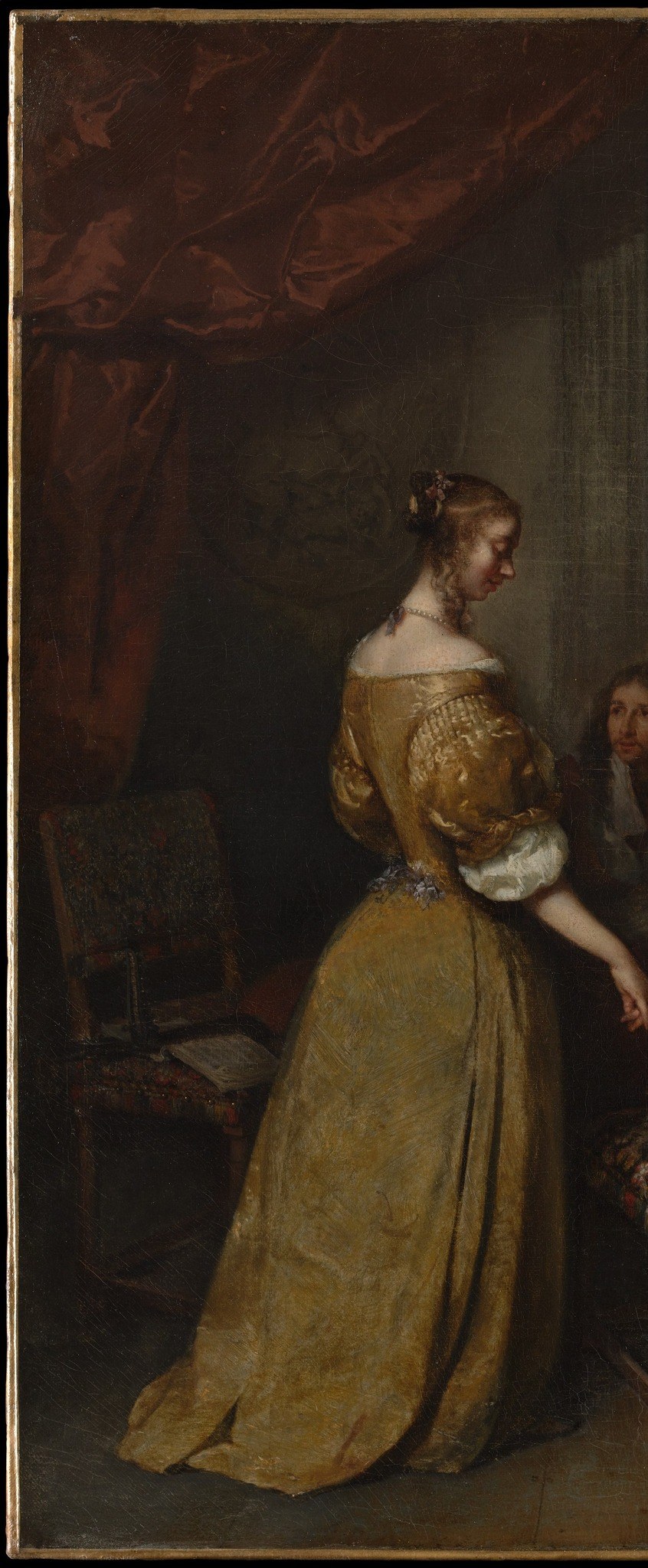
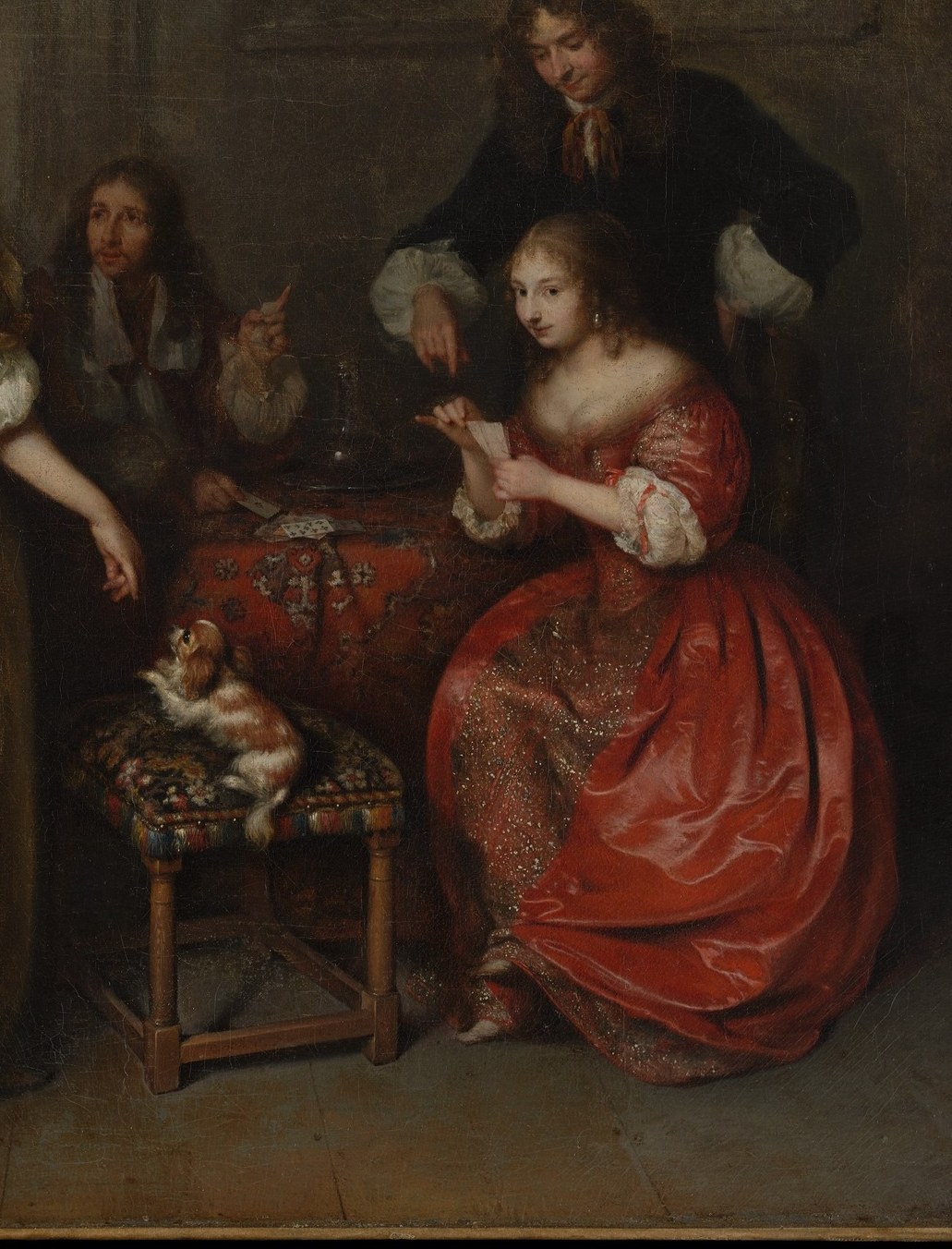
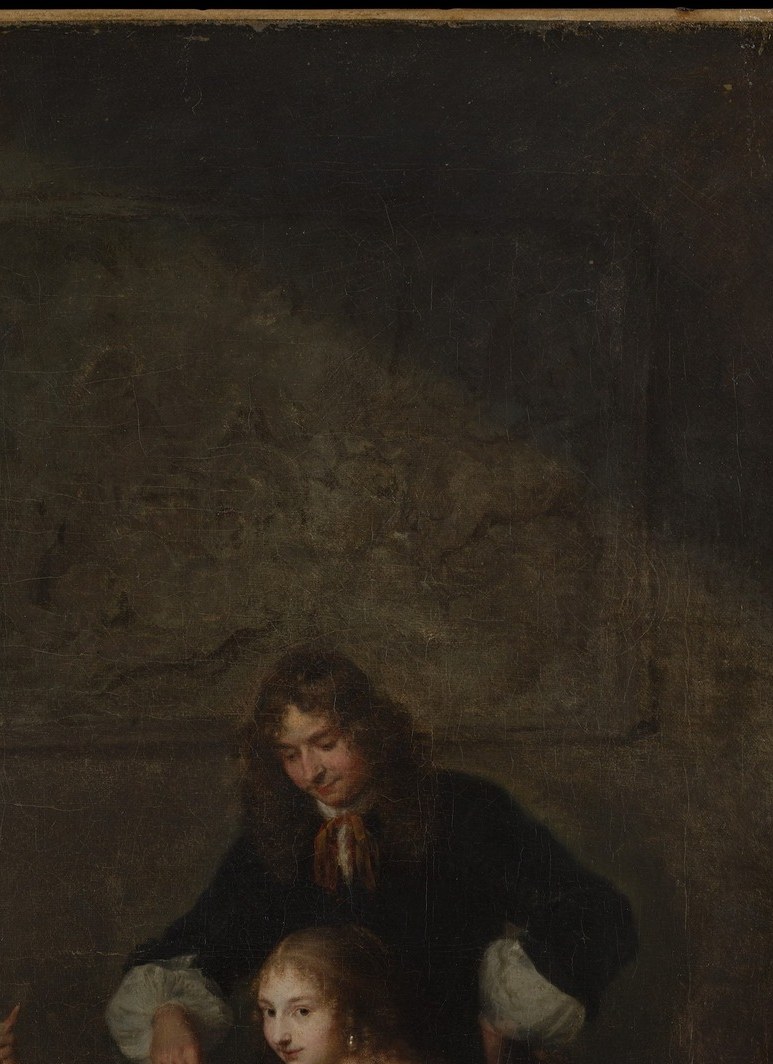
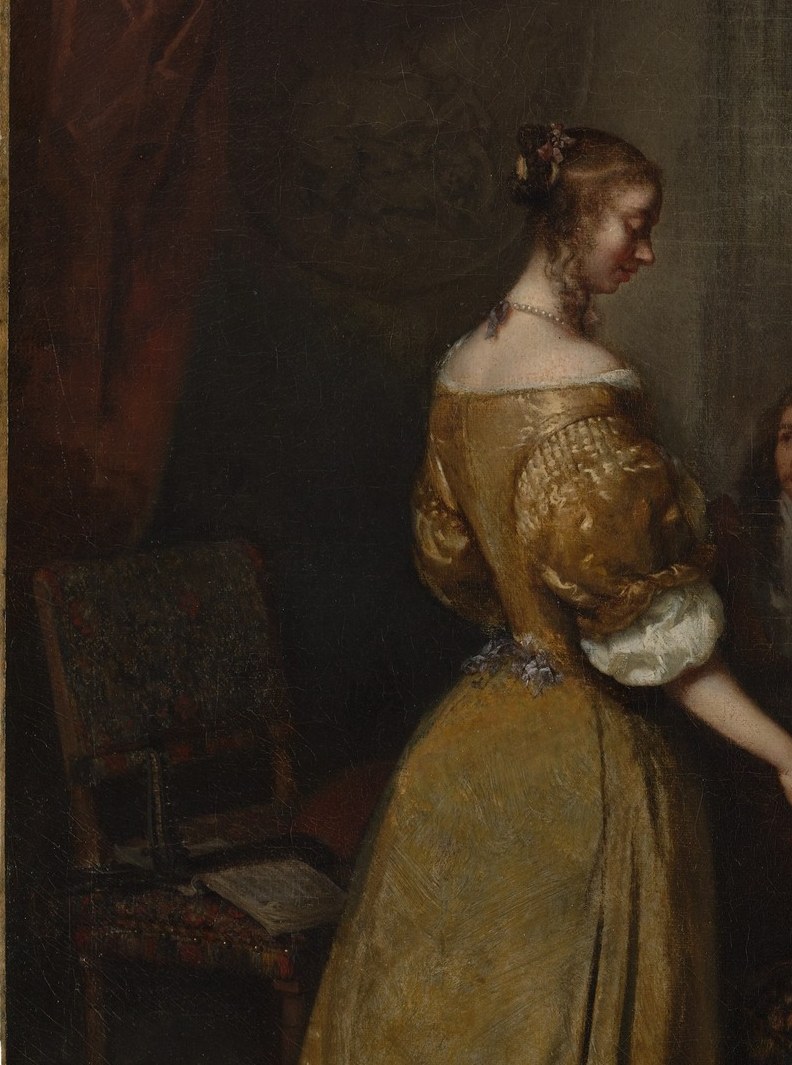
Caspar Netscher's "The Card Party," painted around 1665, is a masterclass in social tension hidden beneath a veneer of polite leisure. At first glance it's a quiet domestic scene: two women playing cards by candlelight. But Netscher embeds a visual riddle in the distribution of attention. The man in the dark coat leans forward, his face suspended between curiosity and something less innocent, he watches the game, but he also watches the woman in red, whose hand of cards we cannot see.
Look closely at the man's face. His expression is the film's narrative pivot: withheld, intense, almost invasive. Then find the small dog at the base of the composition, a motif borrowed from Dutch domestic interiors to signal faithfulness. But faithful to whom? The dog sits near the standing woman in gold, not the seated woman in red, complicating the social triangle playing out above it.
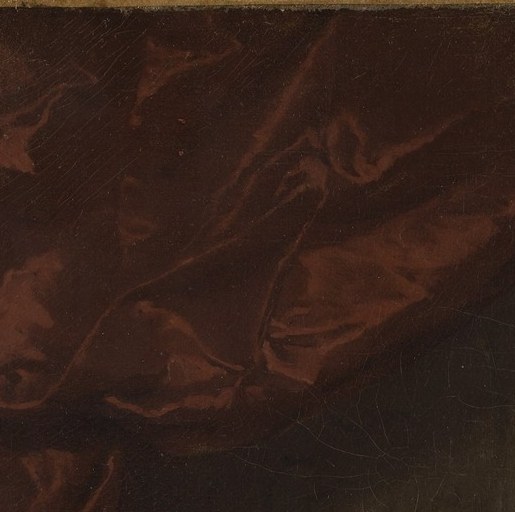
Netscher was a virtuoso of silk and brocade, and this painting shows why his work rivalled that of van Mieris and Ter Borch. The gold satin gown is a technical showpiece, every fold catches the candlelight differently. But the lighting is also a moral map: the faces and fabrics that matter most are touched by light, while the shadowed figure in the background and the dark curtain on the right quietly contain the scene, bracketing the action in a moral frame.
The single candle on the table does more than illuminate, it's a classic vanitas symbol, burning down while the players remain absorbed in a game of chance. Leisure, Netscher seems to suggest, has a cost.
#arthistory #dutchgoldenage #casparnetscher
Details
Transcript
A quiet card game in a Dutch interior. Your eye goes first to the light, and the gold dress. But the real story is in the shadows. The man in the dark coat leans in to watch. He cannot play. He can only look. A small dog lurks near the floor, easy to miss. It's a symbol of fidelity, in what feels like a quiet test. The candle burns down while the players weigh fortune.