View of Emmerich by Jan van Goyen
View the artwork: View of Emmerich →
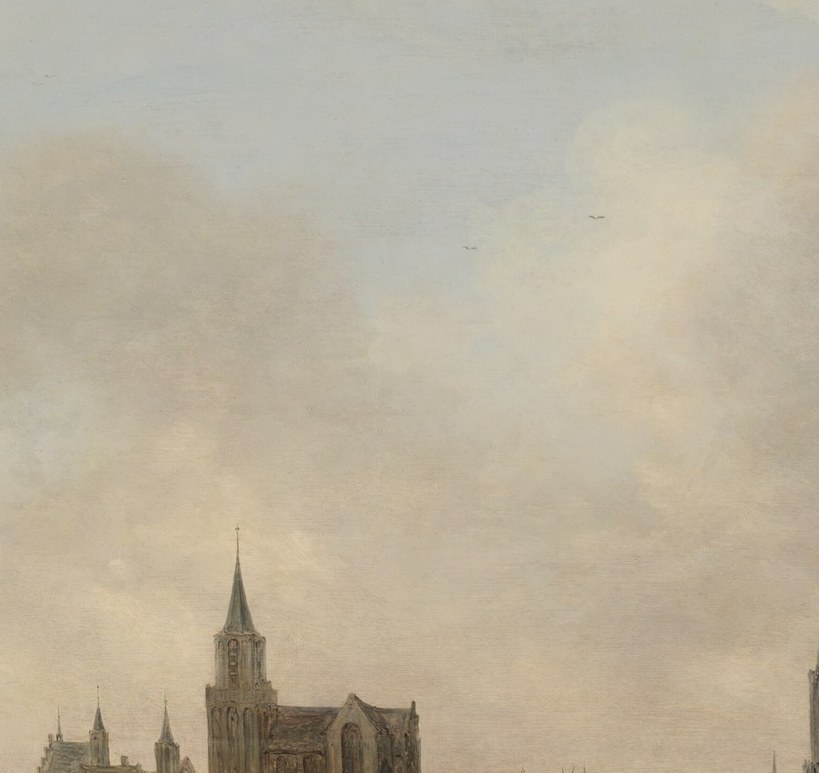
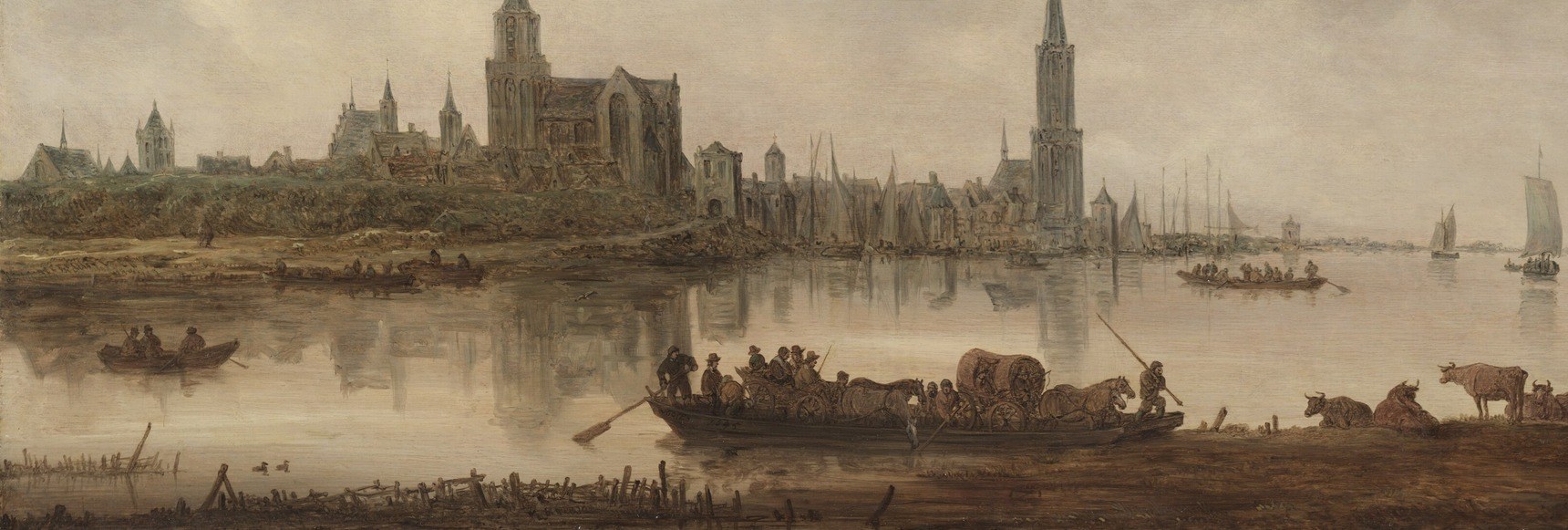
Jan van Goyen's View of Emmerich, painted in 1645, is a quiet monument to consistency. It shows the town of Emmerich on the Rhine from the river itself, with its distinctive twin-towered church anchoring the low horizon line. The painting lives today in a private collection, seldom seen in public, which makes this wide, luminous view feel almost like a secret.
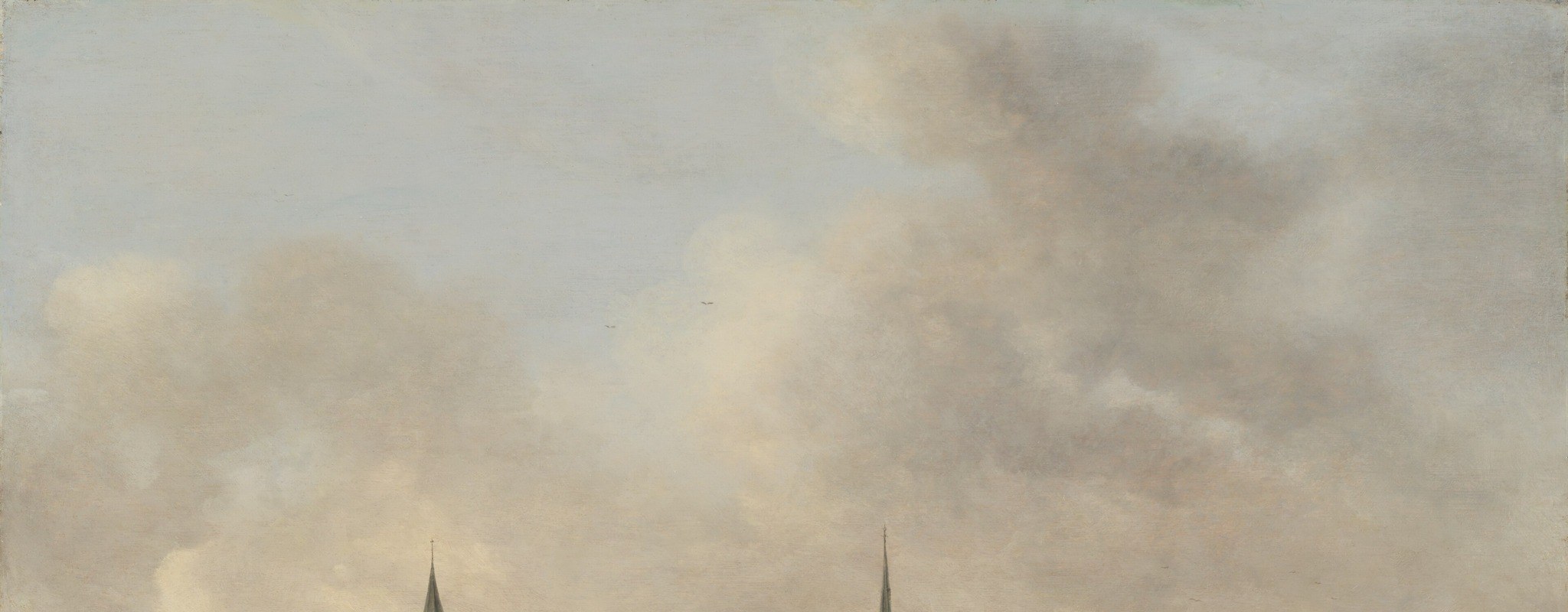
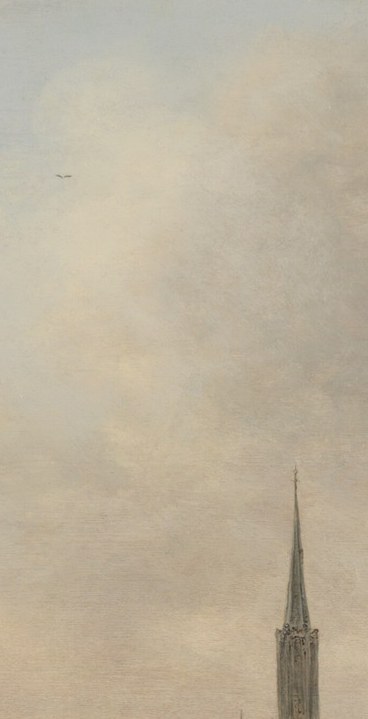
The first thing to notice is the sky. Van Goyen gave it well over half the composition, using thin layers of grey and gold to build a humid, light-filled atmosphere that dissolves the hard edges of the town. Down on the river, a small rowing boat in the left foreground is the only real measure of human scale. The water mirrors the spires so faithfully that the town seems to float between two skies, a trick that doubles the architecture without adding brushwork.
What makes the painting quietly staggering is the career behind it. Van Goyen was one of the most prolific artists of the Dutch Golden Age, leaving roughly twelve hundred paintings and more than a thousand drawings. This means he produced, on average, about two finished works every month for forty years. View of Emmerich is not a rarity. It is a single day in a relentless, lifelong practice of looking.
When you look at it now, you are not just seeing a town. You are seeing what a painter saw when he paused for an afternoon, knowing he would be back at the easel doing it again tomorrow.
#arthistory #dutchgoldenage #vangoyen
Details

Transcript
In 1645, you could walk through Emmerich just like this. The squat twin towers were the town's unmistakeable landmark. Van Goyen painted its exact profile from the middle of the Rhine. He gave the sky more than half the canvas. This one painting is just a Tuesday for him. Van Goyen left behind twelve hundred paintings. And over a thousand drawings.