Peaceable Kingdom by Edward Hicks
View the artwork: Peaceable Kingdom →
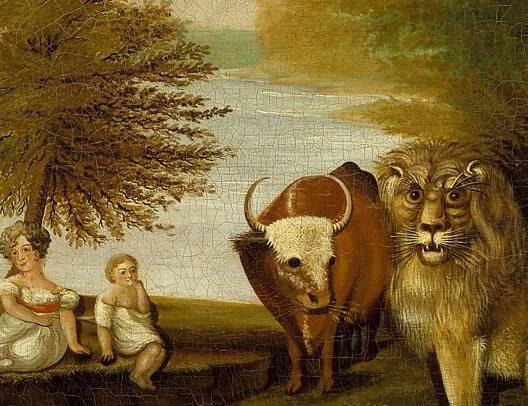
This is Edward Hicks's "Peaceable Kingdom" (ca. 1830-32), a painting that is less a landscape and more a Quaker sermon in oil paint. Hicks painted over sixty versions of this scene, each one a meticulous diagram of a specific Bible verse: Isaiah 11, which imagines a world where predators and prey live without fear, and a little child leads them all.
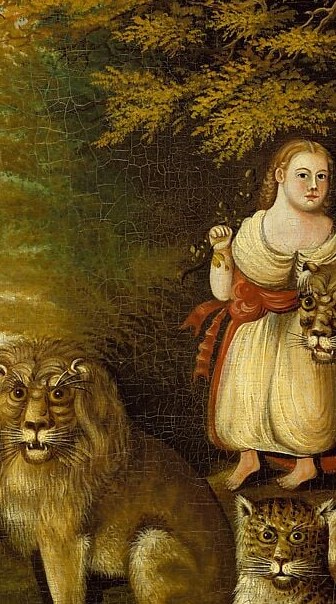
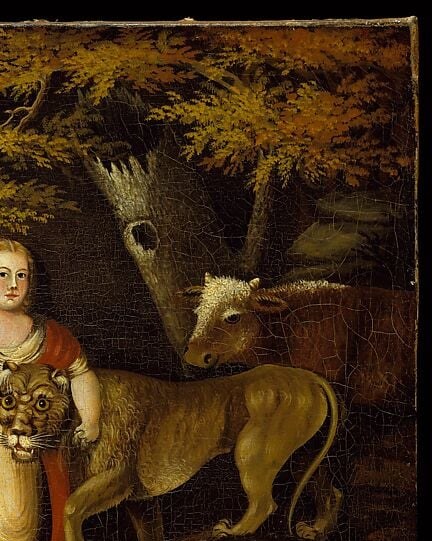
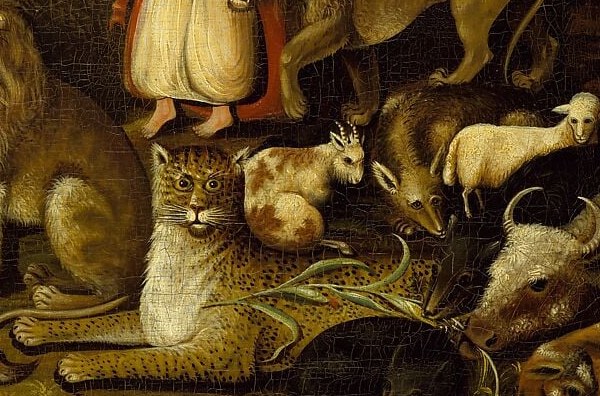
Look at the foreground. The lion rests its paws flat on the ground, not coiled to strike. It shares the grass with an ox, an animal that would have been prey, and the two exist without any sign of tension. To the right, a spotted leopard reclines beside a lamb. Each of these pairings is a direct, literal citation from Isaiah. The painting functions like a key: find the animal, unlock the verse.
At the center is a small girl in a white apron, face upturned and serene. She is the "little child" of the prophecy. Hicks paints her with a folk-art directness, but her placement is everything. She stands as the proof that this truce actually works in the world of the canvas. In the far background, barely visible, is a depiction of William Penn's 1682 treaty with the Lenape, a political hope for peace that Hicks embedded in nearly every version of this scene.
Hicks was a Quaker minister who painted signs and carriages for a living. His congregation sometimes questioned whether a painter could be a true man of God. This painting was his answer: a piece of art that was also a piece of scripture, built to be read as carefully as a page.
#arthistory #edwardhicks #americanfolkart
Details
Transcript
At first glance, a sweet, slightly awkward animal picture. But this Quaker preacher painted a sermon with a strict script. The ox and the lion share the foreground without a snarl. Isaiah's text: the lion shall eat straw like the ox. Mortal enemies, collapsed. The leopard lies down with the lamb. Literally. And a little child shall lead them. She is the proof the code works.