Wall painting from the west wall of Room L of the Villa of P. Fannius Synistor at Boscoreale by http://www.wikidata.org/.well-known/genid/760a43607685c6ead4750fc26a6f1e6b
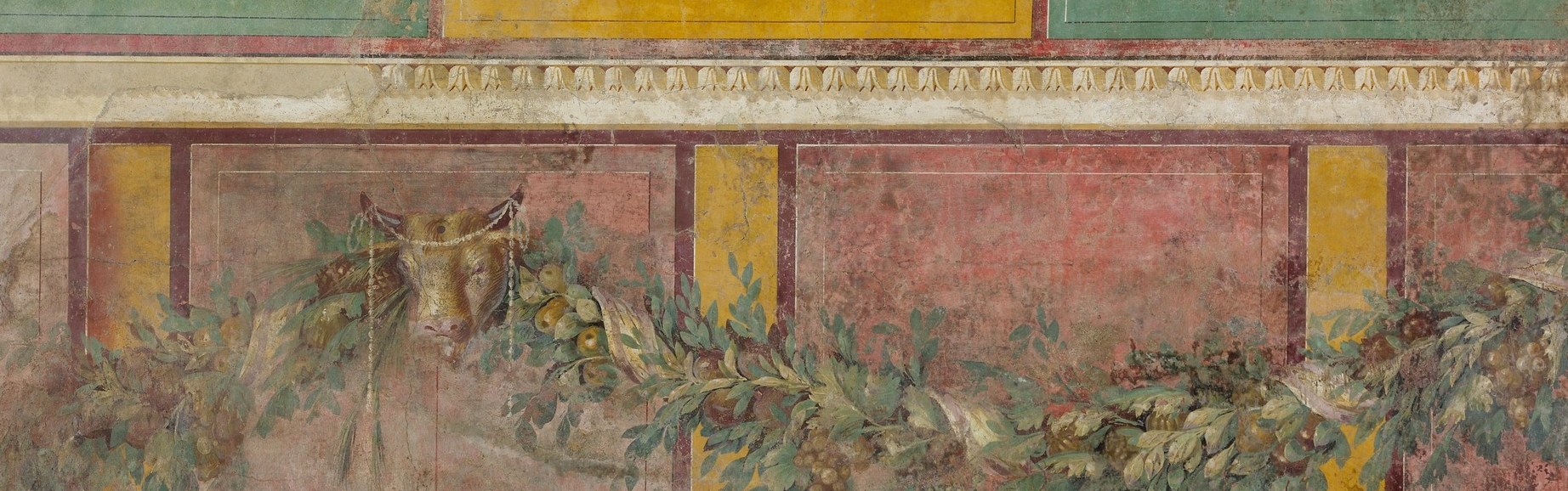
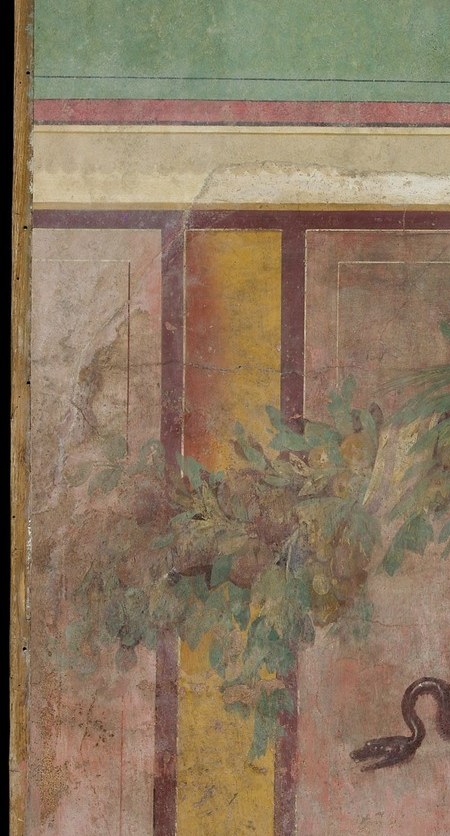
This is the west wall of Room L from the Villa of P. Fannius Synistor at Boscoreale, painted around 50 to 40 BCE. The fresco was removed from its villa near Pompeii after the 1900 excavation and now lives at the Metropolitan Museum of Art. It is a masterclass in the Roman Second Pompeian Style, a way of painting that sought simply to erase the wall.
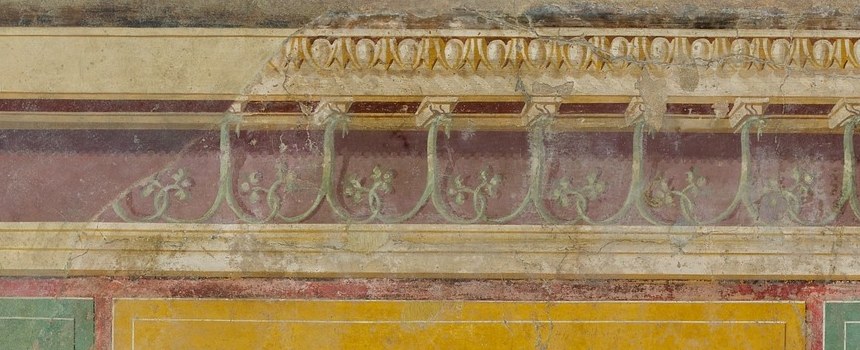
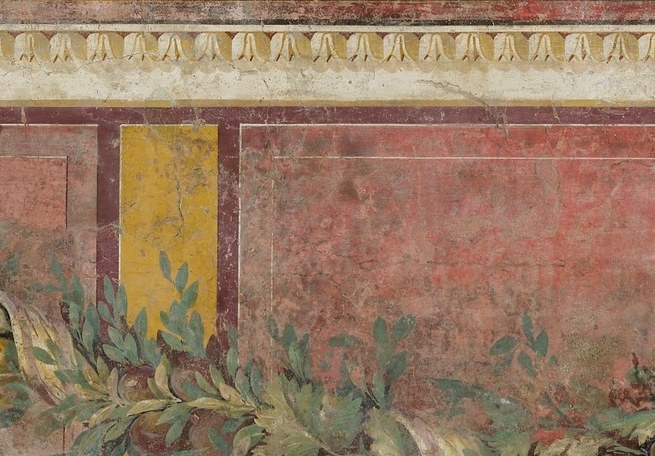
Look where the light falls. The red marble slab on the left is completely flat plaster, but the brushwork convinces you of veined stone. The shadow line under the cornice, the highlighted edge of the golden panel, the column on the far right, every element is a paint stroke that pretends to be carved masonry. The painter has dissolved a solid wall into an open portico, and the illusion only reveals itself when you stop believing it.
This villa belonged to a man named Publius Fannius Synistor and was buried by Vesuvius in 79 CE. When excavators cut the frescoes from the walls, they revealed a technique focused entirely on spatial deception: painted architecture that invited the viewer into a space that did not physically exist. The light always falls from the left, matching the real courtyard daylight that would have flooded the adjoining peristyle.
Stand in front of this at the Met and your eye still wants to walk through the stone that isn't there.
#arthistory #romanfresco #secondstyle
Details

Transcript
Look closely. This is a flat wall. Red marble, gold panels, a projecting cornice. The painter used shadow to carve stone that isn't there. A column anchors the right edge, holding up an imaginary portico. Above, an entablature with painted horned serpents. All of it painted around 45 BCE for a villa near Pompeii.