A Musical Party by Gabriel Metsu
View the artwork: A Musical Party →
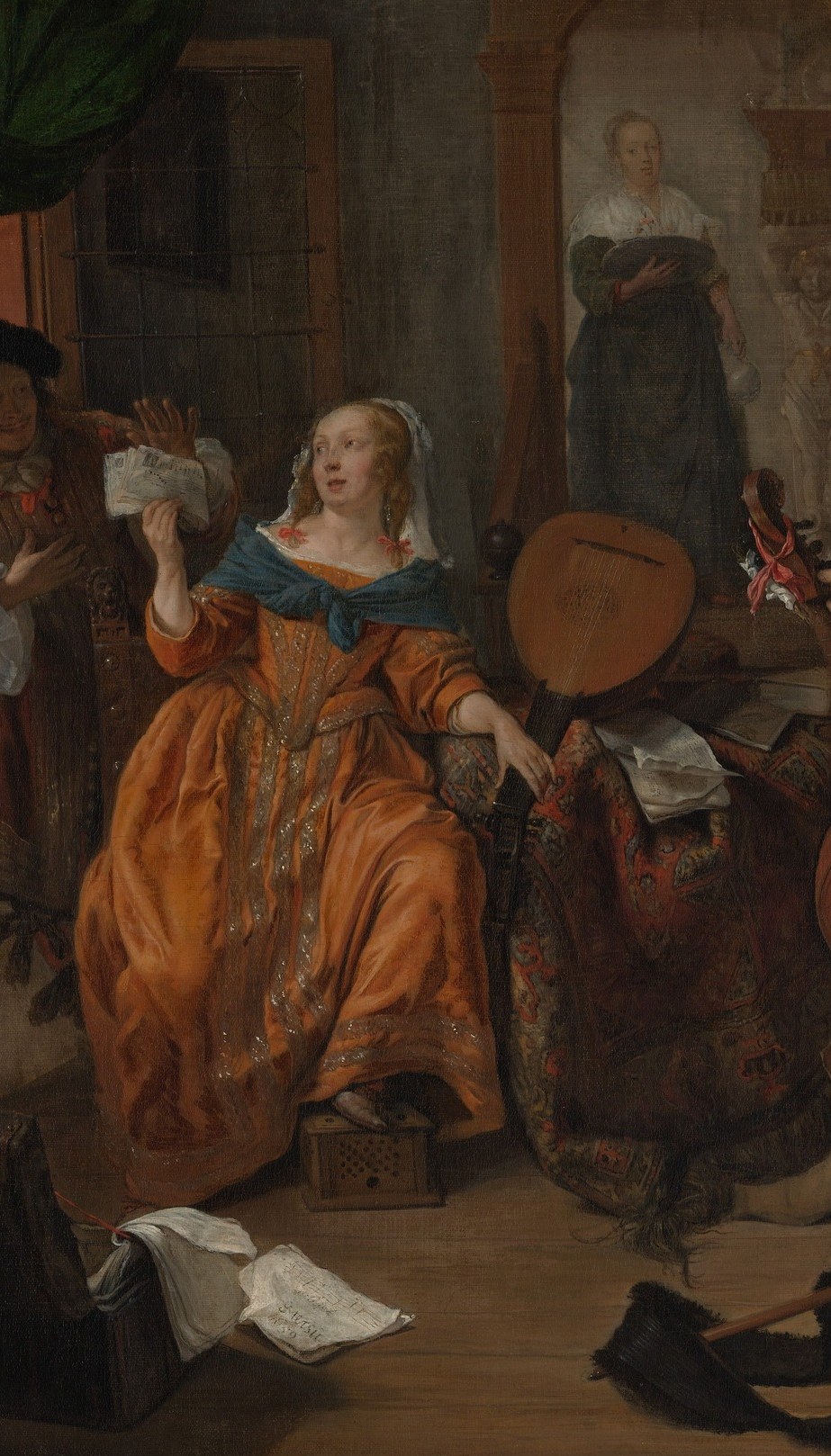
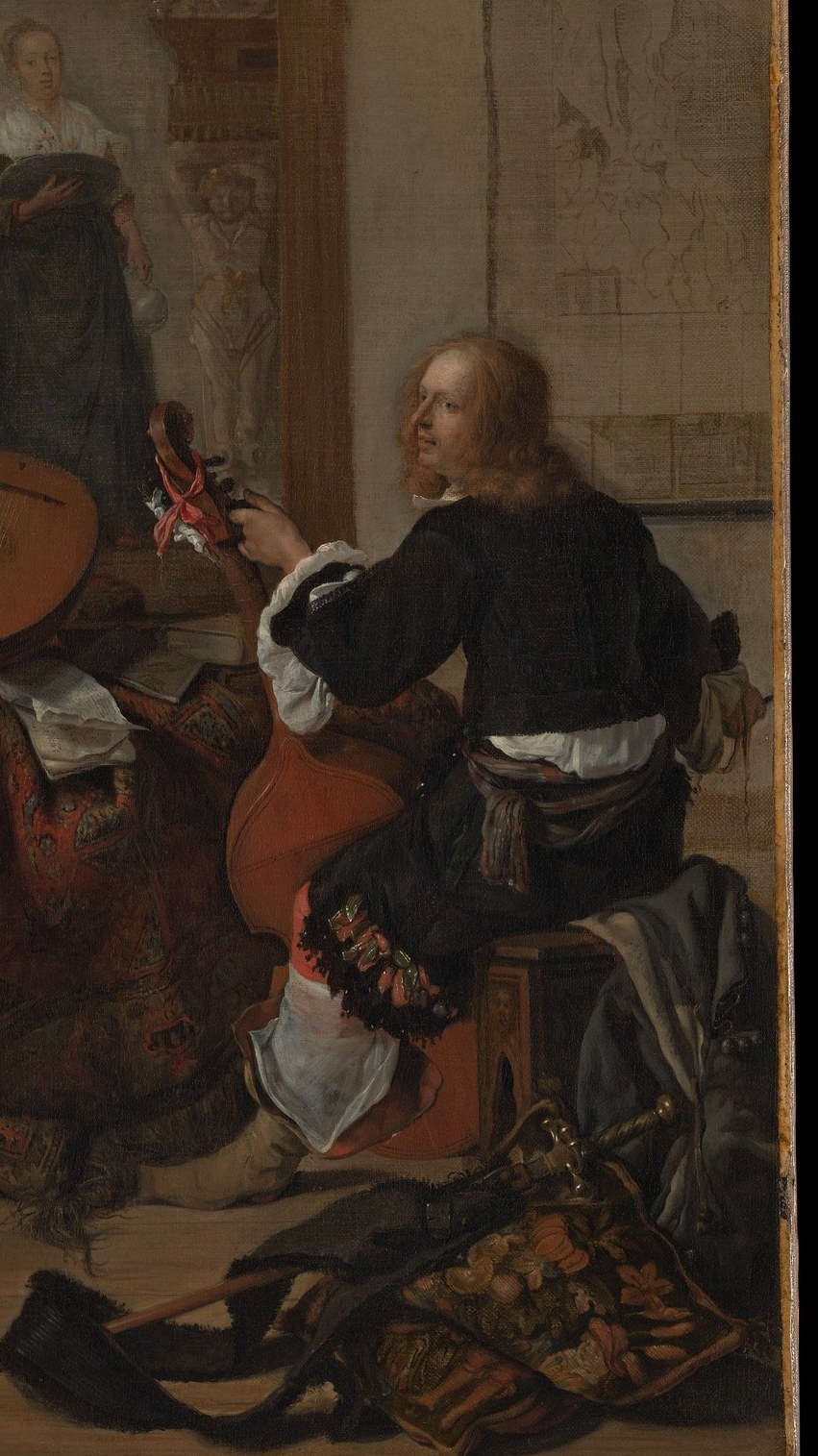
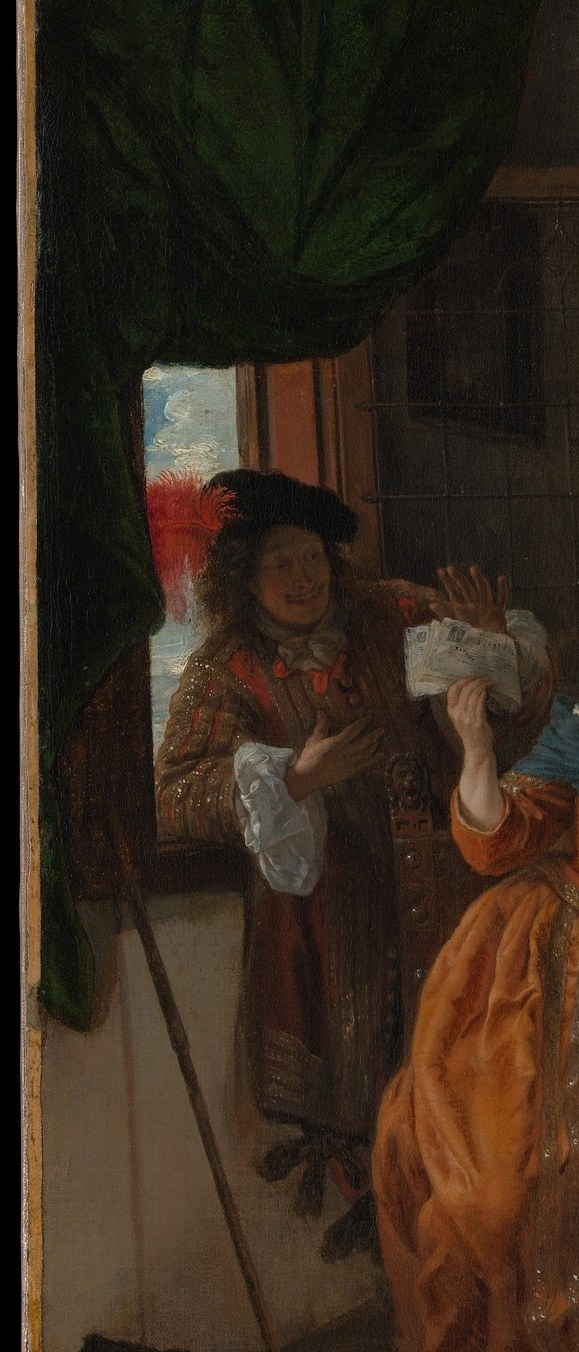
Gabriel Metsu's "A Musical Party" (1659) hangs today at the Metropolitan Museum of Art, but for centuries its real subject was hiding in plain sight. The title primes you for a genteel concert. The man holds a viola da gamba, the boy in the theatrical red hat waits by the window, and the central woman in that extraordinary orange gown might be about to sing. Except she isn't holding sheet music. She is holding a coin.
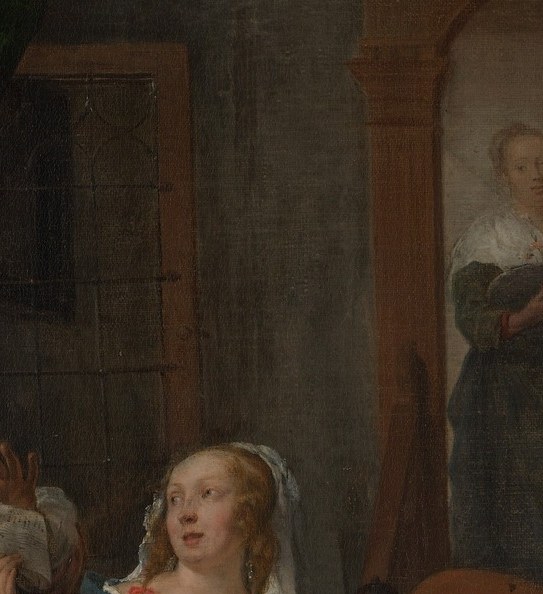
Look closely at her outstretched hand. That single detail reclassifies the entire scene. The scattered papers on the floor may be discarded letters or accounts, not song sheets. The large globe on the table and the maps on the wall, standard props in Dutch genre painting for merchant-class aspiration, suddenly read as instruments of commerce, not cultured backdrop. And the woman standing in the shadowed doorway? She may be a chaperone for a transaction that has nothing to do with music.
Metsu was an eclectic painter who resisted a single signature style across his 133 known works. Only fourteen are dated. This one he placed squarely in the 1650s, the height of the Dutch Golden Age, when genre scenes of domestic life were wildly popular with a rising merchant class that wanted to see its own world reflected. But Metsu rarely painted simple decoration. His scenes are layered, often morally ambiguous, and built around objects, a letter, a glass, a coin, that turn the picture.
So the party was never a party. The music stopped before it started. What remains is a moment of exchange, suspended in warm glaze and deep shadow, waiting for you to notice the hand.
#arthistory #dutchgoldenage #gabrielmetsu
Details
Transcript
Four figures, one instrument, and a room of deep shadow. He holds the viol, and the boy in the red hat watches. But her gaze is downward. Not at the music. In her hand: a coin, not a page of sheet music. This is not a musical party at all. It is a negotiation.