Portrait of a Young Woman as a Vestal Virgin by François-Hubert Drouais
View the artwork: Portrait of a Young Woman as a Vestal Virgin →
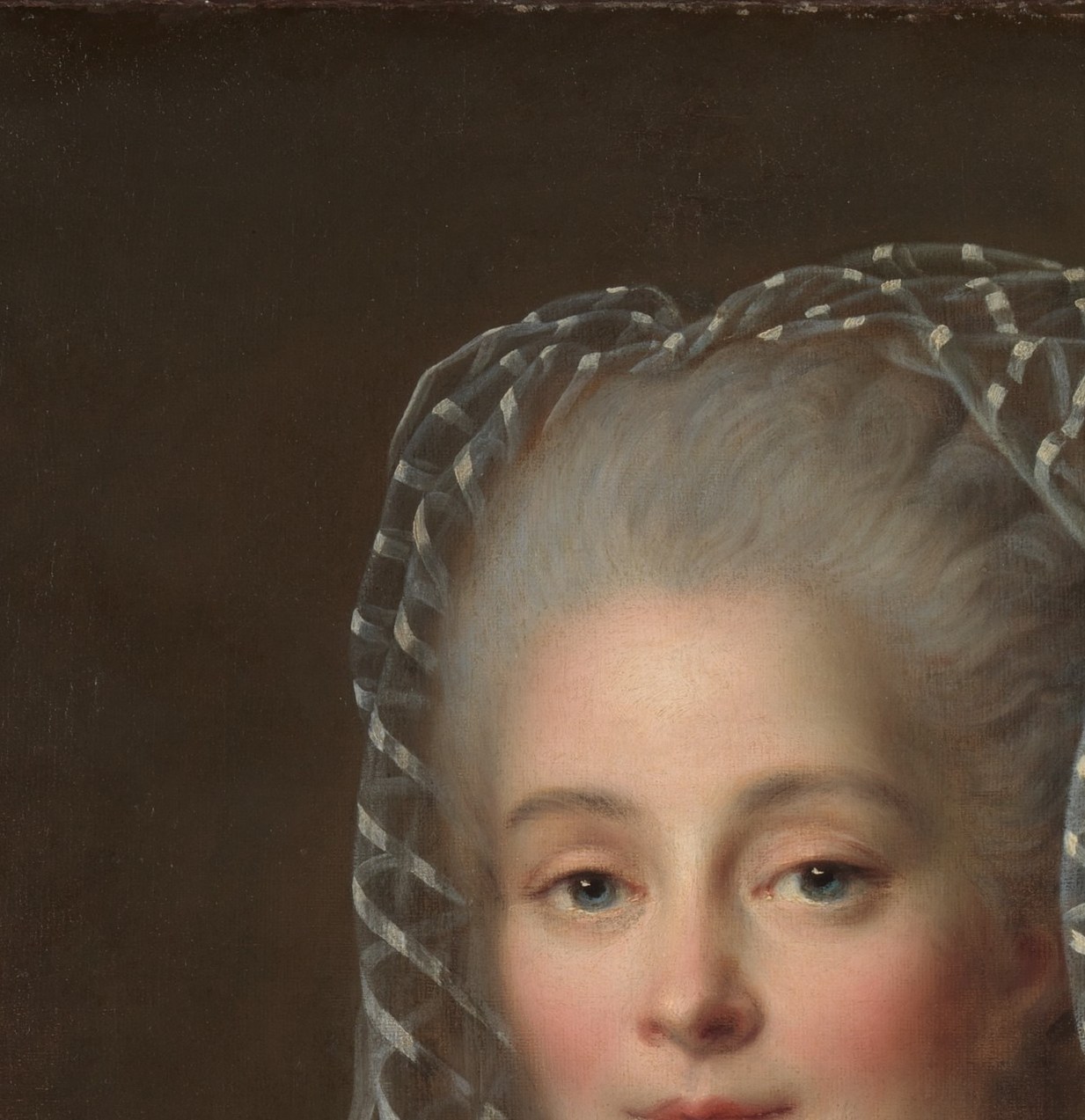
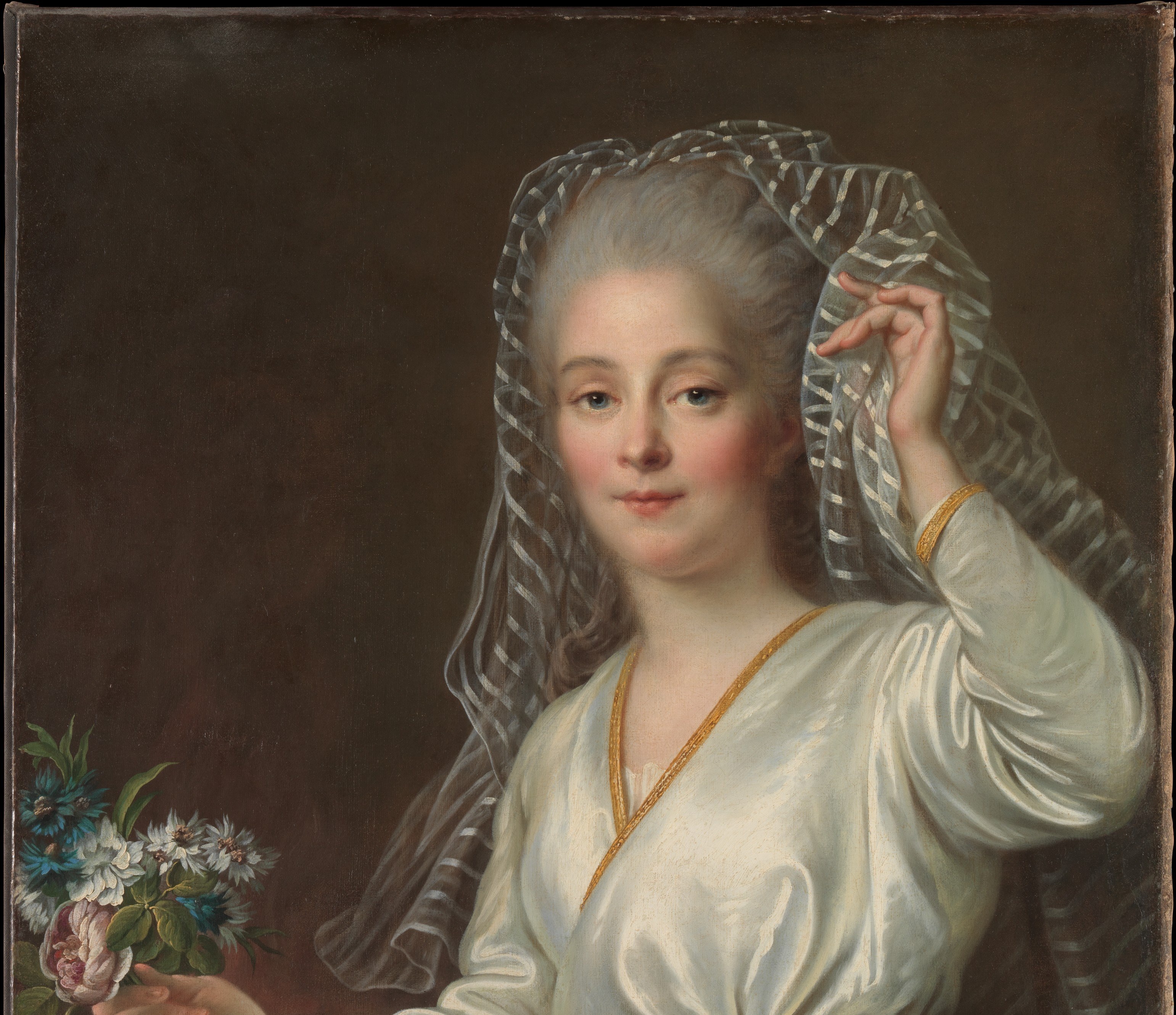
This is François-Hubert Drouais's 'Portrait of a Young Woman as a Vestal Virgin', painted in 1767. It hangs in an era when the French aristocracy had a serious taste for dressing up as figures from classical antiquity, and Drouais was the leading portraitist for exactly this kind of fashionable role-play at the court of Louis XV.
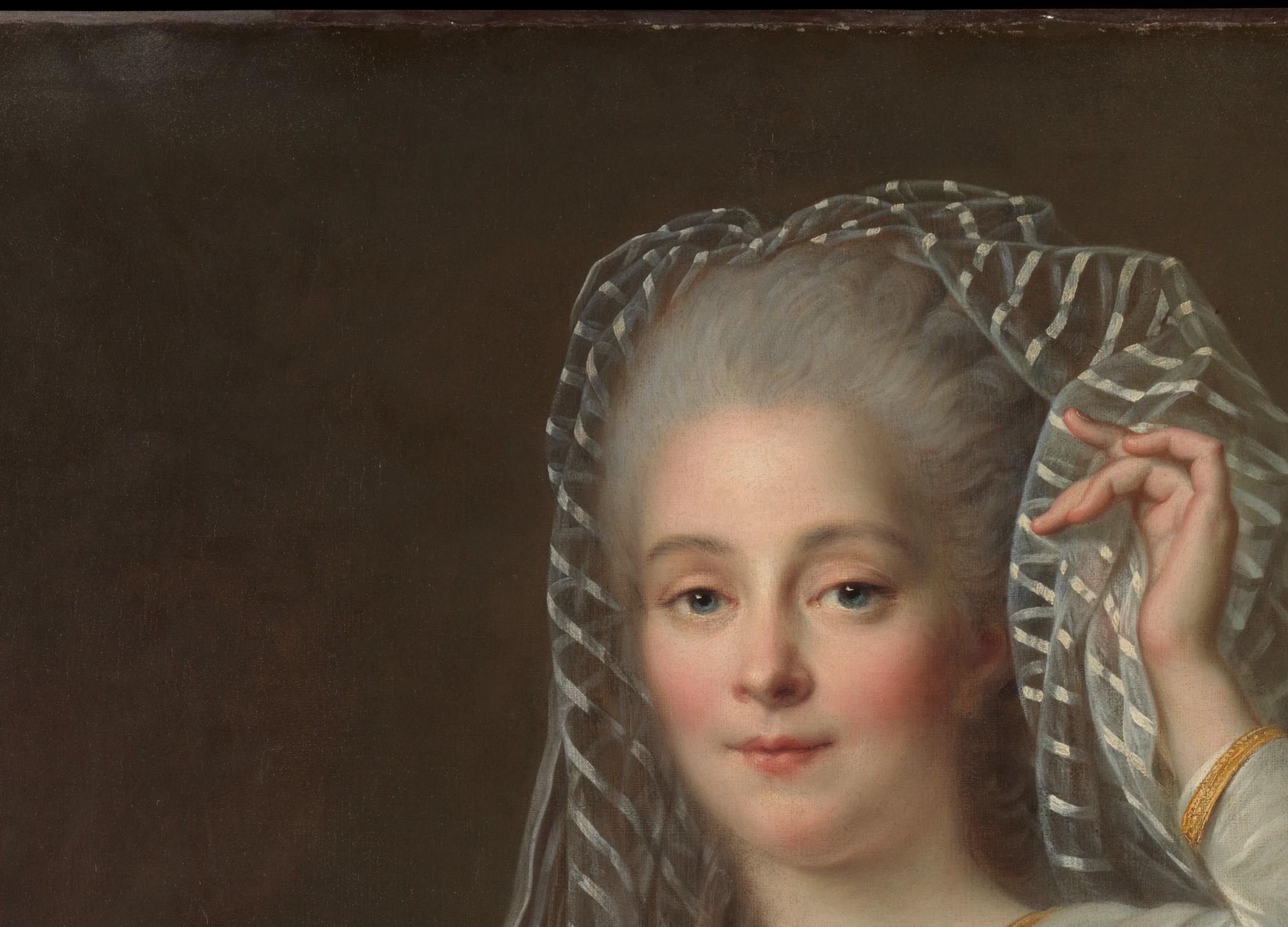
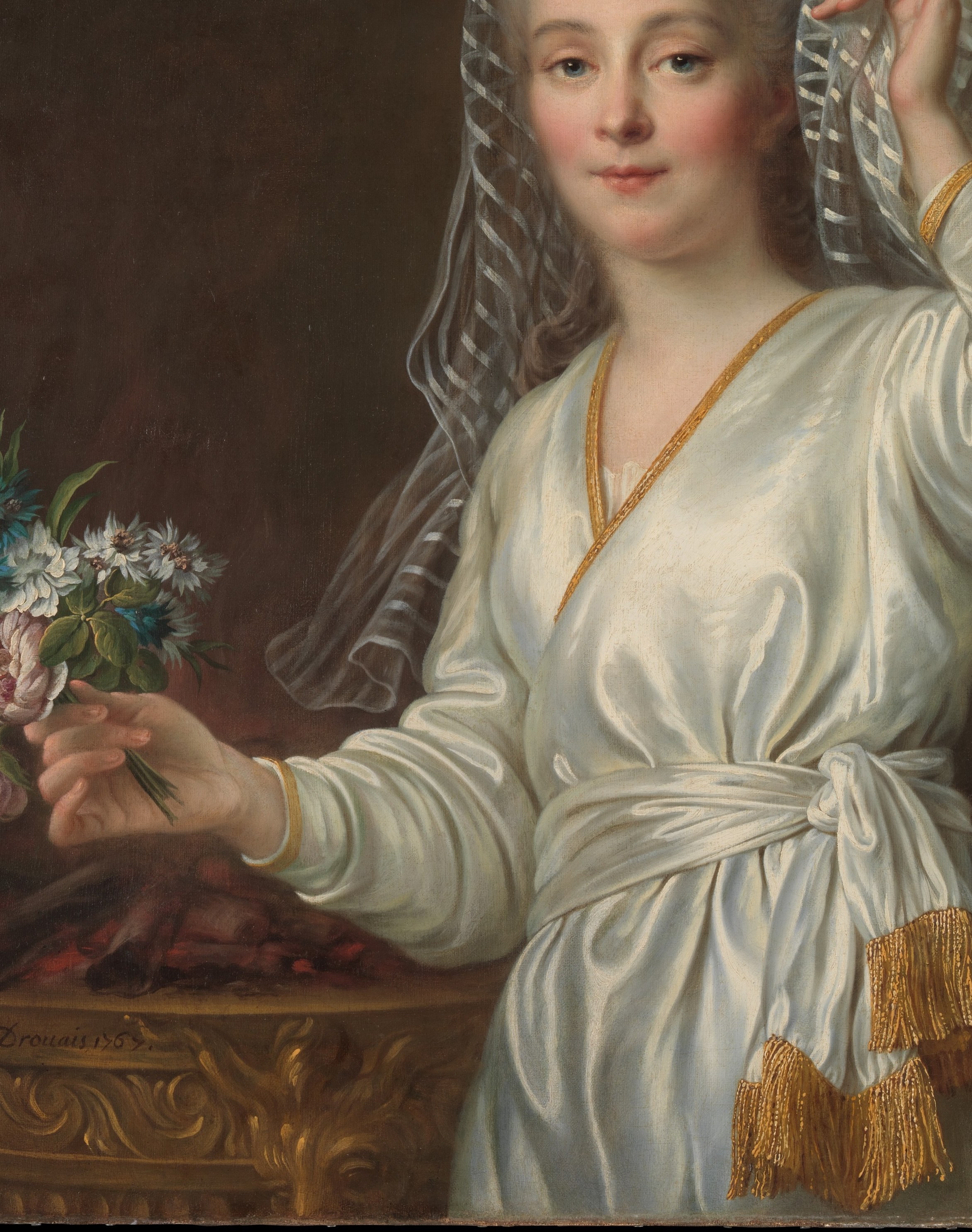
Look closely at the props. The white gown, the lifted veil, and the bouquet of flowers are not random pretty details; they are a complete symbolic language borrowed from the cult of Vesta. The white gown signals chastity, the veil is a sacred object only a priestess could handle, and the flowers are an offering to the goddess of the hearth. The books on the table add a layer of intellectual virtue, insisting the sitter is serious-minded.
The costume is a near-perfect illusion until you notice the gold chain around her neck. No Roman priestess ever wore anything like it. That single anachronism is a deliberate tell, a piece of modern luxury that anchors the painting firmly in 18th-century Paris. The sitter is not pretending to actually be Roman; she is displaying her learning, her taste, and her moral character through a theatrical code everyone in her circle would have understood.
Drouais was a master of this kind of elite image-making, and his popularity at court made his portraits a fashionable necessity. This is less a portrait of a person and more a portrait of a woman's public argument for her own virtue. What prop do you think the sitter herself chose?
#arthistory #frenchart #portraitpainting
Details

Transcript
She is dressed as a priestess of ancient Rome. The white gown. In the cult of Vesta, this meant chastity. She lifts a veil, a sacred object only a Vestal could touch. The flowers she holds are a direct offering to the goddess of the hearth. And the books behind her insist she is morally serious, not merely decorative. This is a noblewoman commissioning an argument for her own virtue. One piece of jewelry gives the game away. A gold chain, entirely modern. No Roman priestess ever wore it.