Saint Margaret of Cortona by Gaspare Traversi
View the artwork: Saint Margaret of Cortona →
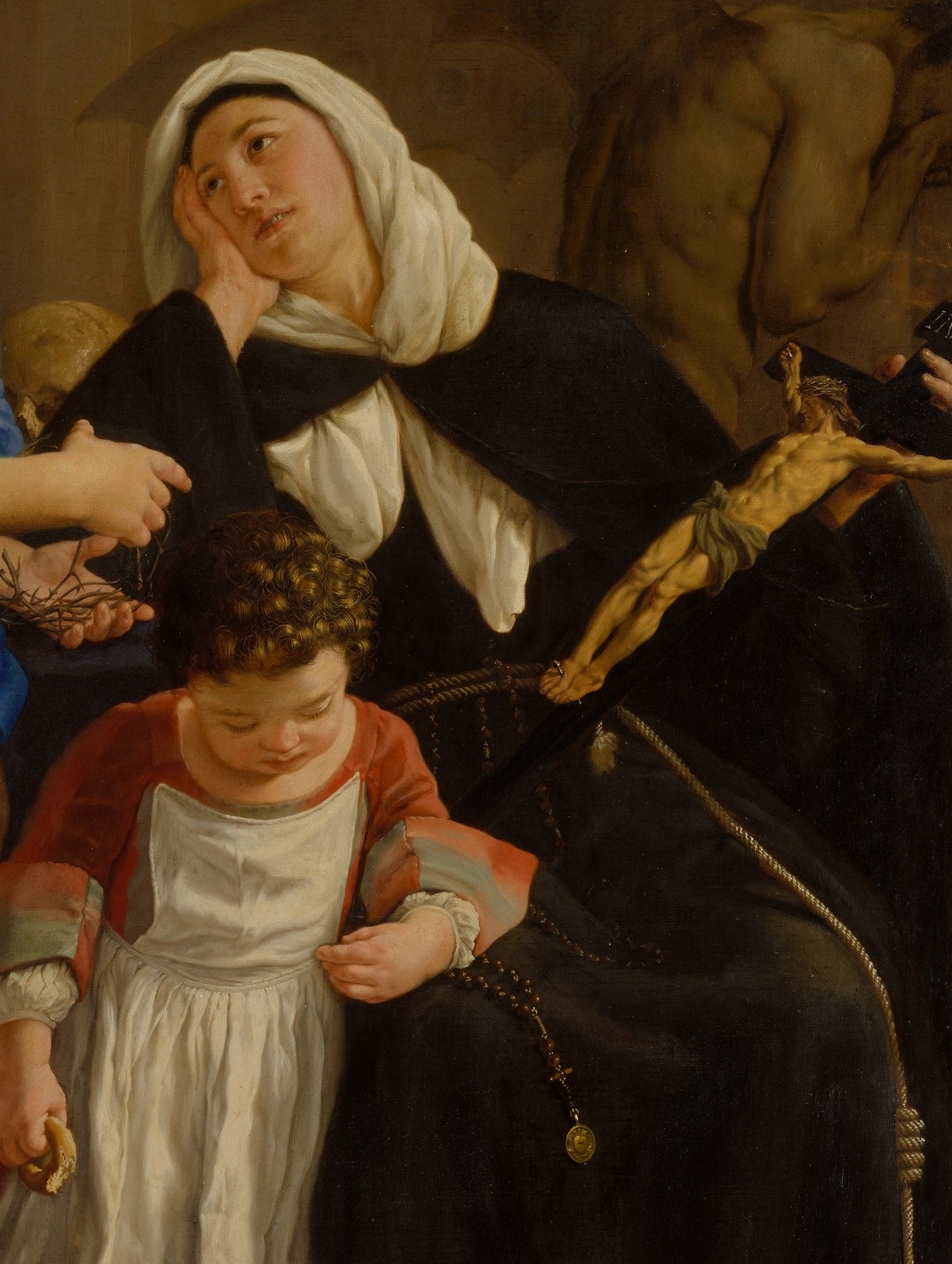
Gaspare Traversi's "Saint Margaret of Cortona," painted around 1758, pulls a private moment of conversion into the open. The artist is better known for his satirical genre scenes of Neapolitan life, but here he turns to a saint whose story was raw, local, and still uncomfortably human.
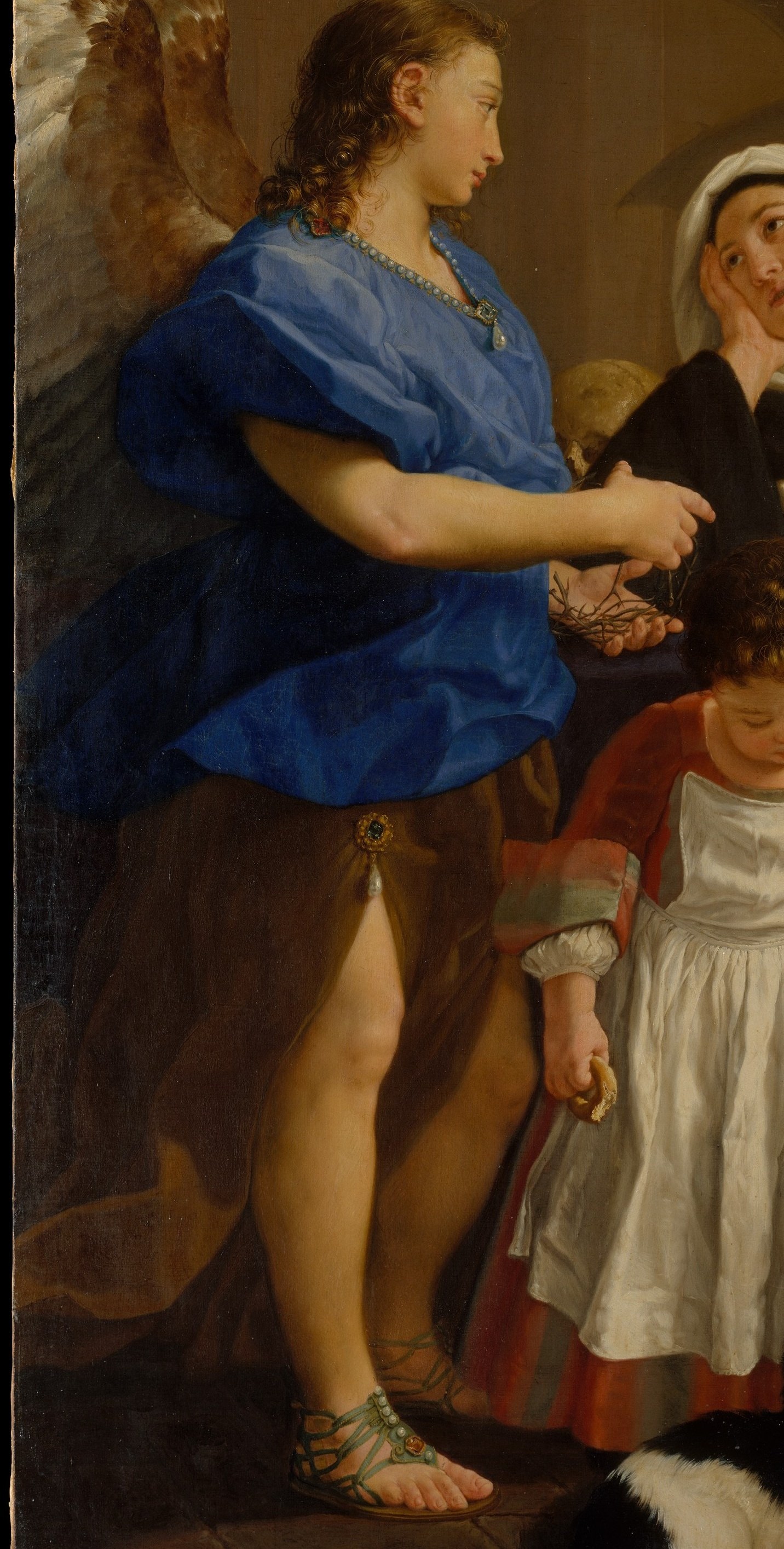
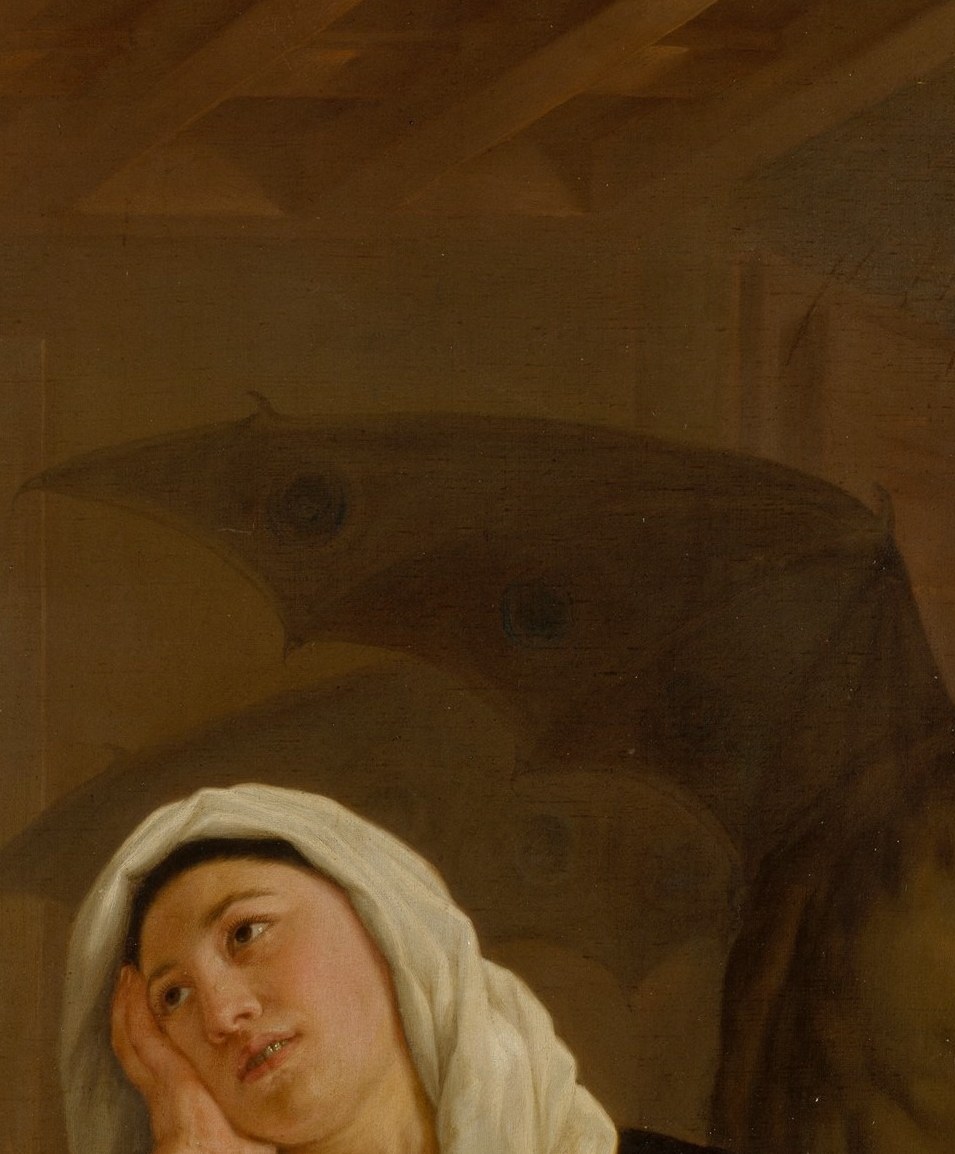
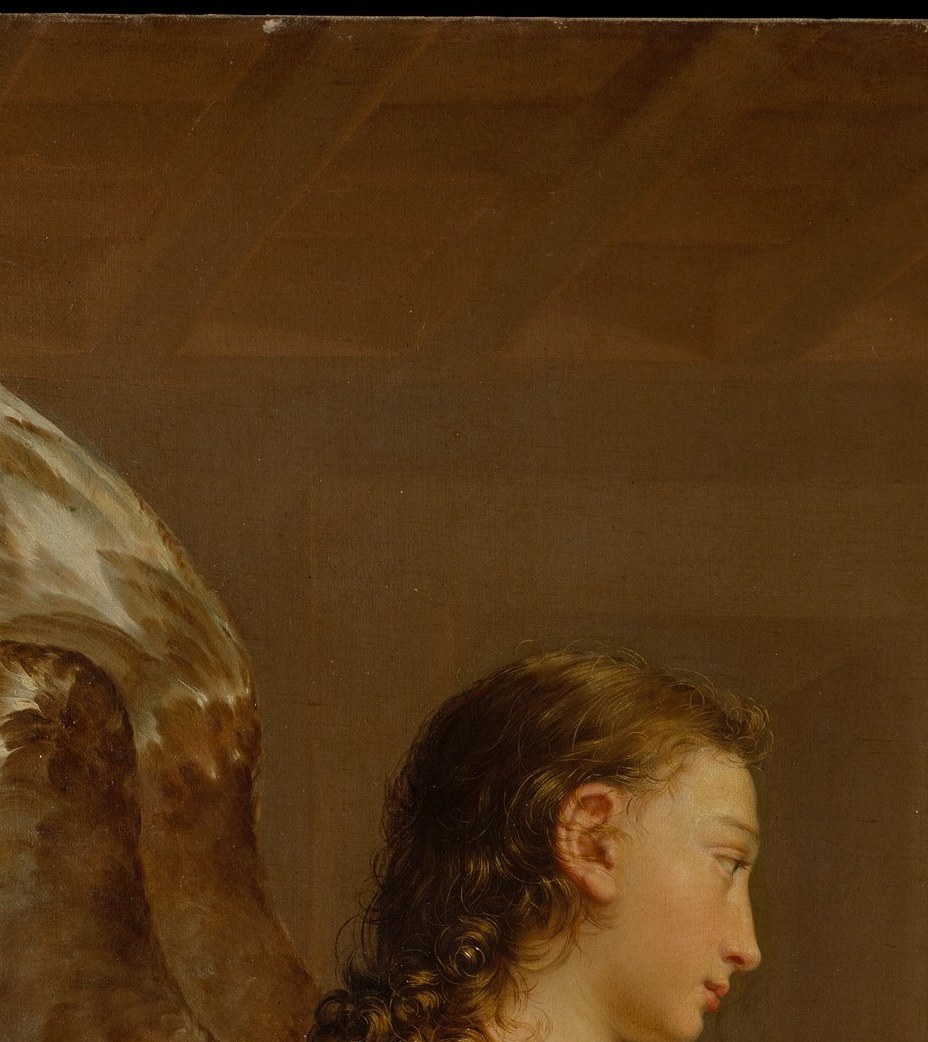
Look at the contrast between the two faces. Margaret looks upward with a pained rapture, her expression suspended between grief and surrender. The angel bending toward her carries none of the distant formality you expect in Baroque religious painting. Traversi gives the angel an almost startling tenderness, a warm and intimate face that meets her anguish directly.
The small dog at the lower right is the narrative key. Margaret of Cortona was the mistress of a Tuscan nobleman. When her lover was murdered, his dog led her to his body. That discovery broke her former life apart. She entered a Franciscan order, devoted herself to penitence, and was eventually canonized. Her illegitimate son, possibly represented by the child kneeling at her feet, entered the order with her.
Traversi stages this not as a distant miracle but as a quiet human encounter. The painting's whole theology lives in the space between her anguished face and the angel's gentle one.
#arthistory #italianbaroque #gasparatraversi
Details
Transcript
She was a mistress, a mother, and a scandal. Now look at her face. She is somewhere else. The angel bends toward her with startling warmth. This is not a remote divine being. It is a friend. Her dog found the body of her murdered lover. That moment shattered her life and rebuilt it as a saint's. His hand reaches to crown, bless, or unbind her. Seventeen fifty-eight. A Neapolitan painter saw only grace.