Lady Lee (Margaret Wyatt, born about 1509) by http://www.wikidata.org/.well-known/genid/b5aa8f782fc3735633e0639811d9deb6

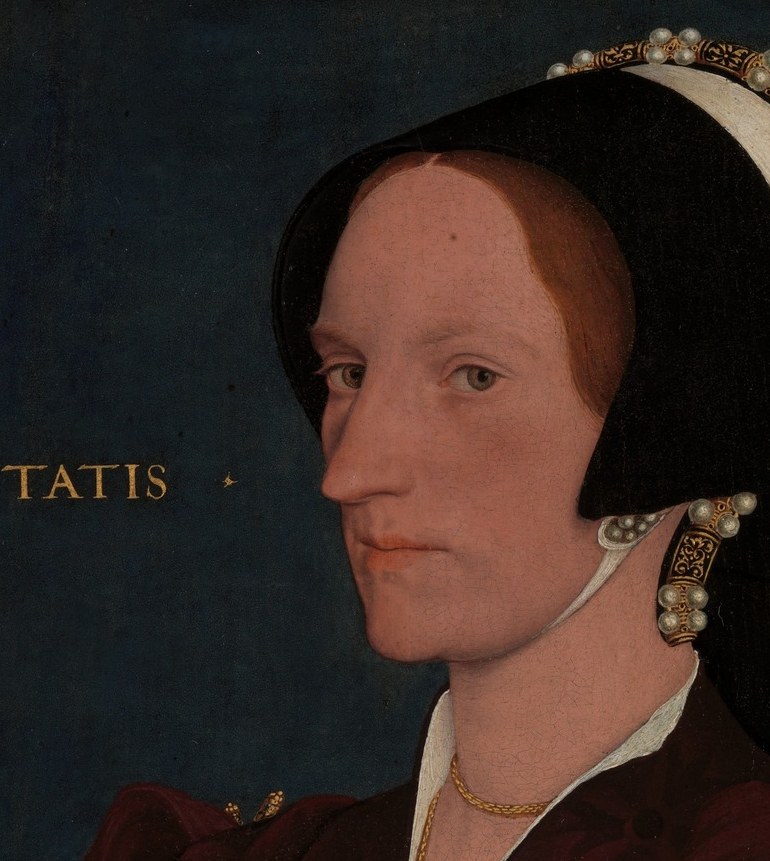
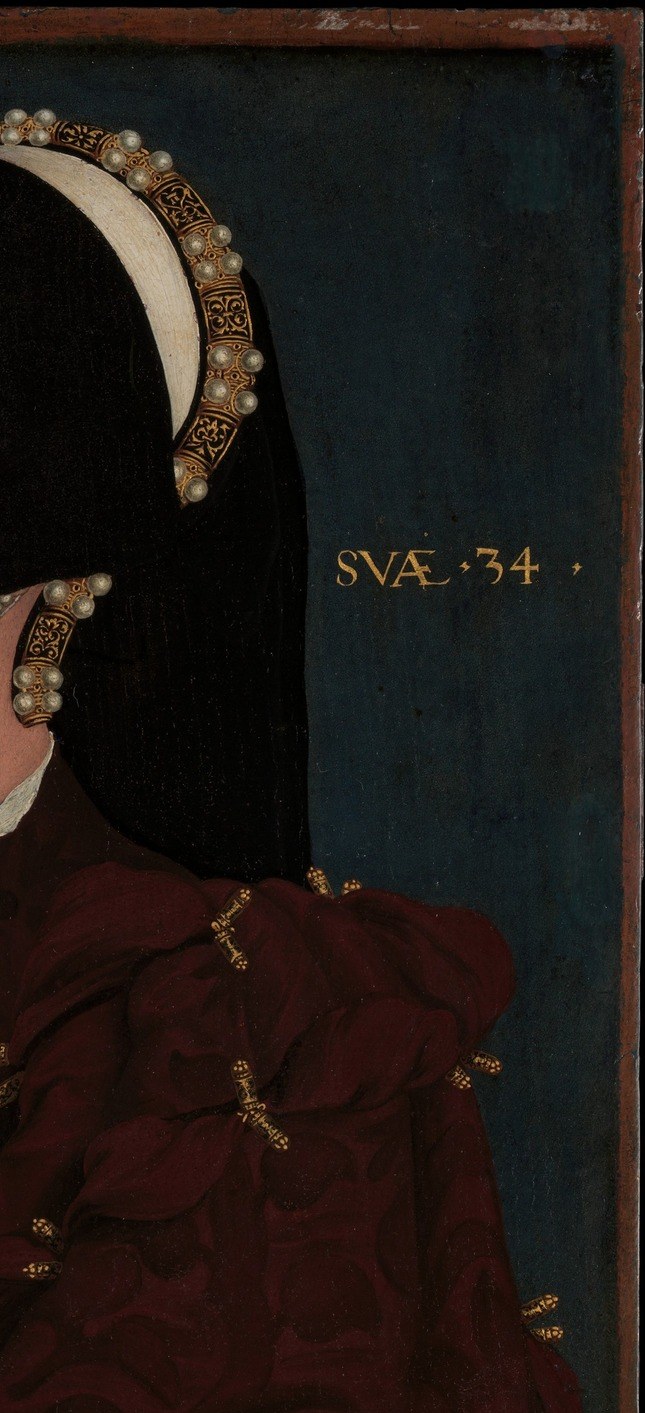
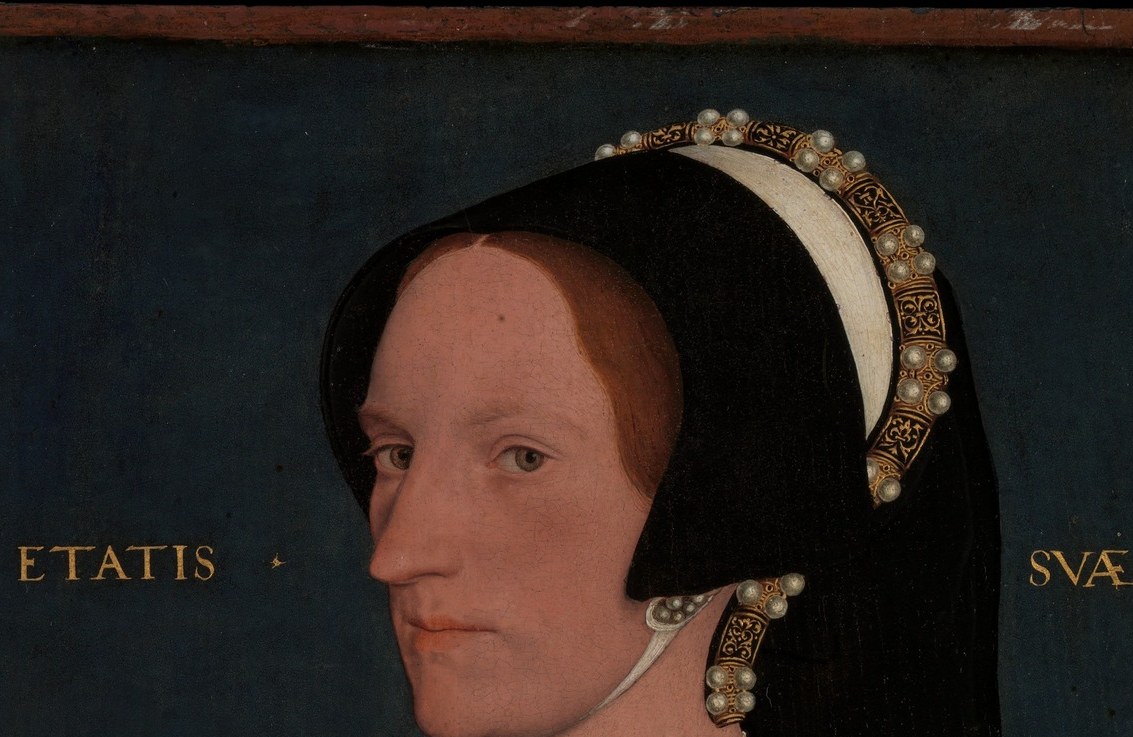
This is "Lady Lee," a portrait of Margaret Wyatt, painted around 1543 in the workshop of Hans Holbein the Younger. She was the sister of the famous Tudor poet Thomas Wyatt, and the gold inscription flanking her head tells us she was 34 years old when she sat for this, the exact year her brother died.

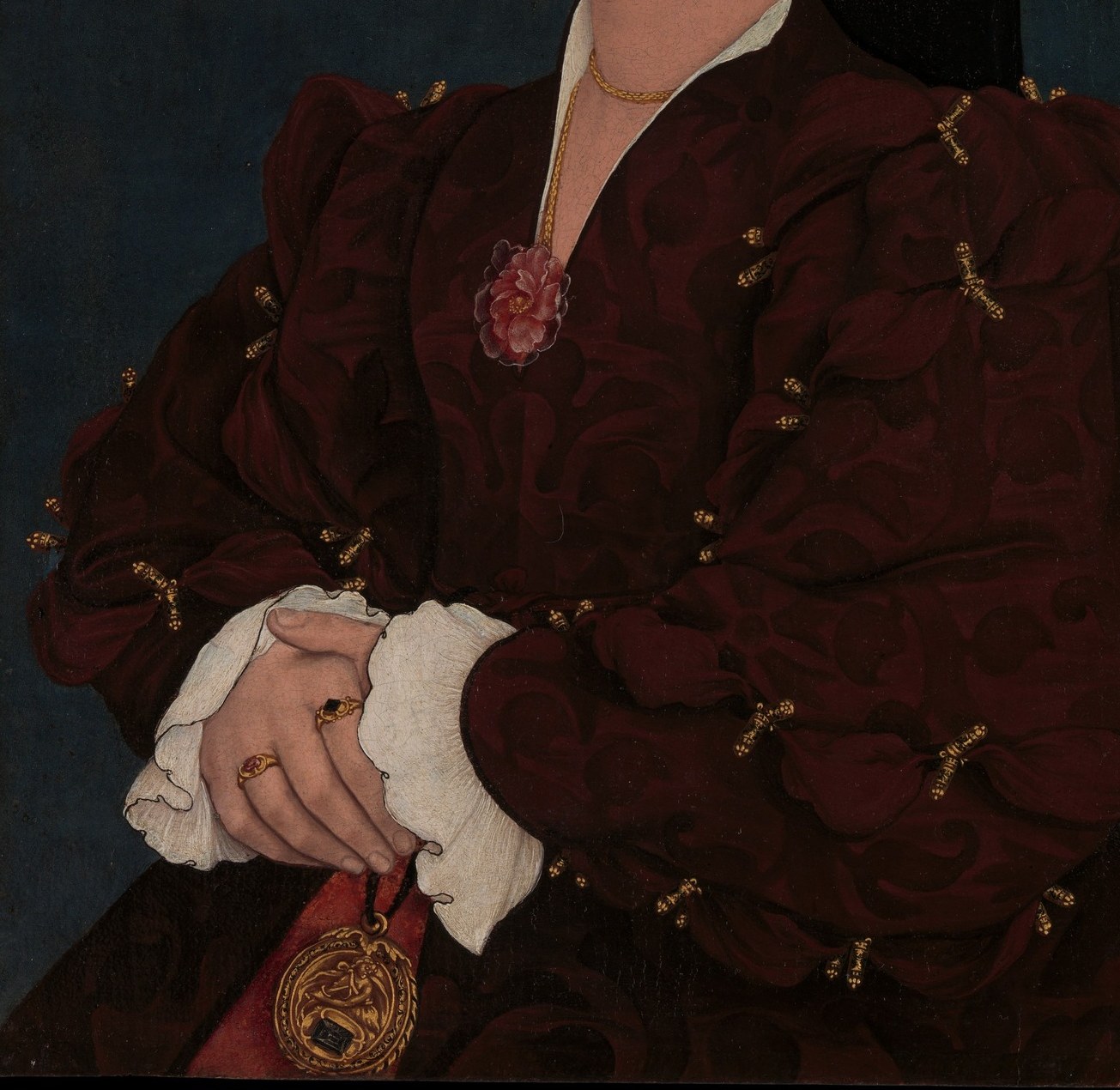
Look first at her headdress. It's a gable hood, an architectural, tent-like style that was already being replaced at court by the softer French hood. By wearing it, Margaret was making a deliberate, visible choice to identify with conservative English traditions. Then look at her hands. The jeweled pendant she holds wasn't a casual accessory. In Tudor portraiture, objects in the hands always carried meaning, a sign of piety, a mark of royal favor, or a personal emblem.

Margaret Wyatt married Sir Anthony Lee and moved through the highest circles of Henry VIII's court. The painting comes from Holbein's workshop rather than his own hand, which means it was likely produced shortly after the artist's death by assistants who had access to his preparatory drawings.

The deep blue background and the light-absorbing crimson velvet are doing something specific: they strip away every distraction, forcing you to reckon with her face and what she chose to wear for posterity, the clothing of a woman who had survived the storms of the Tudor court and wanted you to know it.

#arthistory #tudor #holbein

Details
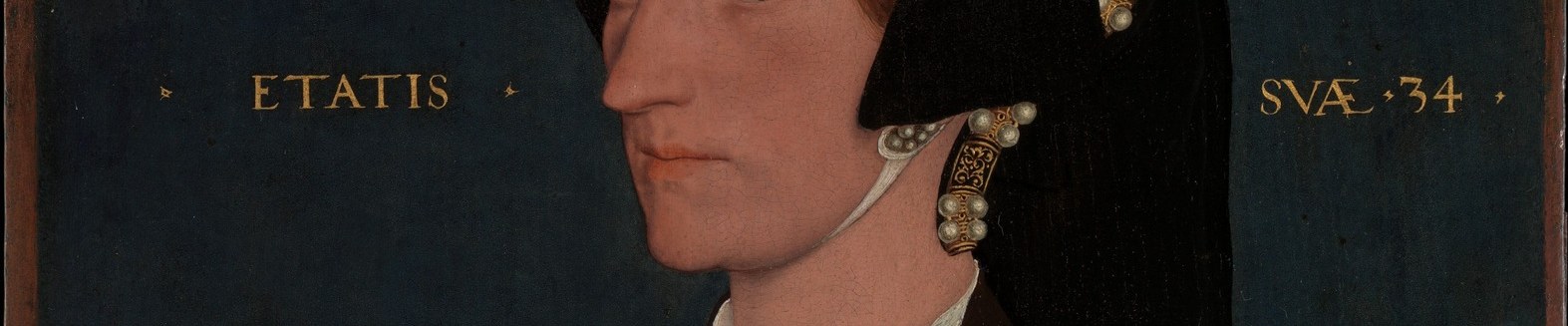
Painted directly onto the background like a caption, this inscription locks the sitter at age 34 (circa 1543) , the same year her famous brother poet Thomas Wyatt died; it is biography encoded into paint
The primary expressive center , composed and watchful, the three-quarter pose was the prestige position in Holbein-era court portraiture; her gaze suggests self-possession rather than submission to the painter
The unmodulated background , likely azurite or smalt , is itself a painter's decision: total suppression of setting to force attention onto the figure; edge inspection here might reveal ground texture or the contour of an underdrawing
By 1540 gable hoods were already going out of fashion, replaced by the French hood , wearing one here is a statement of conservative, established Englishness and resistance to continental trends
Crimson velvet was among the most expensive fabrics of the period; the light-absorbing red creates a grave, weighty presence while the subtle surface highlights demonstrate the painter's command of tonal modulation in dark hues
Transcript

A woman in black, crimson, and gold. Margaret Wyatt. Sister of the poet Thomas Wyatt. Look above her. The inscription says she is 34. That same year, 1543, her brother died. And that hood? It was already out of fashion. Margaret chose it anyway. A statement of old English loyalty. Her hands hold a jewel. A gift, or a mark of status. A portrait of a woman who knew exactly who she was.