The Triumph of the Winter Queen: Allegory of the Just by Gerard van Honthorst
View the artwork: The Triumph of the Winter Queen: Allegory of the Just →
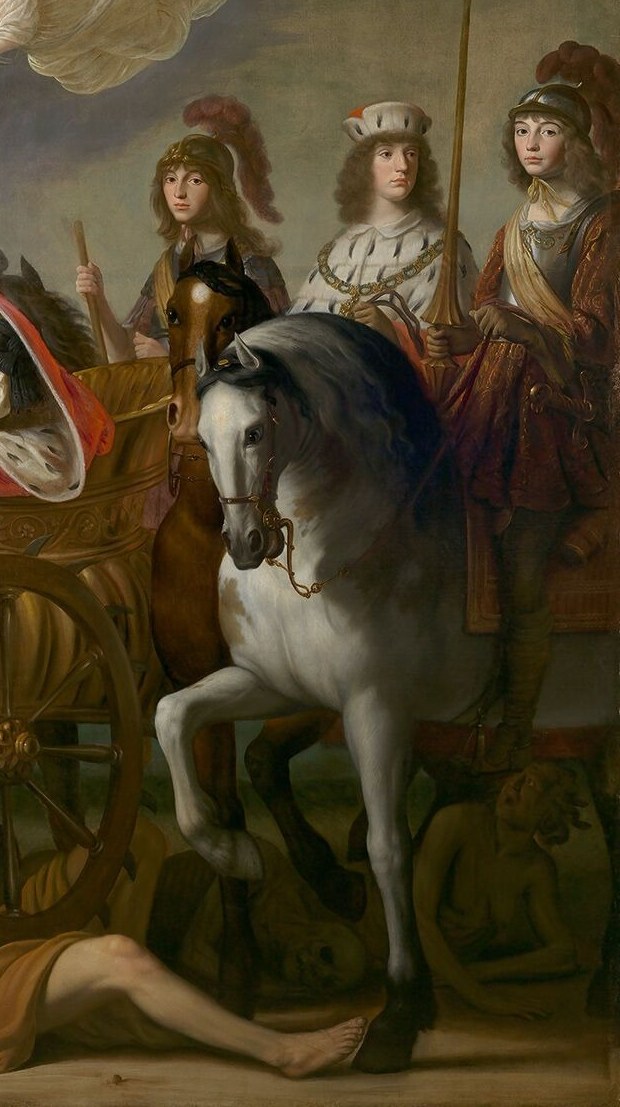
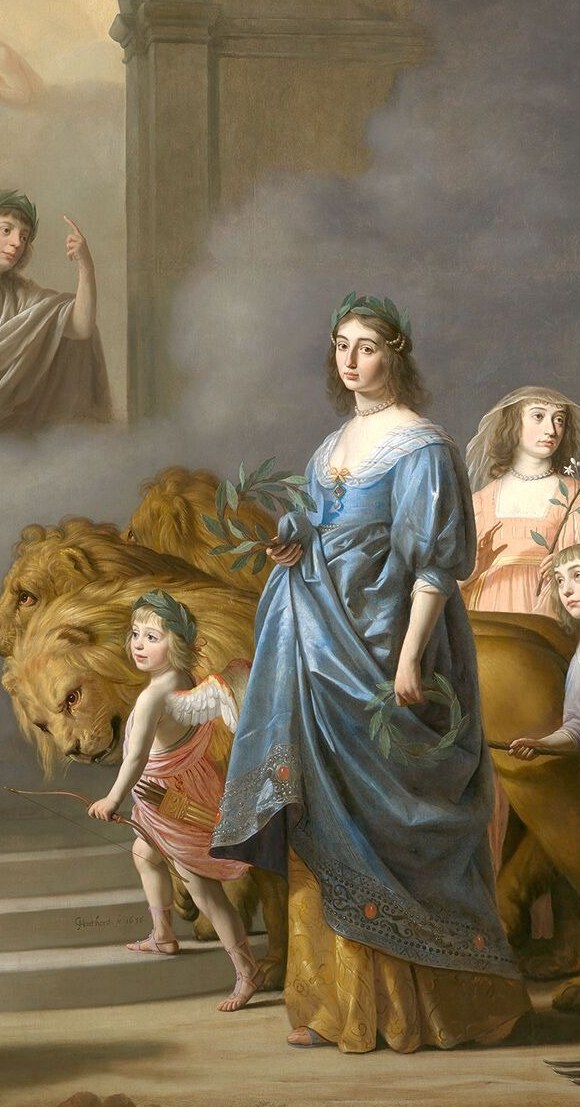
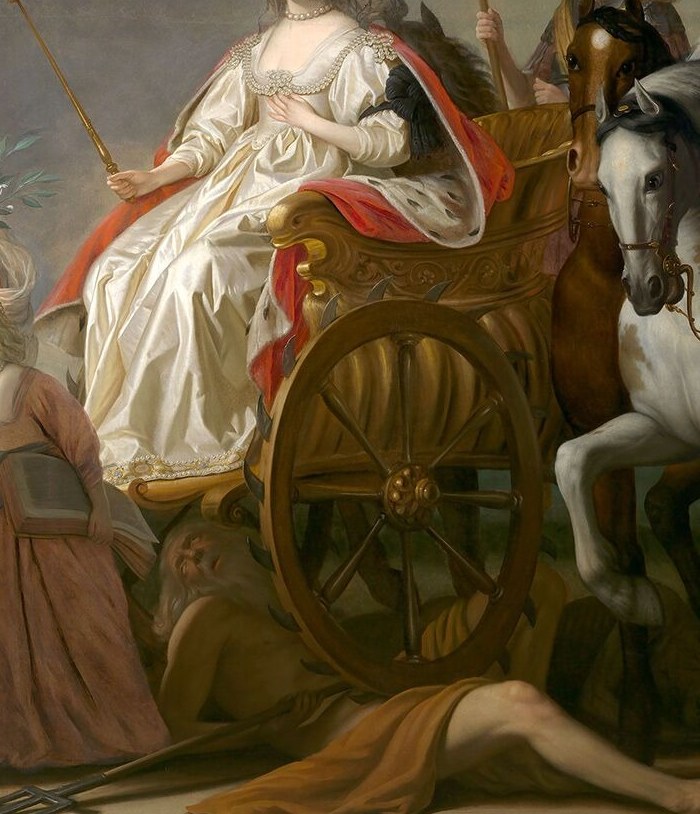
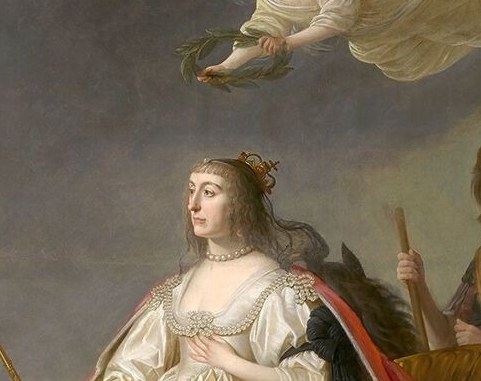
This is The Triumph of the Winter Queen: Allegory of the Just, painted in 1636 by the Dutch master Gerard van Honthorst. It is a political manifesto in oil paint, designed to argue that Elizabeth Stuart, the so-called Winter Queen, was robbed of a throne that God himself intended for her. The painting lives at the Staatsgalerie Stuttgart.
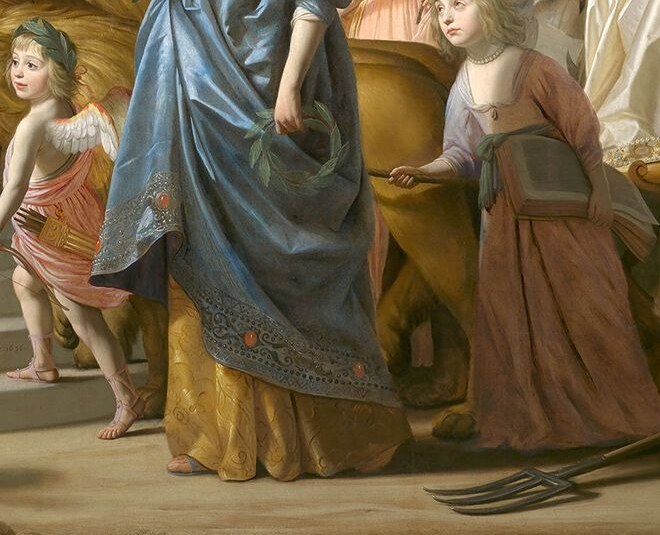
Look at the angel descending from the upper left. The crown hovers in mid-air, suspended between heaven and the queen awaiting it below. That gap is the entire argument: the crown is divinely offered but politically withheld. At her feet, a child gestures fearlessly at a lion, a direct quotation from the prophecy of Isaiah. Van Honthorst is telling us her rule would bring the peaceable kingdom.
Elizabeth Stuart was the daughter of England’s James I. In 1619 her husband Frederick was offered, and accepted, the throne of Bohemia. Their reign lasted just one winter. Driven out by Catholic Hapsburg forces, they fled into lifelong exile, becoming the great Protestant cause célèbre of the age. This painting was made in The Hague nearly two decades later, a sustained act of visual propaganda insisting her claim had not faded.
In December 2020, the painting itself became a headline again. Two men walked into the gallery at Schloss Friedenstein in Gotha, Germany, where it was on loan, and simply walked out with it. It vanished for over a year before police recovered it in a Stuttgart basement in 2022. It seems the Winter Queen has not yet run out of drama.
#arthistory #dutchgoldenage #vanhonthorst
Details
Transcript
They called her the Winter Queen. Her reign in Bohemia lasted a single winter before she fled. In exile, she commissioned this painting to argue she was wronged. An angel descends with a crown. That crown was never placed on her head. The children and the lion claim a biblical peace only a just ruler can bring. Nearly 400 years later, the painting itself was stolen. Thieves walked it out of a German gallery in broad daylight. It was missing for over a year before a tip led police to its hiding place.