The Presentation of Christ in the Temple by Giovanni di Paolo

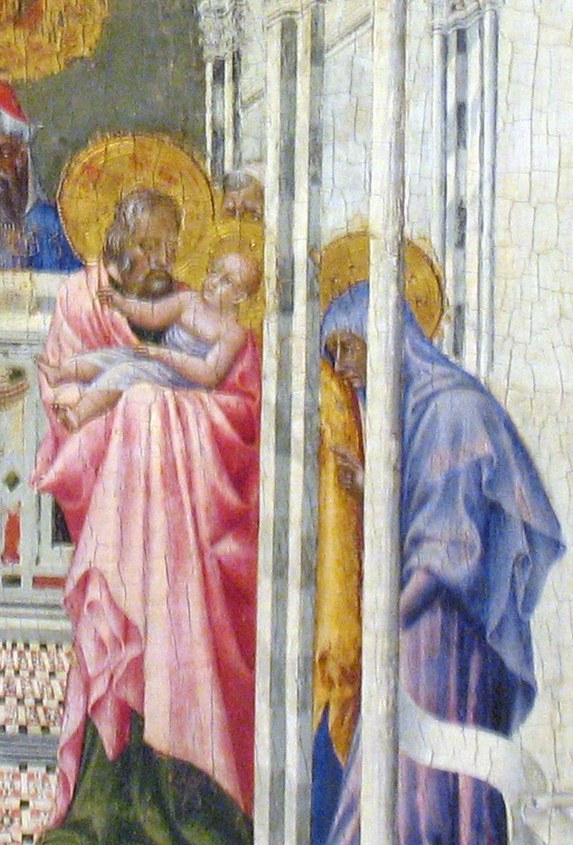
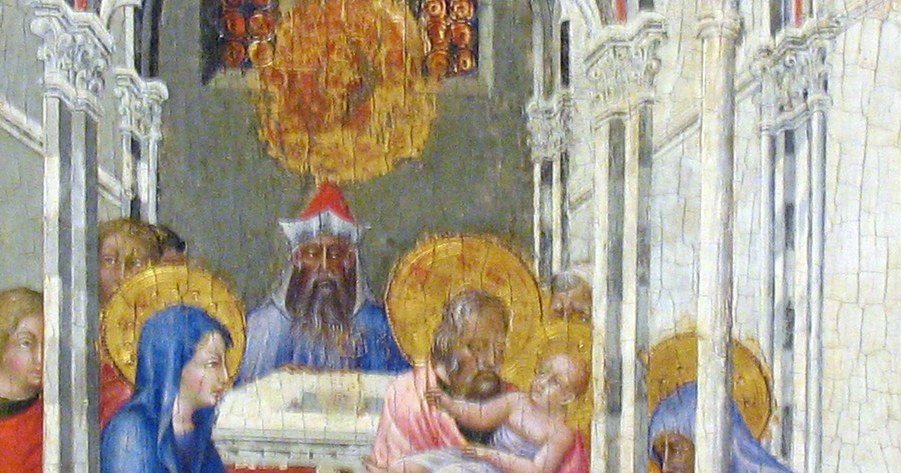
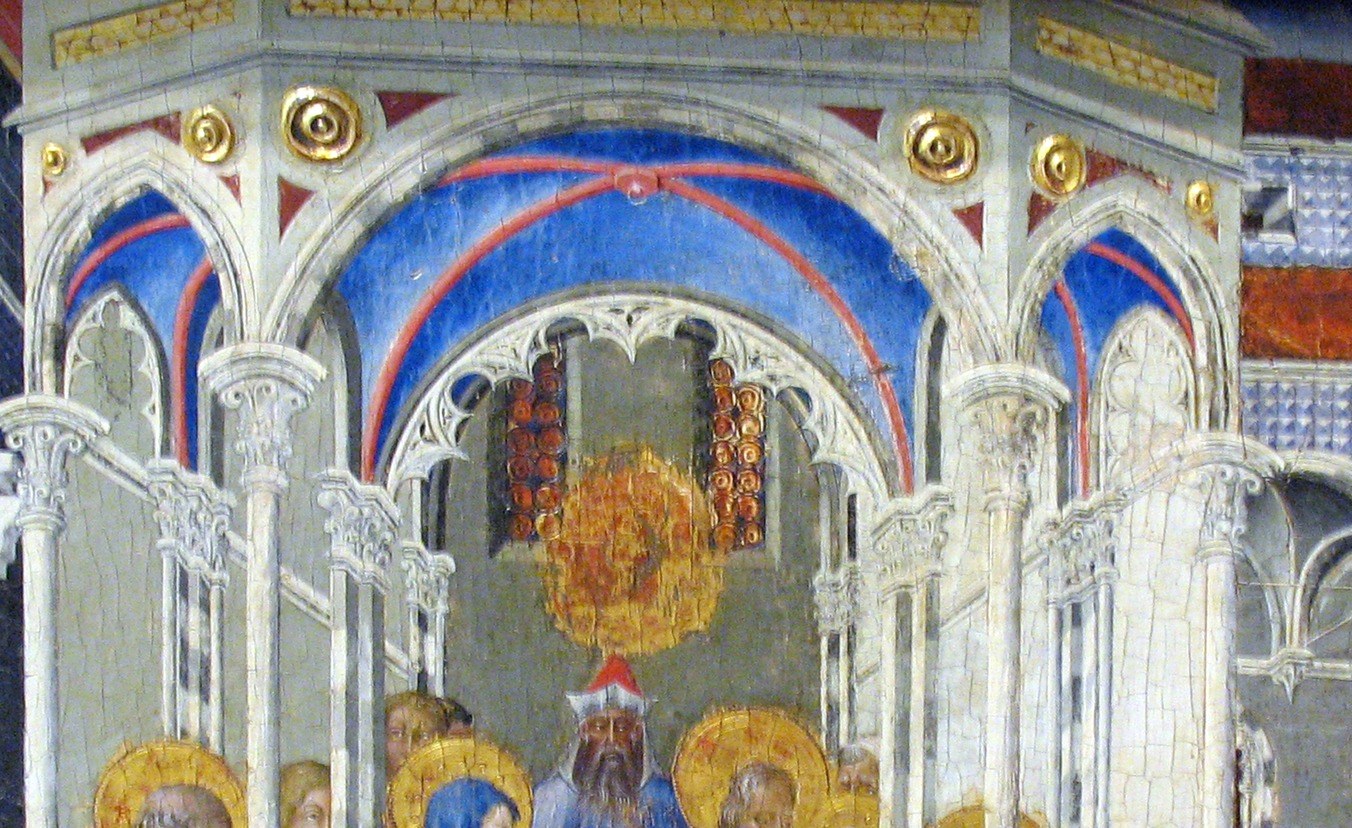
This is Giovanni di Paolo's The Presentation of Christ in the Temple, painted around 1435. He was one of the great dreamers of the Sienese school, and his version of Jerusalem looks a lot like a fantastical Siena. The temple here is a Gothic-Romanesque hybrid built from gold, blue, and red arches that never existed in the ancient world.

Look first at the floor. The intricate geometric tilework mirrors the real mosaic pavements of Siena's own cathedral. Then look at the right margin. Crouched beneath the ceremony is a barefoot man in rags, a detail most viewers scroll straight past. His presence opens a small window onto the social world outside the sacred event.

Di Paolo was known for elongated figures and a dreamlike touch that fell out of fashion after his death but was rediscovered in the 20th century. The crouching man is one of those quiet choices that makes a painting live long after its biblical moment has passed.

What else do you notice hiding at the edges of this scene?

#arthistory #sienesepainting #renaissanceart

Details
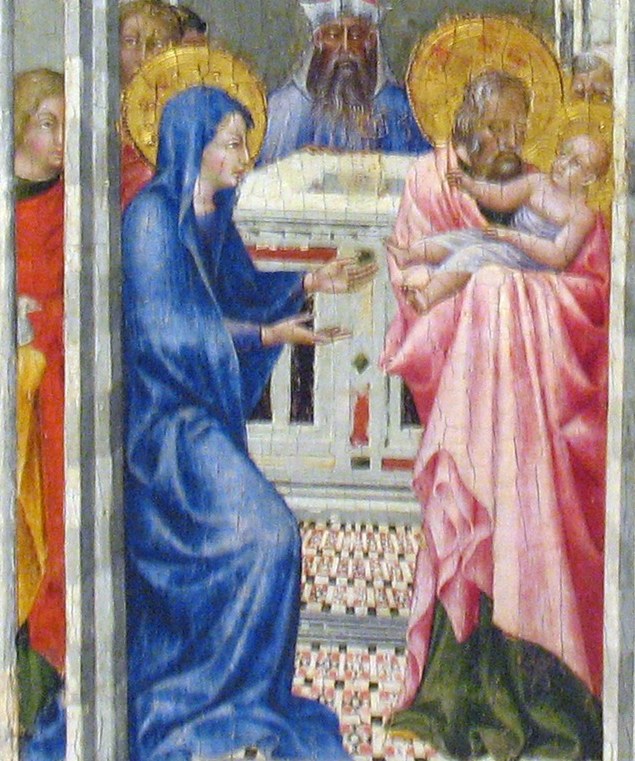
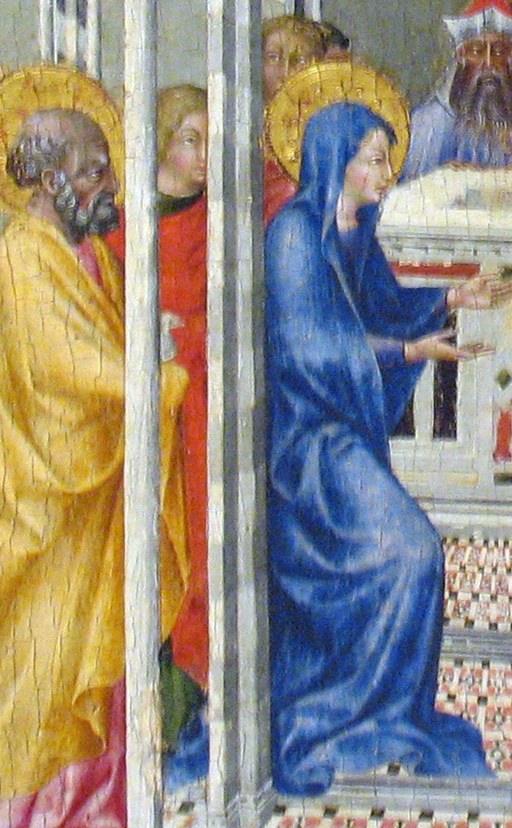
The pivot of the whole composition , her forward inclination and outstretched arms channel every gaze toward the altar moment of consecration.
His luminous halo and aged posture embody prophetic recognition , this is the man who declared 'Now dismiss thy servant in peace,' making him the theological hinge of the scene.
His warm ochre mantle contrasts with Mary's blue, creating a chromatic pairing that Renaissance viewers would read as conjugal unity flanking the sacred act.
The overlapping halos create a nested golden crown effect at the compositional apex , a technique Giovanni di Paolo uses to unify the sacred persons into a single radiant form.
The interlocking arches in blue, red and gold create a fantasy Gothic-Romanesque hybrid that has nothing to do with Jerusalem , it is Giovanni di Paolo imagining the Temple through a Sienese cathedral lens.
Transcript

They look like a holy family in an ancient temple. But this is not Jerusalem. It is a dream of his own city. Siena's cathedral has a floor like this. He painted it tile by tile. Now look to the right. Beneath the ceremony. A barefoot man crouches. A poor man, watching a sacred moment. Giovanni di Paolo put him there. A reminder of who was outside.