Landscape with a Church by a Torrent by Jacob van Ruisdael
View the artwork: Landscape with a Church by a Torrent →
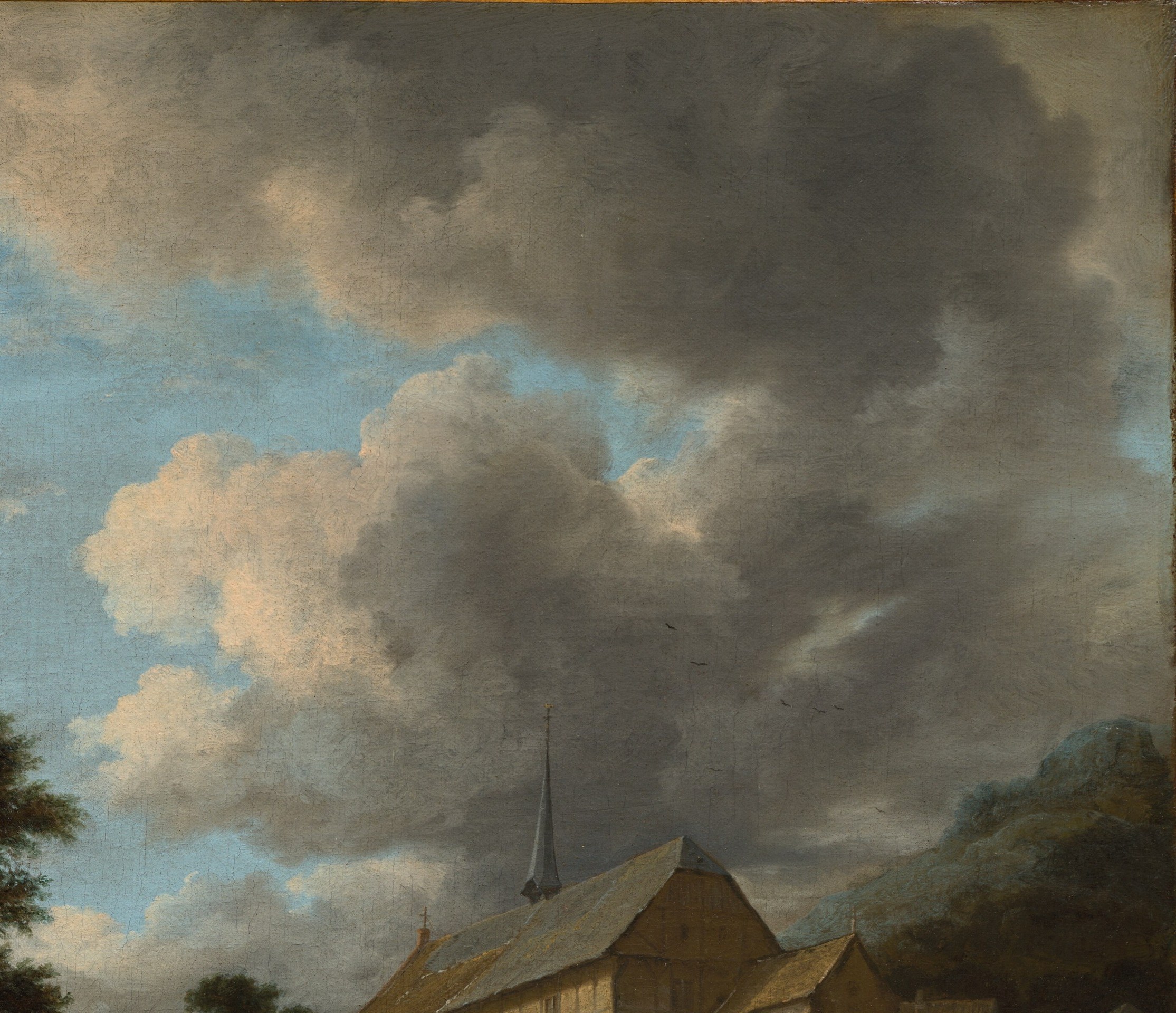
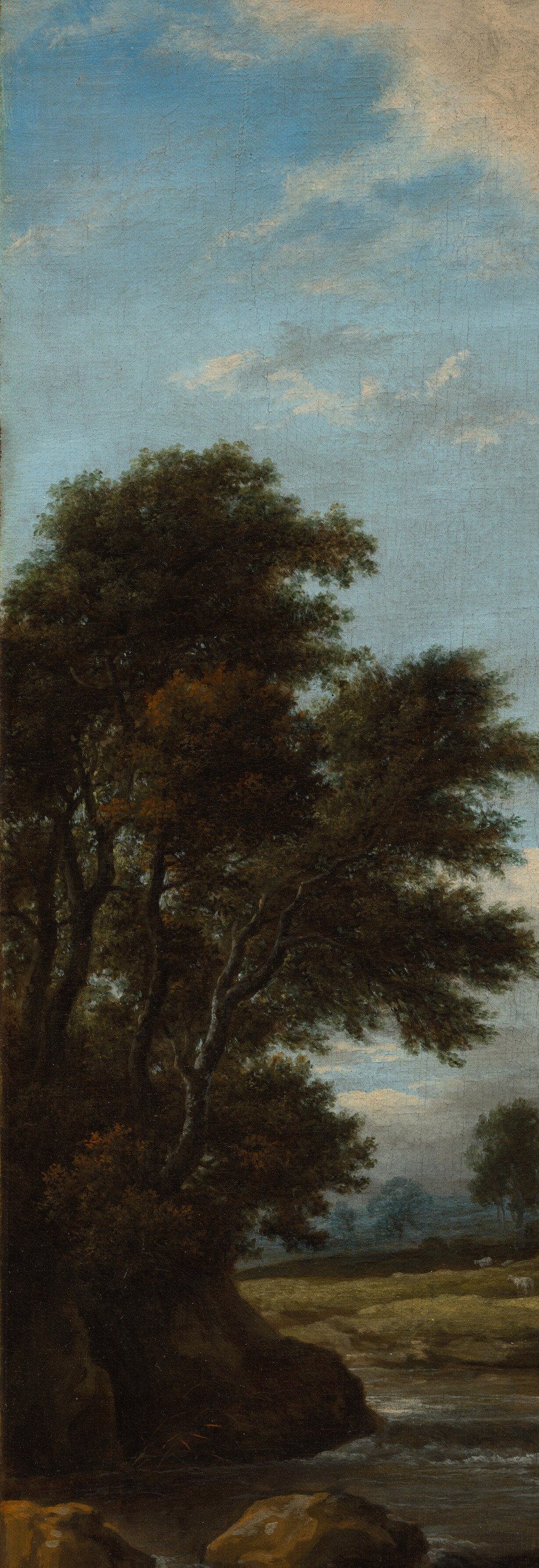
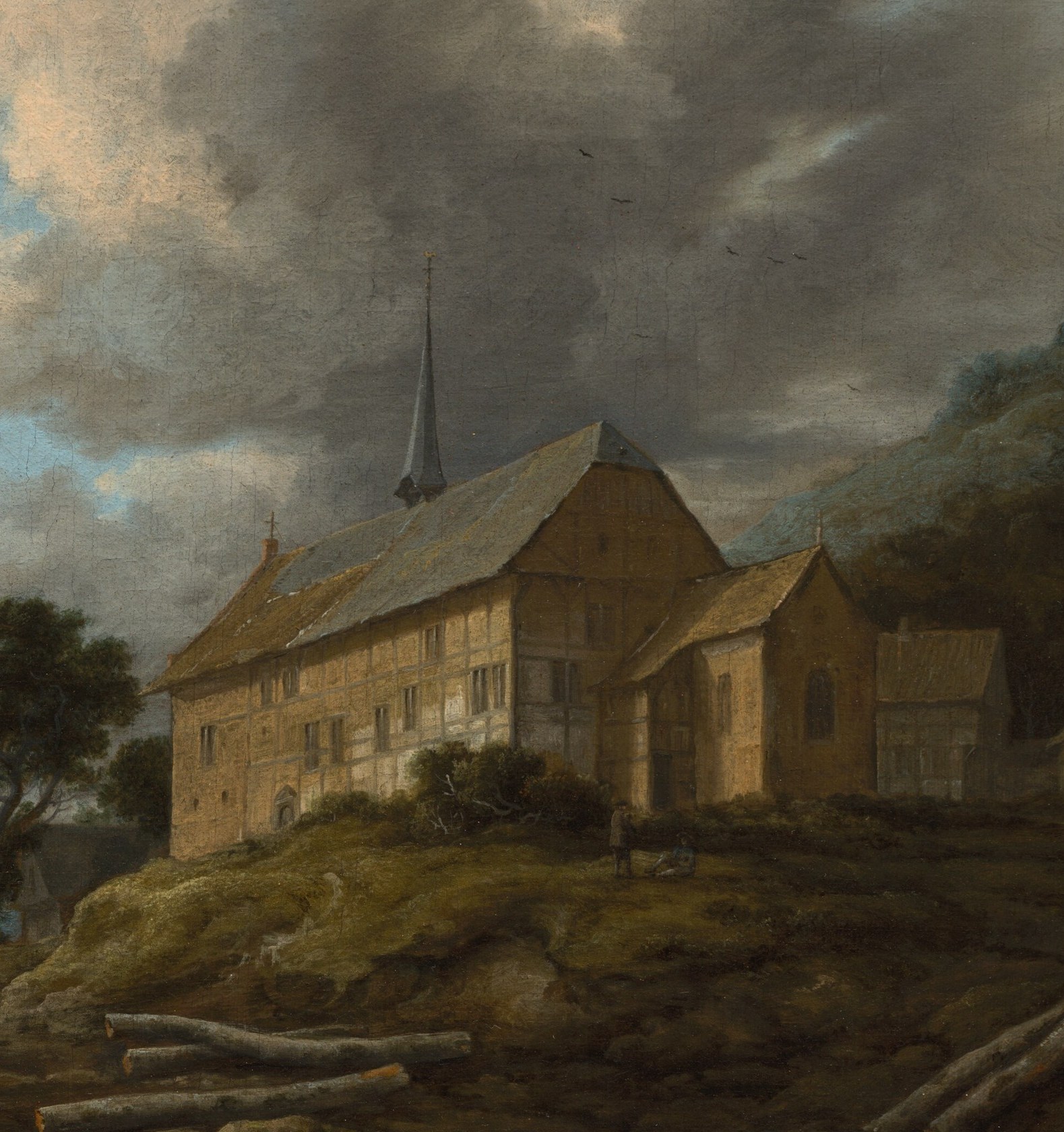
This is Jacob van Ruisdael's "Landscape with a Church by a Torrent," painted around 1670. Ruisdael is the pre-eminent landscape painter of the Dutch Golden Age, and this canvas is a masterclass in how to make still pigments feel like fast, cold, dangerous water.
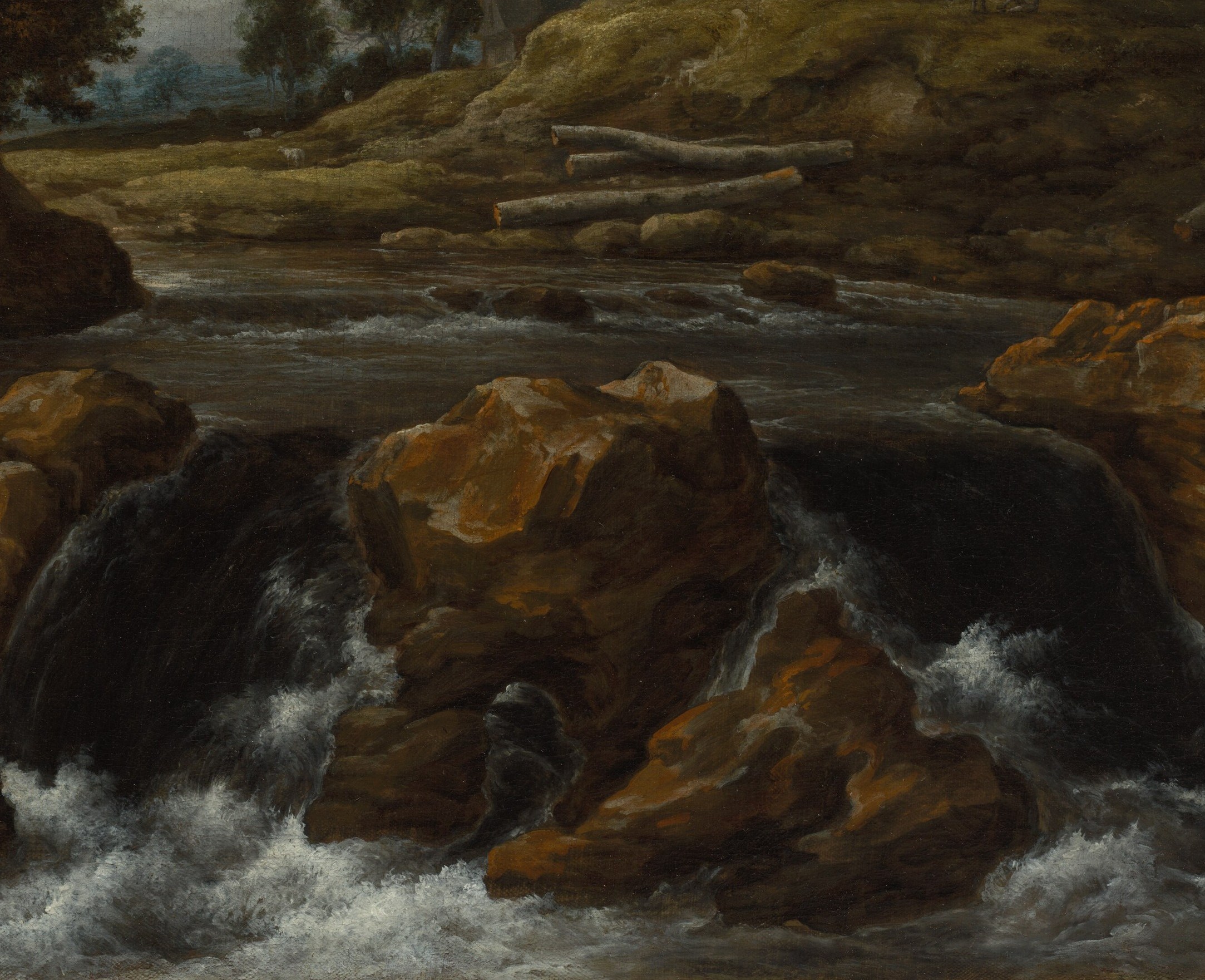
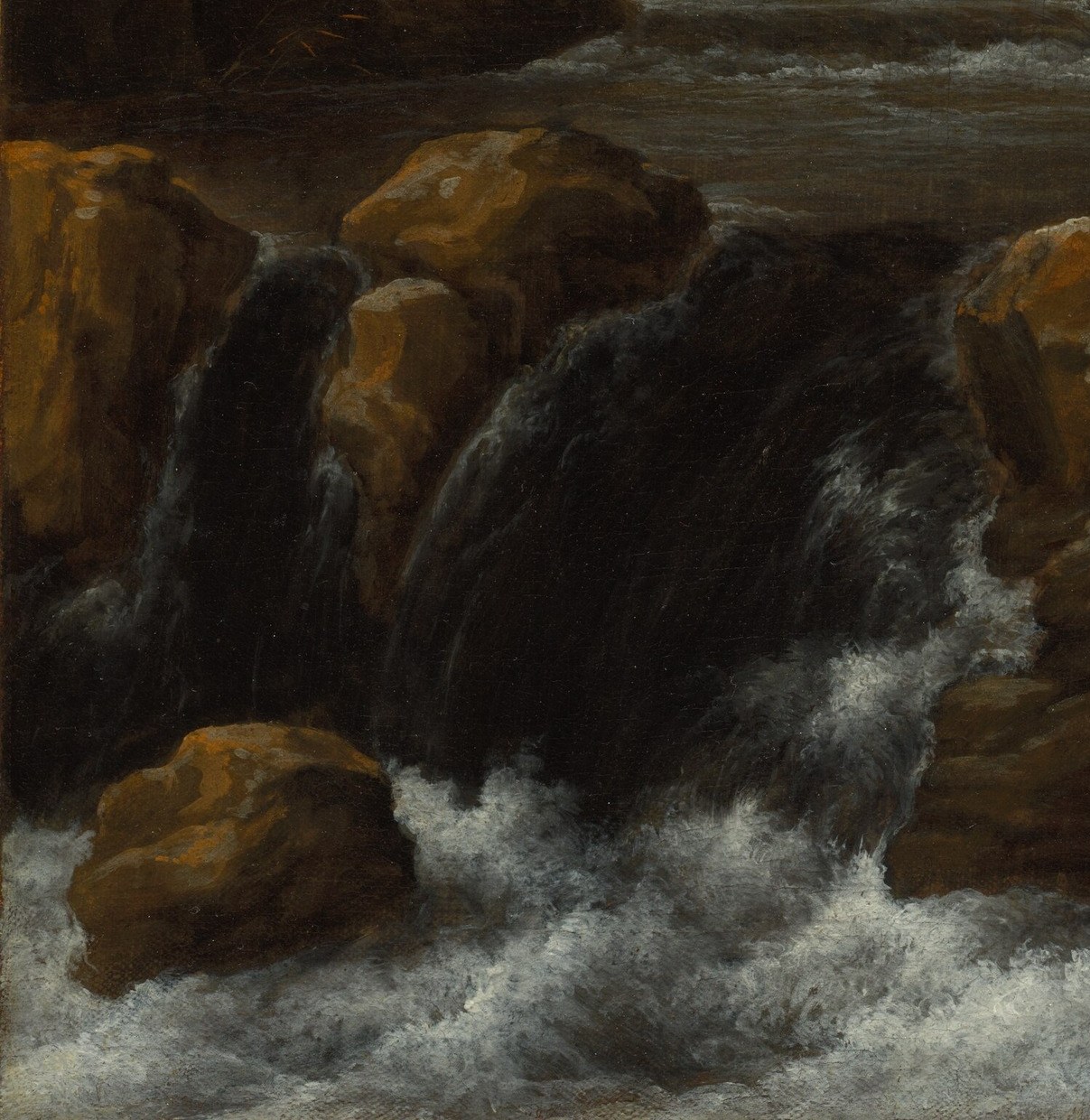
The secret lives in the foreground waterfall. Ruisdael did not simply paint white streaks over blue. He built the foam by dragging stiff, unmixed white impasto across a dark glazed underlayer that was already dry. The peaks of those brushstrokes catch real gallery light, while the dark base recedes, creating genuine optical depth and the illusion of churn.
He then anchored the whole composition with a pool of near-black shadow at the very bottom edge of the canvas. That extreme dark makes the white foam above it read as blindingly bright by comparison, a tonal trick borrowed from chiaroscuro and applied to raw nature. The tiny figures near the church base reinforce the scale, making the torrent feel overwhelming and the stone mill a fragile foothold against it.
Next time you see a waterfall in a museum, step close and look for the dark paint hiding beneath the white. That is where the motion is.
#arthistory #dutchgoldenage #jacobvanruisdael
Details
Transcript
You are looking at paint that appears to move. The secret is in these churning white forms. He laid down dark under-colors first, then dragged thick white over them. The foam is not mixed on the palette. It is built, layer by layer, on the canvas. The deepest shadow sits directly beneath the brightest white. That tonal jolt is what makes the foam read as luminous, not just pale. Jacob van Ruisdael taught oil paint to behave like a torrent.