Packet Ship Passing Castle Williams, New York Harbor by Chambers, Thomas
View the artwork: Packet Ship Passing Castle Williams, New York Harbor →
Thomas Chambers painted "Packet Ship Passing Castle Williams, New York Harbor" in the mid-19th century, and you can see it at the National Gallery of Art in Washington, D.C. He was an English immigrant, the son of a merchant sailor and a laundress, who arrived in America in 1832 and spent decades working as a painter in port cities from New Orleans to Boston while never once exhibiting with an official art institution.
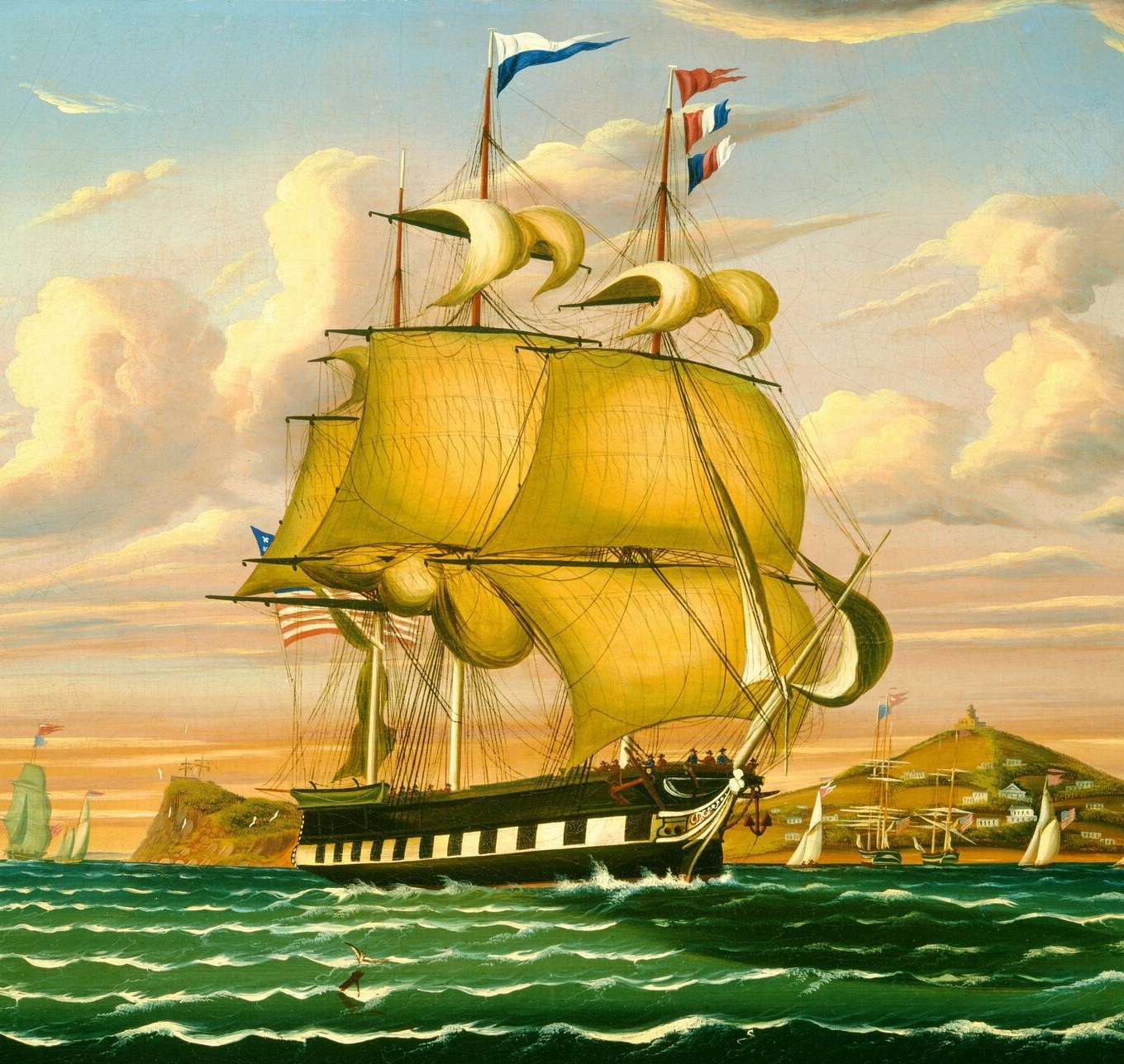
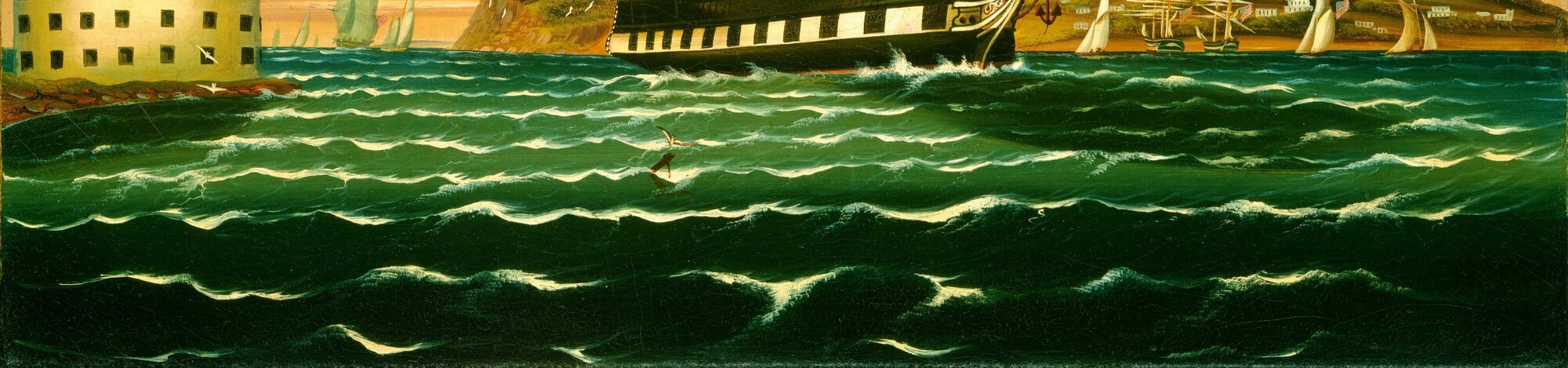
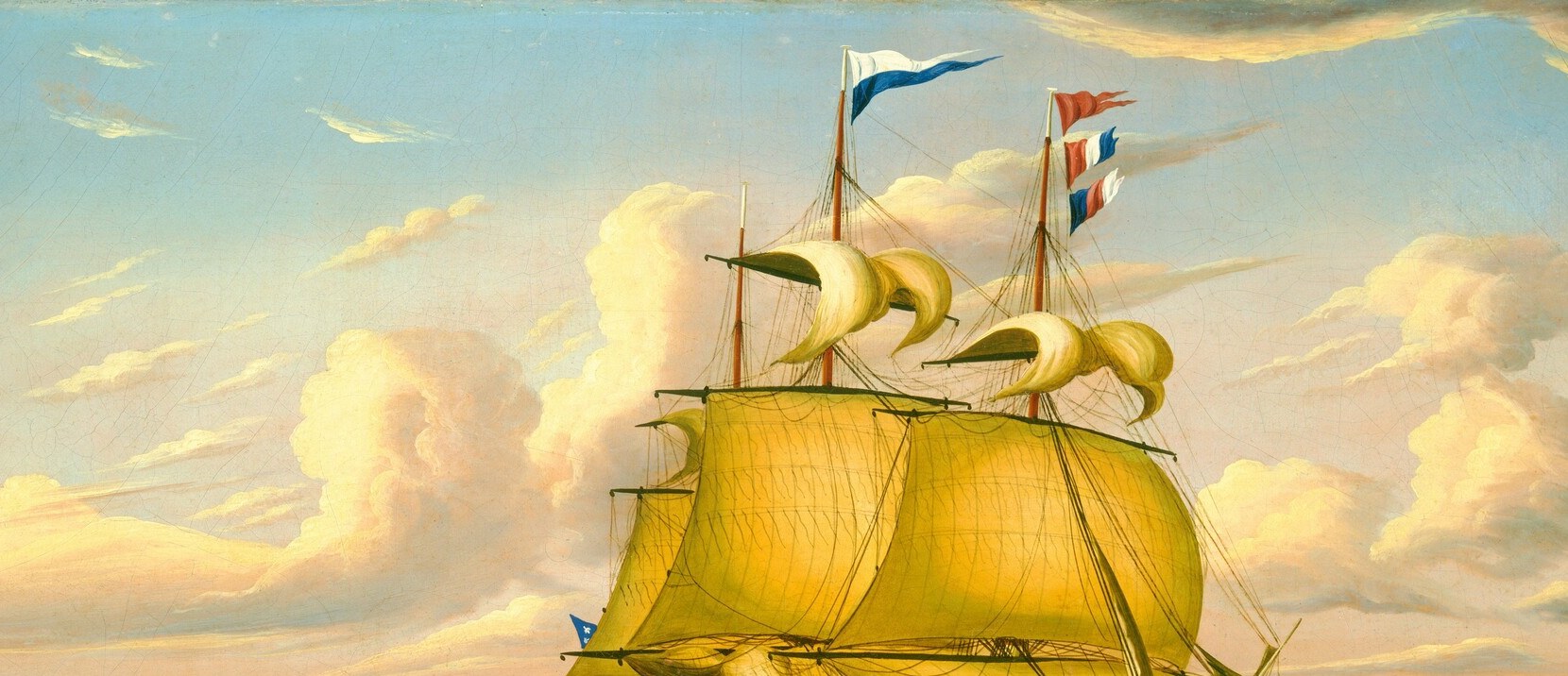
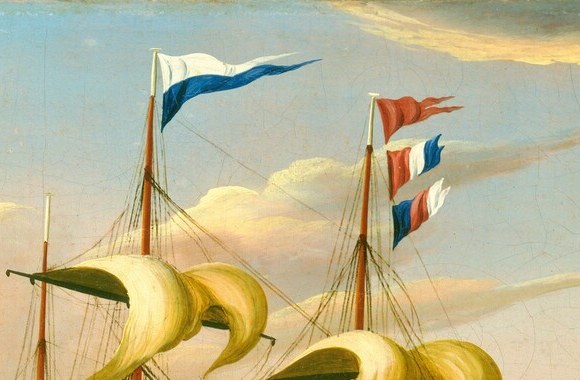
Look at the water first. Chambers doesn't paint realistic waves. He paints a stylized, rhythmic pattern of dark green troughs and white foam, almost like wallpaper. Then look at the sky, an impossibly warm, amber-gold glow that bathes the entire harbor in theatre light. The towering white clouds are painted with a bold, impasto-like energy that frames the ship like a hero.
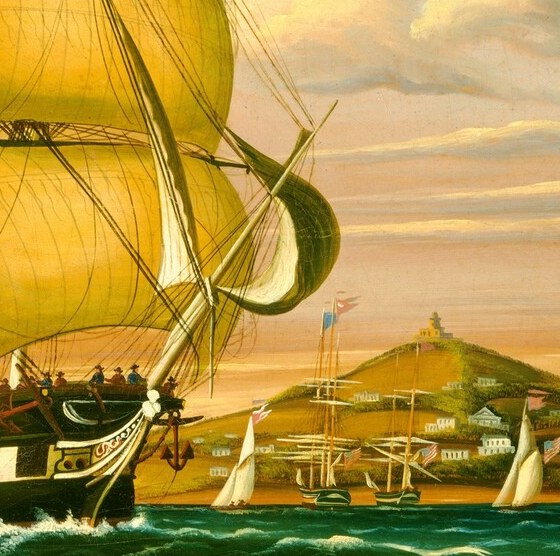
Castle Williams on Governors Island places us in New York Harbor, but Chambers plays with the facts. The dramatic, steep headland behind the fort is a complete topographic exaggeration, a romantic flourish that reveals his imagination operating over strict documentation. He compressed real geography into vivid, decorative compositions that appealed to middle-class patrons of his day.
Chambers died penniless in an English poorhouse in 1869 and was almost completely forgotten. In 1942, a signed painting resurfaced, and his exuberant, flat-color style was celebrated as something startlingly fresh, critics hailed him as "America's first modern." Not bad for a self-taught sailor's son.
#arthistory #americanart #folkart
Details
Transcript
A packet ship steam-past Castle Williams in New York Harbor. The painter, Thomas Chambers, was a self-taught English immigrant. His signature trick was a sky that glows like a theatrical backdrop. He paints water not with realism, but with a bold, repeating pattern. The fort is Castle Williams, anchoring the scene in a real place. Yet the cliffs behind it are a romantic exaggeration, a complete fiction. This decorative boldness is why critics later called him America's first modern.