View of the Town of Alkmaar by Salomon van Ruysdael
View the artwork: View of the Town of Alkmaar →
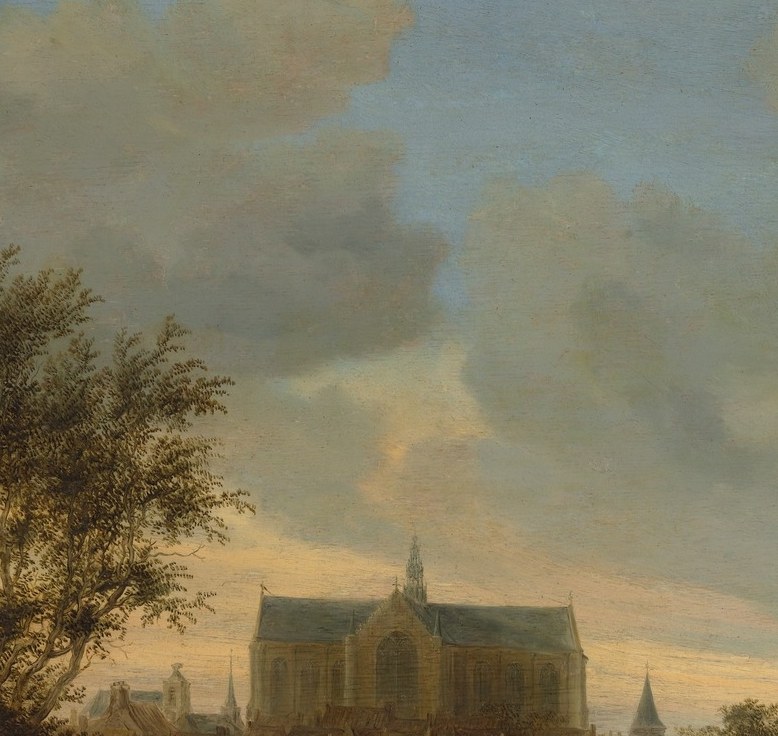
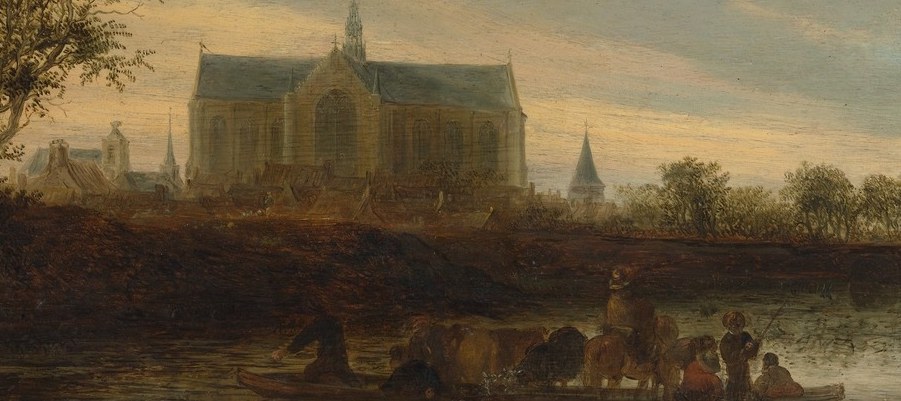
This calm evening landscape is Salomon van Ruysdael's View of the Town of Alkmaar, painted around 1645. It shows the Dutch city from across a river, its profile defined by the Grote Kerk and by the economic engine that made the Golden Age possible: windmills.
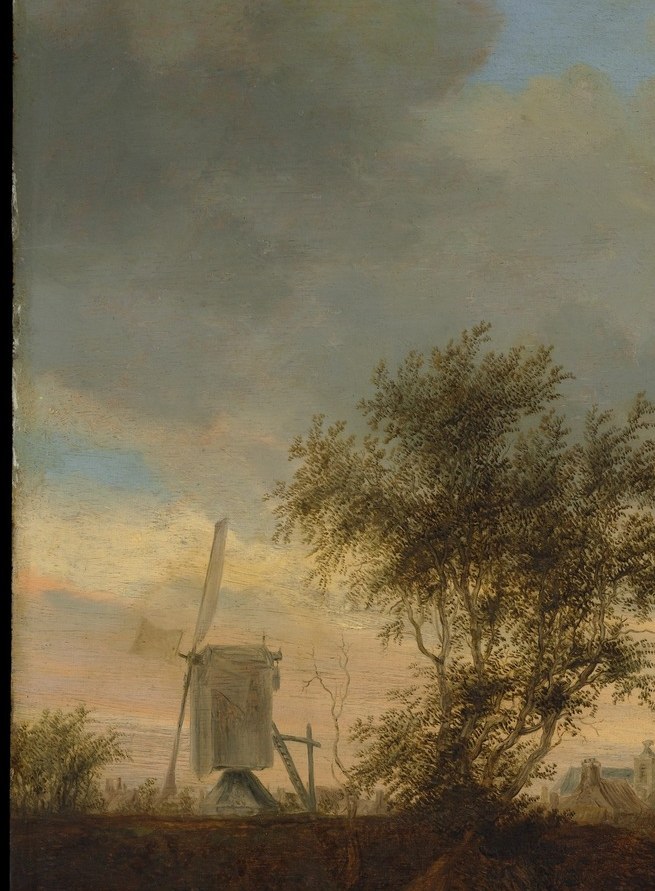
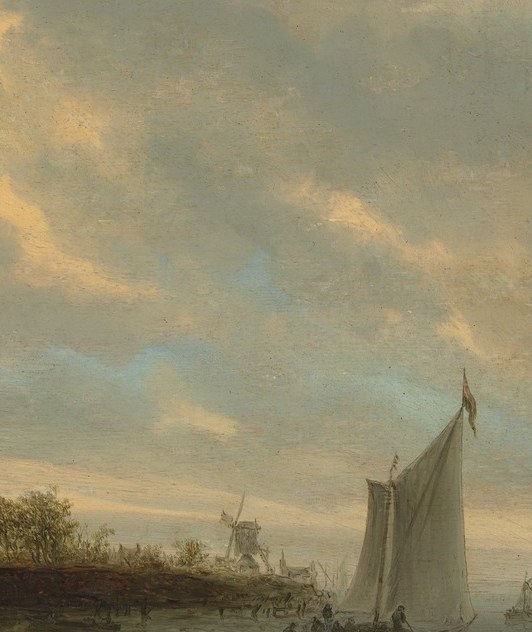
Look for the two windmills that bracket the church tower, one just visible above the dark trees on the left, the other clear against the sky on the right. Together they frame the town's dual identity as a place of both worship and industry. The human element is quiet but present: a flat-bottomed ferry mid-river, carrying horses and passengers across in the day's last commercial crossing.
Van Ruysdael was the uncle of the more famous Jacob van Ruisdael, but he was a major figure in Haarlem in his own right. This painting comes from a period when Dutch landscape painters were moving away from invented panoramas toward carefully observed records of specific, identifiable places. Alkmaar's landmarks are rendered with enough precision that a local would recognize them instantly.
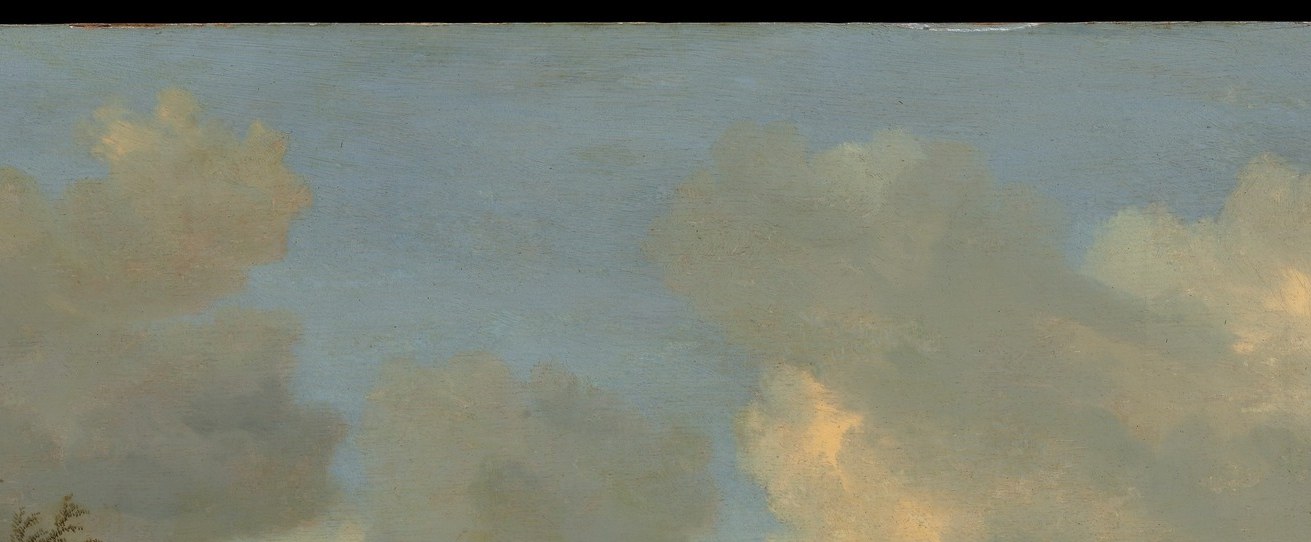
The real subject is the light. Over a third of the canvas is sky, towering clouds lit from within by a late-afternoon sun already below the horizon. That warm band of haze just above the town sets the hour and gives the whole scene its quiet charge. A town settling. A day finishing.
#arthistory #dutchgoldenage #salomonvanruysdael
Details
Transcript
This is Alkmaar in the 1640s. A Dutch town at dusk. The Grote Kerk anchors the town. The eye goes to it first. Now look left: a windmill rises above the trees. And right: a second windmill stands opposite the church. Between them, a ferry carries horses and passengers across. Sacred space on the horizon. Commerce moving beneath it.