The Square of Saint Mark's, Venice by Canaletto
View the artwork: The Square of Saint Mark's, Venice →
The Square of Saint Mark's, Venice, painted by Canaletto between 1742 and 1744, is a masterwork of the veduta genre now in the National Gallery of Art, Washington. It is also an accidental historical document, capturing a precise moment just before Venice's symbols of power began to physically disappear.
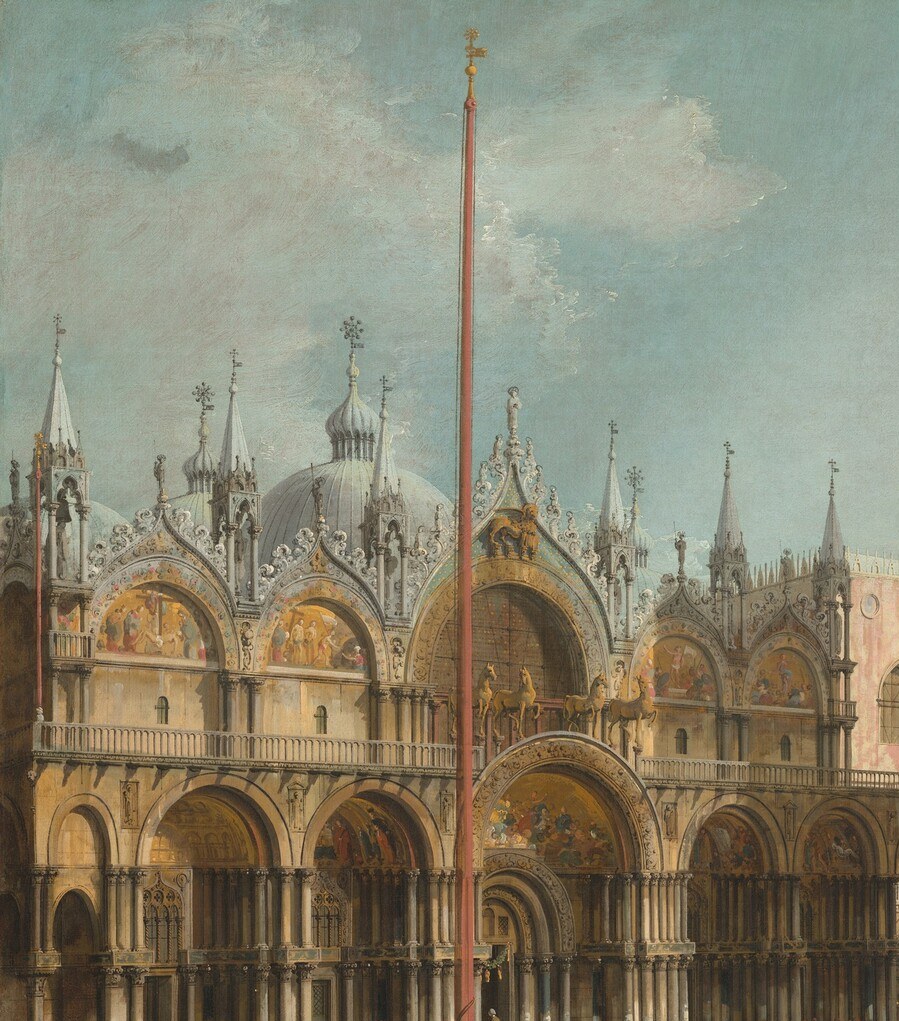
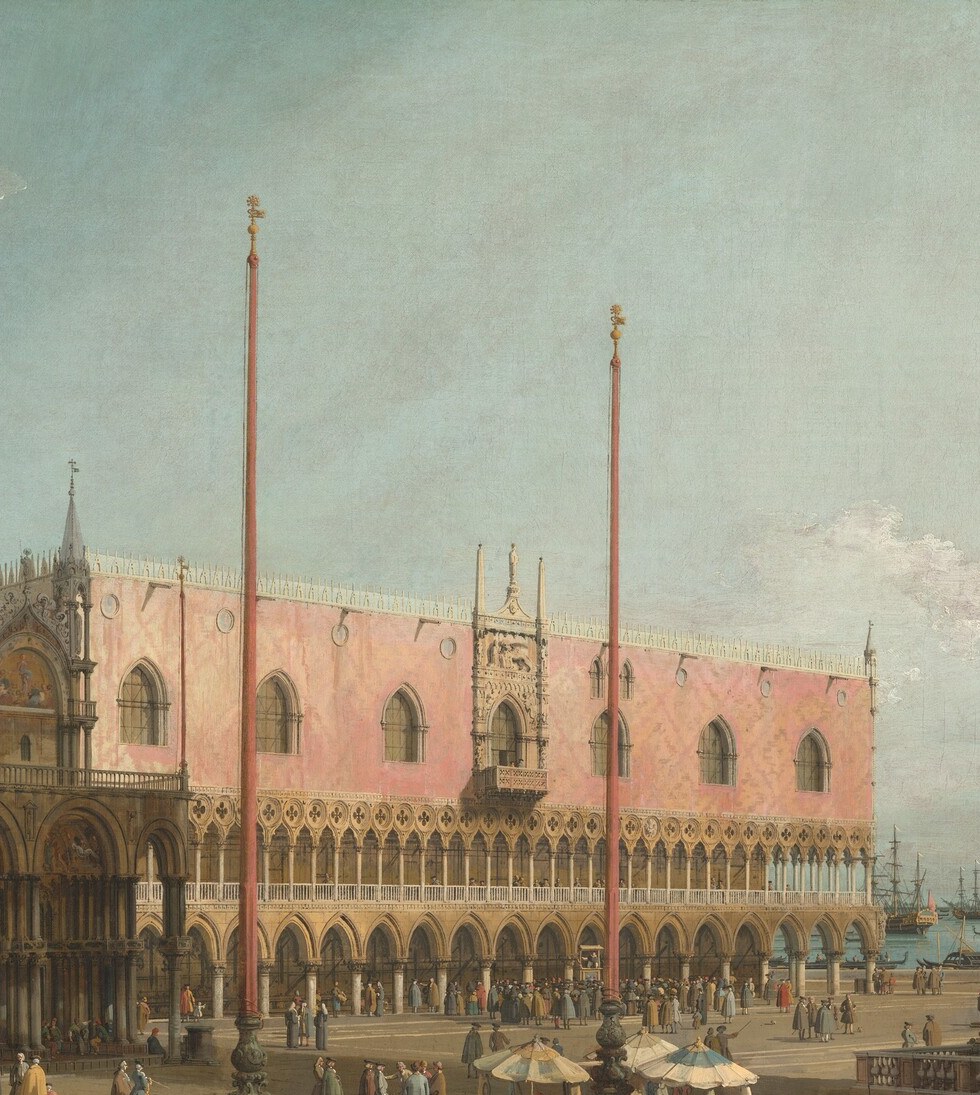
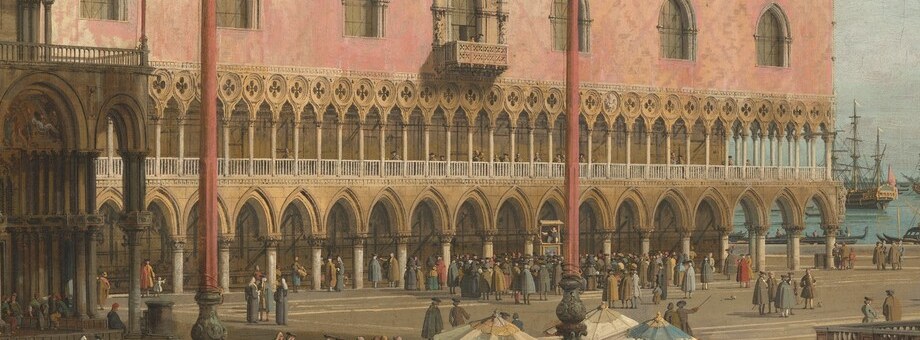
Look closely at the upper gallery of the Basilica. The four bronze horses of the Quadriga of Saint Mark stand in their original positions. These ancient sculptures, looted by the Venetians from Constantinople's Hippodrome in 1204, were themselves stolen by Napoleon in 1797 and shipped to Paris. They were eventually returned, but Canaletto's painting is a rare record of them in place before the upheaval. Below them, three tall flagpoles in the piazza once flew the standards of Venice's lost maritime kingdoms: Crete, Cyprus, and Morea. By the time the paint dried, the flagpoles had become monuments to an empire that was already gone.
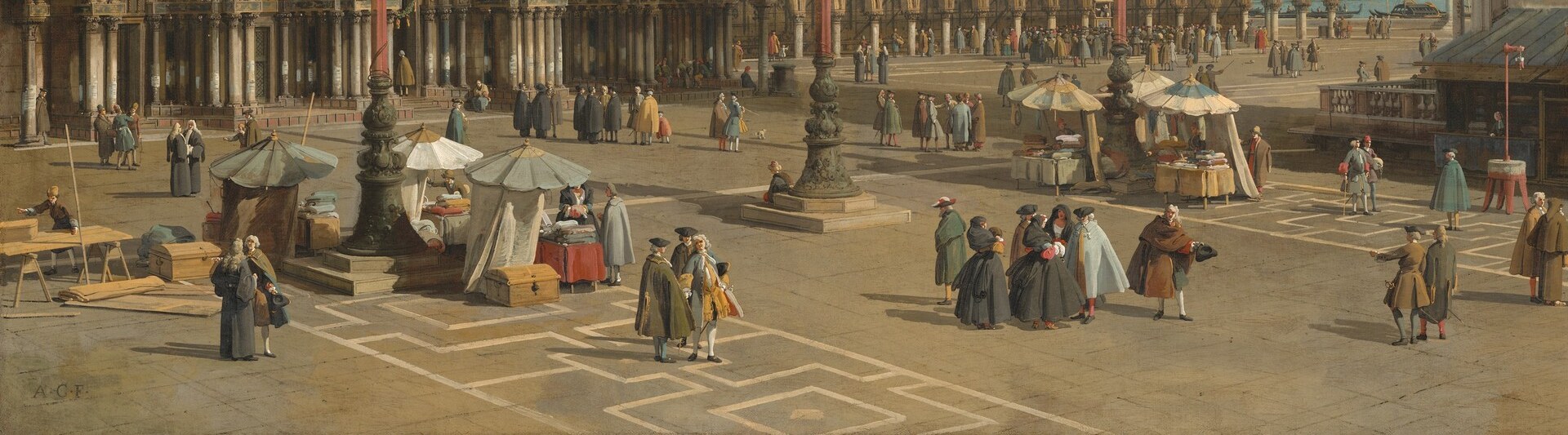
The artist's initials, A.C.F., are visible in the lower left corner. Canaletto rarely signed his work before the 1740s. This canvas was likely made for a specific British patron, probably the 4th Earl of Carlisle, who wanted an authenticated, signed souvenir of his Grand Tour. It was, in effect, the 18th-century equivalent of a certified luxury good, anticipating the modern art market's obsession with provenance. The painting stayed at Castle Howard in Yorkshire until 1938, when it was sold to the heiress Barbara Hutton, who gave it to the National Gallery in 1945.
It is a view of a city that was, by then, already a memory. How strange to paint a place as a perfect souvenir and accidentally record the last moments of its ornaments.
#arthistory #canaletto #venice
Details

Transcript
A postcard of Venice, painted for a British Earl. Look above the Basilica, past the golden mosaics. There: four bronze horses. Looted from Constantinople in 1204. Fifty years after this was painted, Napoleon stole them. Canaletto made a document of things about to vanish. These three poles once flew flags for Crete, Cyprus, and Morea. All three kingdoms were lost to the Ottomans before 1715. The painter signed his name on the stone. A.C.F.