The Contest for the Bouquet: The Family of Robert Gordon in Their New York Dining-Room by Seymour Joseph Guy
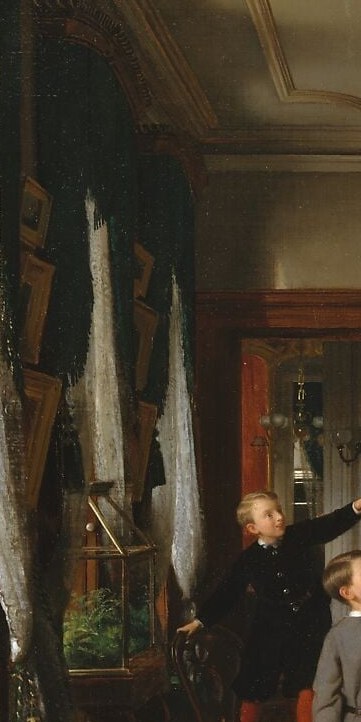
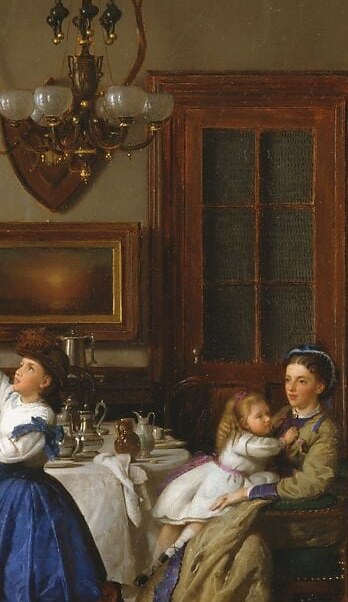
Seymour Joseph Guy's "The Contest for the Bouquet" (1866) captures the family of Robert Gordon in their dining room at 7 West 33rd Street. Gordon was a Scottish-born financier and a founding trustee of the Metropolitan Museum of Art, and he commissioned this painting directly from Guy, an artist he had patronized before. The canvas is a document of Gilded Age domestic life from the very man who helped shape the institution that now owns it.
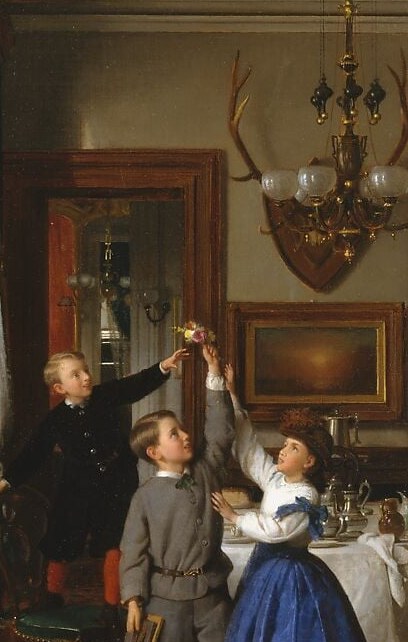
The scene is a staged riot of childhood desire. Three Gordon children battle over a single floral corsage, which the eldest boy holds just out of reach. The real focal point, however, is the calm figure of Frances Gordon seated at right. Her composed gaze anchors the composition and contrasts sharply with the lunging, grasping energy of the children around her dining table.
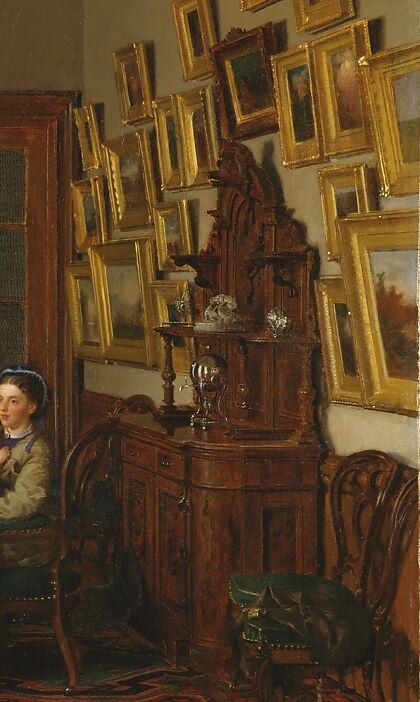
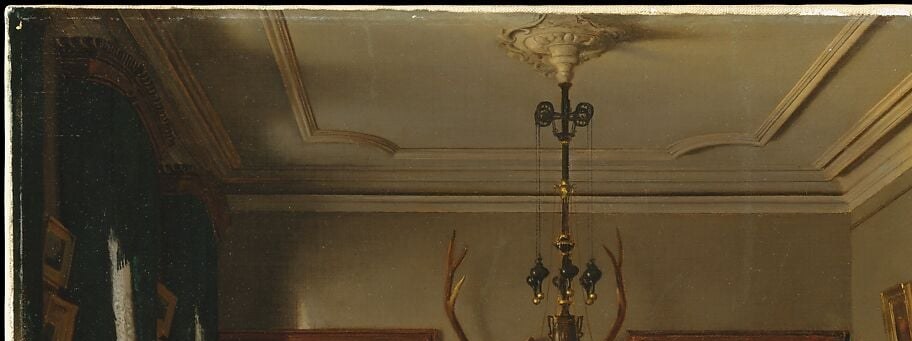
The room itself is a showcase of 1866 New York taste. The wall bears Gordon's own collection of American landscape paintings, the elaborately carved sideboard likely came from the shop of Alexander Roux, and the ceiling chandelier still runs on gas. Guy rendered it all with his signature smooth, enamel-like finish, a technique that conceals every visible brushstroke.
The Metropolitan Museum of Art acquired the painting in 1992 through the Gift of William E. Dodge, by exchange, and the Lila Acheson Wallace Gift. It now hangs as a permanent record of the family whose patronage helped found the museum itself.
#arthistory #metmuseum #gildedage
Details
Transcript
In 1866, a New York financier commissioned a family portrait. Robert Gordon was a founding trustee of the Metropolitan Museum. His wife Frances anchors the scene, but the children have other plans. Look at the prize they are fighting over. A modest floral corsage. The chaos it causes is the painting's wry joke. The artist charged Gordon a fee we have no record of. But it stayed in the family until the Met itself acquired it in 1992. A founding trustee's domestic life, now belonging to the museum he helped build.