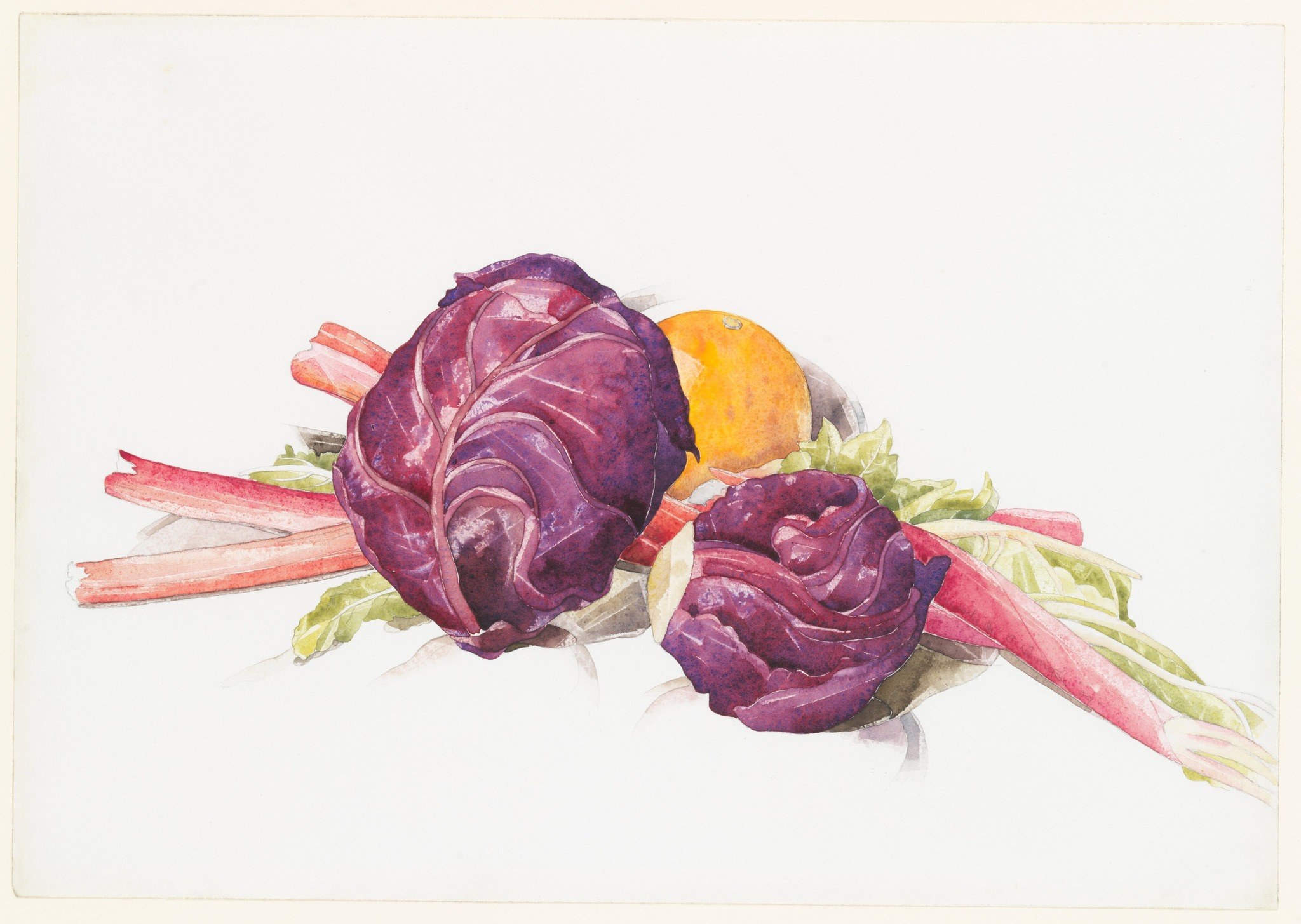
Red Cabbages, Rhubarb and Orange by Charles Demuth
View the artwork: Red Cabbages, Rhubarb and Orange →
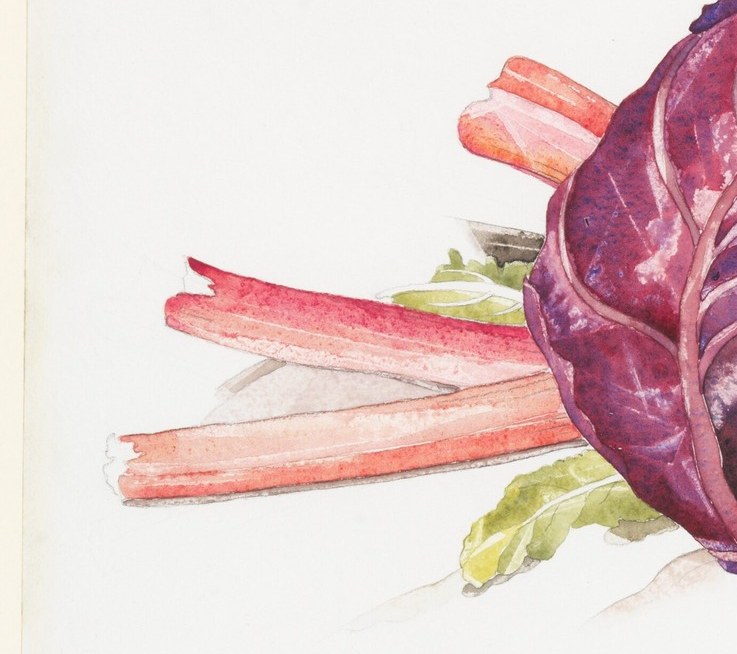
Charles Demuth painted "Red Cabbages, Rhubarb and Orange" in 1929, the year of the Wall Street crash. It is a watercolor on paper, now in a private collection.
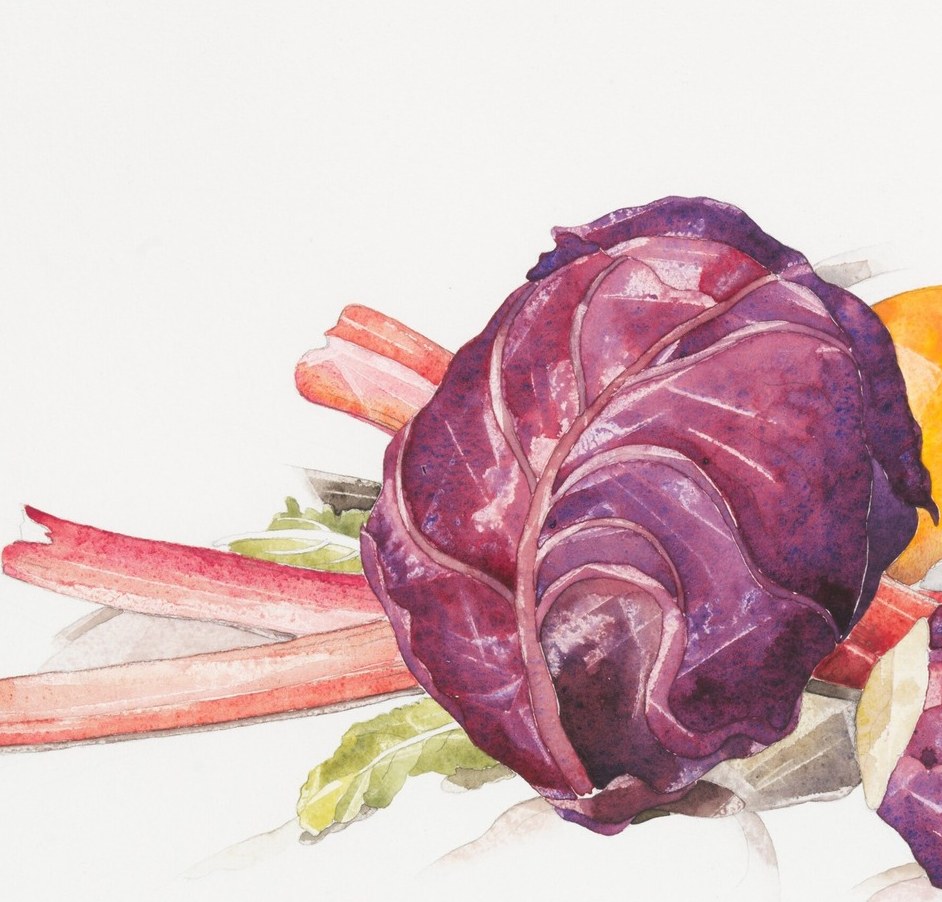
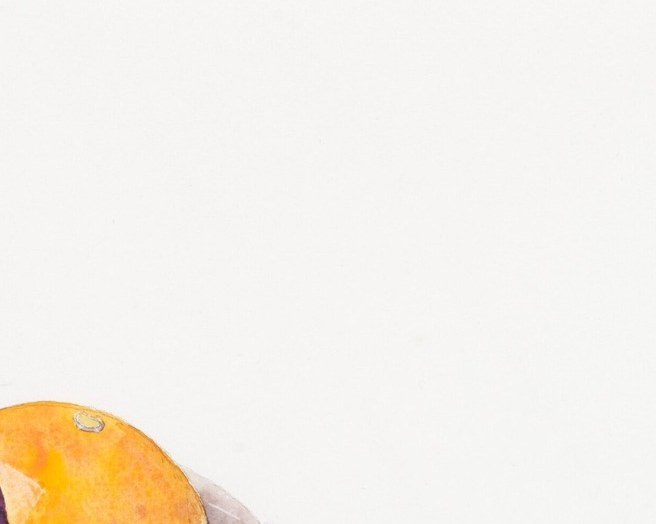
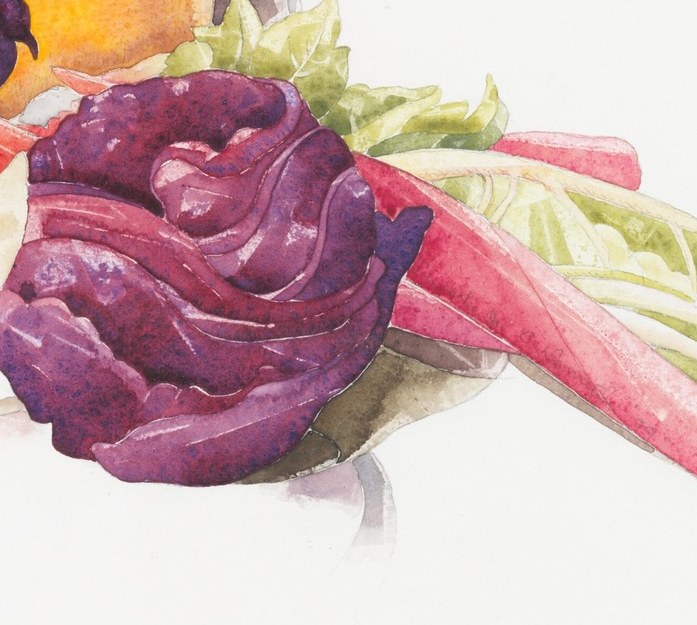
Look at the orange. The glow on its skin is not white paint. It is the bare paper, left untouched. Demuth was a master of letting the ground do the work, a Precisionist trick that gives his vegetables and fruit a startling luminosity. The purple cabbages are built the same way: their tight leaves read as a rosette, and the pale core is paper breathing through pigment.
Demuth studied in Paris and moved through the avant-garde circles that accepted his homosexuality openly, but he spent his life in Lancaster, Pennsylvania. He believed watercolor, not oil, was the genuinely American medium, and he treated a still-life of grocery-store produce with the exacting care other painters reserved for royalty. These works rarely come to auction; his market is quiet, deep, and fiercely protected.
What holds its value when everything else collapses? For Demuth in 1929, the answer was a purple cabbage, a stalk of rhubarb, and a single orange, seen clearly.
#arthistory #charlesdemuth #precisionism
Details
Transcript
This picture was painted the year Wall Street collapsed. 1929. A year when everything lost its value. But here, on a sheet of plain white paper, something held. A single orange, and two cabbages, made priceless by looking. Demuth left the white paper bare in the highlights. No white paint. The glow in that orange is just the paper, breathing through. He called his watercolors 'the only really American art.'