The Holy Family with Saint Elizabeth, Saint John, and a Dove by Peter Paul Rubens
View the artwork: The Holy Family with Saint Elizabeth, Saint John, and a Dove →
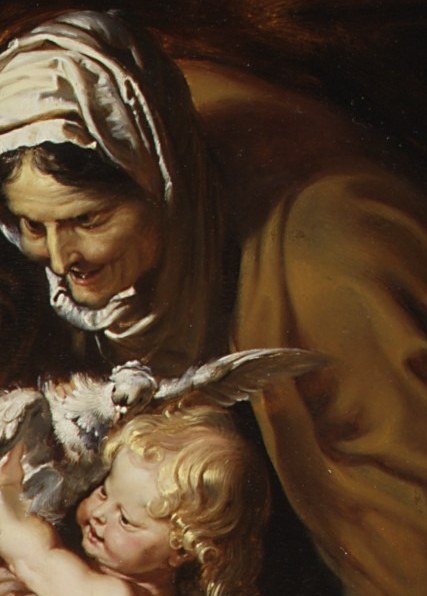
This is The Holy Family with Saint Elizabeth, Saint John, and a Dove by Peter Paul Rubens, painted around 1608 and held in a private collection. It survived something a canvas should never have to endure.
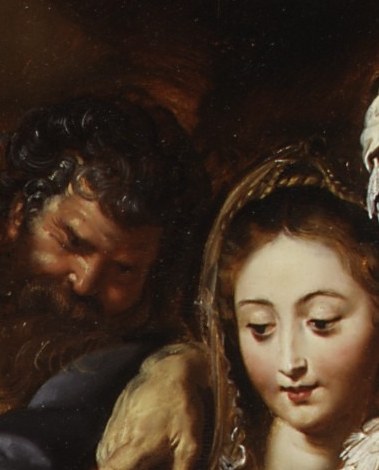
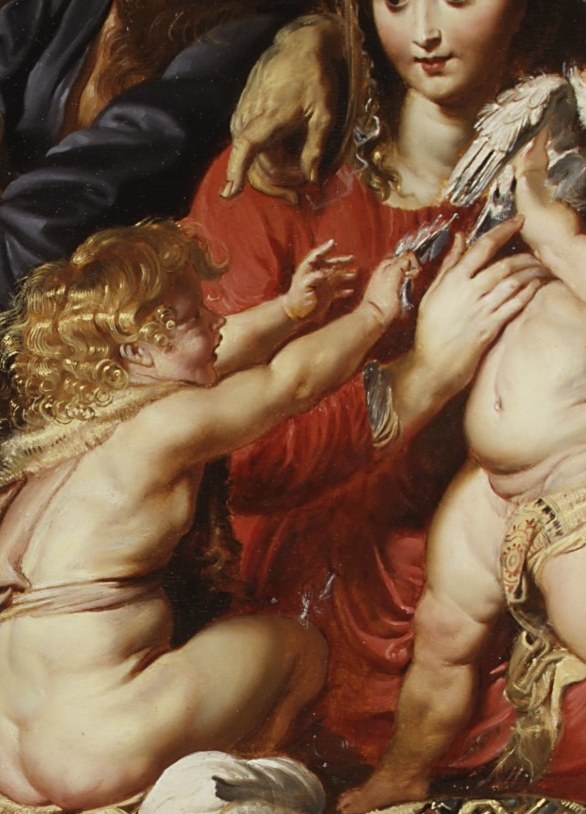
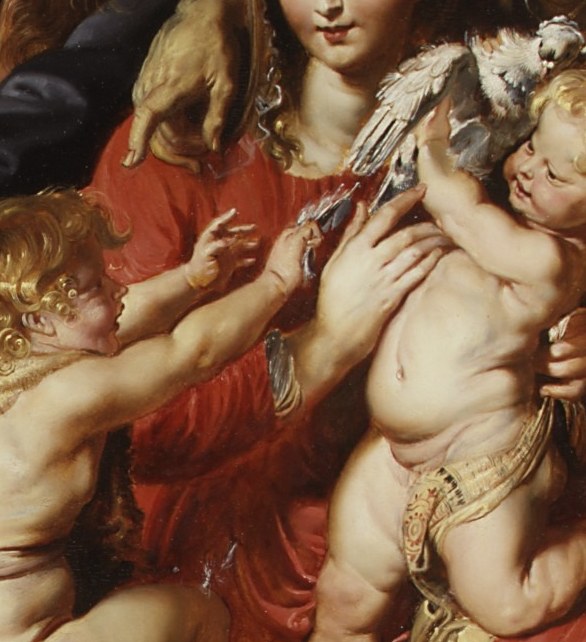
On a Sunday in 1971, a man walked into a church in Antwerp and threw sulfuric acid onto the painting. The acid hit the Virgin Mary's face directly, eating through the oil paint and the varnish. The dove at the center of the composition came close to dissolving entirely, only the wood panel beneath it absorbed enough of the liquid to prevent total loss.
Look at the infant Christ. His flesh is the brightest point in the whole work, painted with that characteristic Rubens softness. During the restoration, conservators used the surviving Christ Child as a tonal reference to rebuild Mary's face. The hands you see cradling him are largely original, they guided the rest of the repair like a key.
Rubens painted this scene just after returning from Italy, where he had studied Caravaggio's dramatic lighting. The darkness pressing in behind Joseph is pure Baroque, it makes the family feel like they are hiding from something. After 1971, that shadow gained an unintended meaning.
Restoration took years, and the painting was returned to display with no visible sign of the attack. Most visitors today walk past it and see only a tender sacred gathering. That invisibility is the restorer's art.
#arthistory #rubens #baroque
Details
Transcript
They look like a family gathered in quiet shadow. But this painting was the target of an acid attack. In 1971, a man splashed corrosive acid across the canvas. The Virgin's face took the worst of the burns. Restorers had to rebuild the surface millimeter by millimeter. This infant's luminous skin guided the reconstruction of her face. The dove was nearly dissolved. It survived because the wood panel absorbed the acid.