The Flight into Egypt by Luca Giordano
View the artwork: The Flight into Egypt →
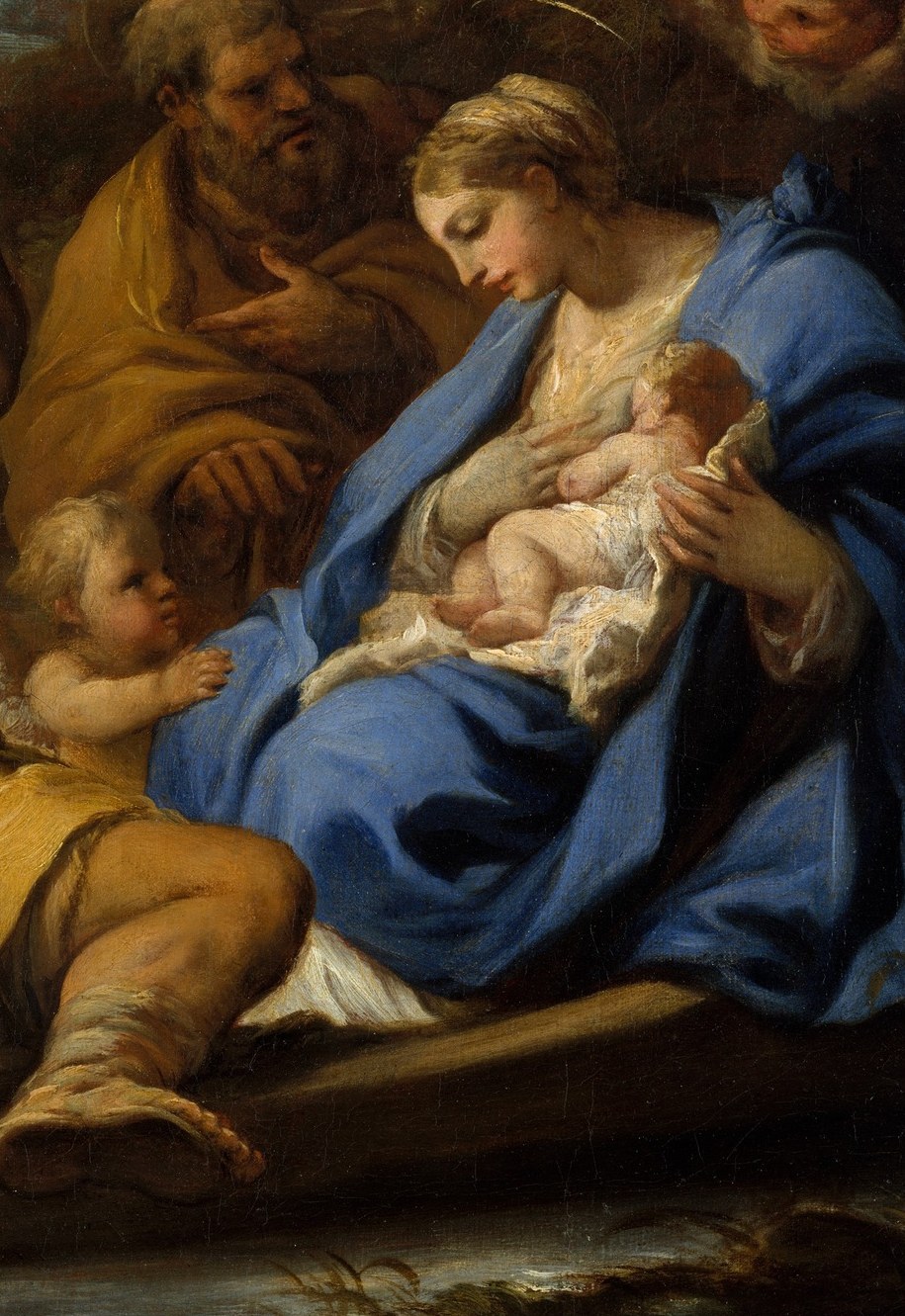
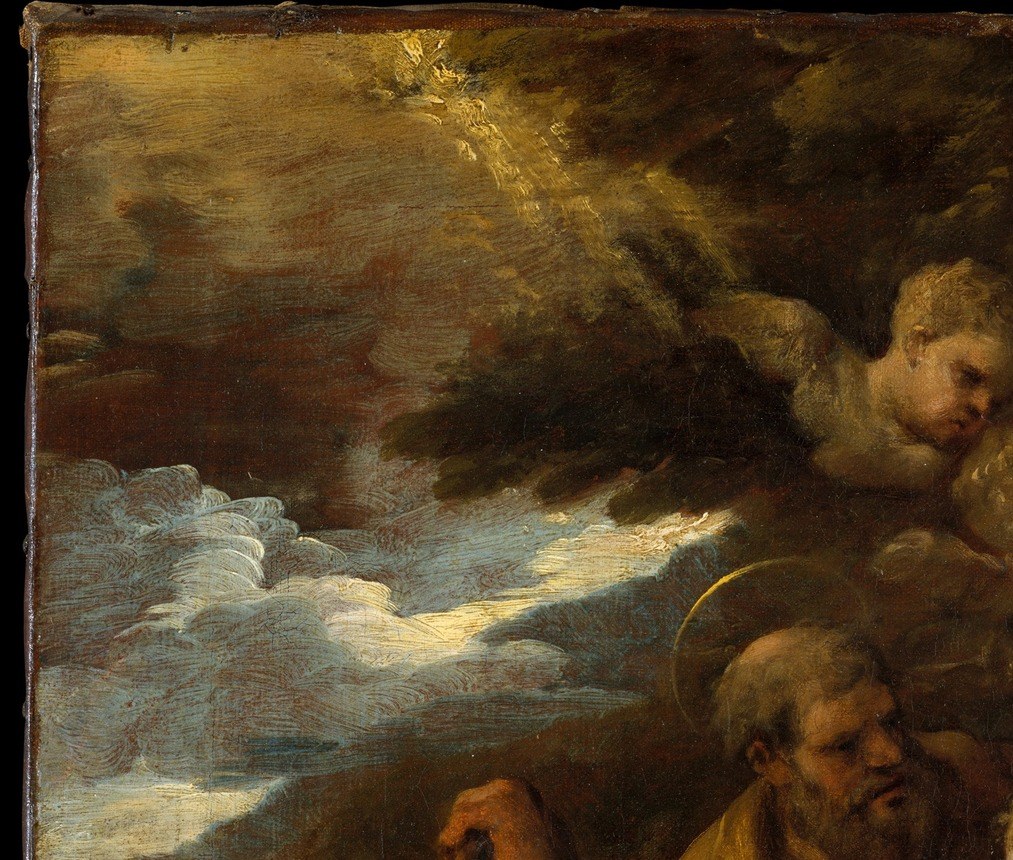
Luca Giordano's "The Flight into Egypt" (1696) holds a secret in its storm clouds. Hung in the Museo del Prado, the Neapolitan master gives us more than the standard pilgrimage. He gives us a mystery hidden in plain sight.
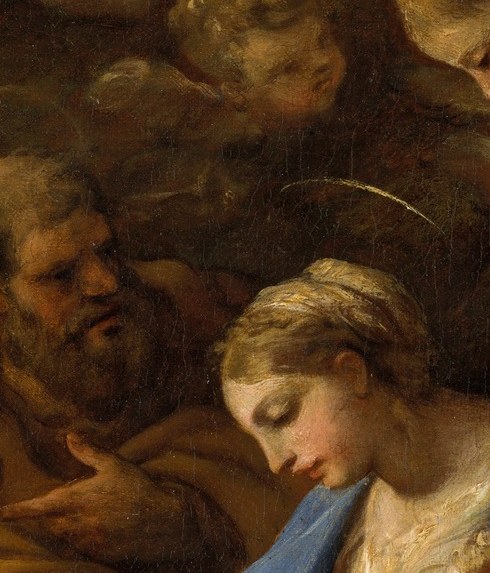
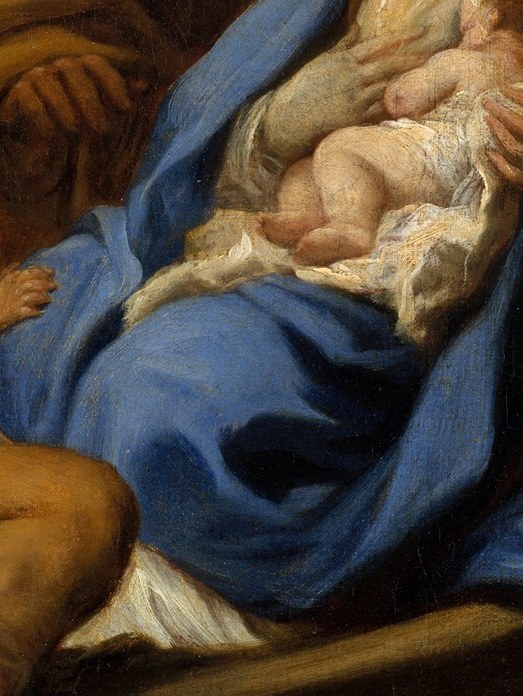
The painting is a masterclass in guiding the eye. Mary's white head covering pulls you in, her blue robe pools at the bottom, and Joseph's upward gaze pushes your attention toward the angelic assembly on the right. Giordano uses warm divine light breaking through the clouds as a deliberate distraction. He wants you looking at the heavenly host.
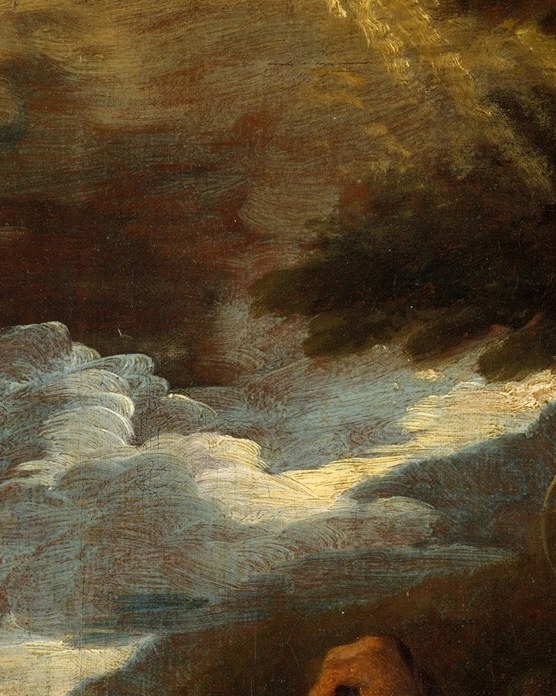
Which is how most people miss the shadowed figure in the upper left. Half-erased by the dark, turbulent background, a barely legible presence lingers behind Joseph. Giordano painted it so subtly that it feels like a discovery every time. Scholars debate whether it is a second guardian angel, an attendant, or a symbolic witness. The ambiguity is the point.
Giordano was famous in his day for painting faster than anyone in Naples, earning him the nickname "Luca Fa Presto" (Luca works quickly). Yet this detail required deliberate, slow restraint. He stopped just before the figure becomes obvious. What else might you be missing on a first glance?
#arthistory #lucagiordano #baroque
Details
Transcript
You know this story: the Holy Family flees into the desert. Mary holds the child. Joseph looks to heaven for protection. Angels and putti crowd the sky to witness the escape. But look deeper into the dark clouds on the left. There is another figure here. Watching in the shadows. Some scholars believe it is an angel none of the others have seen yet. Giordano hides a guardian in plain sight. Not everyone is meant to see it.