Untitled by Shiva and Dayal
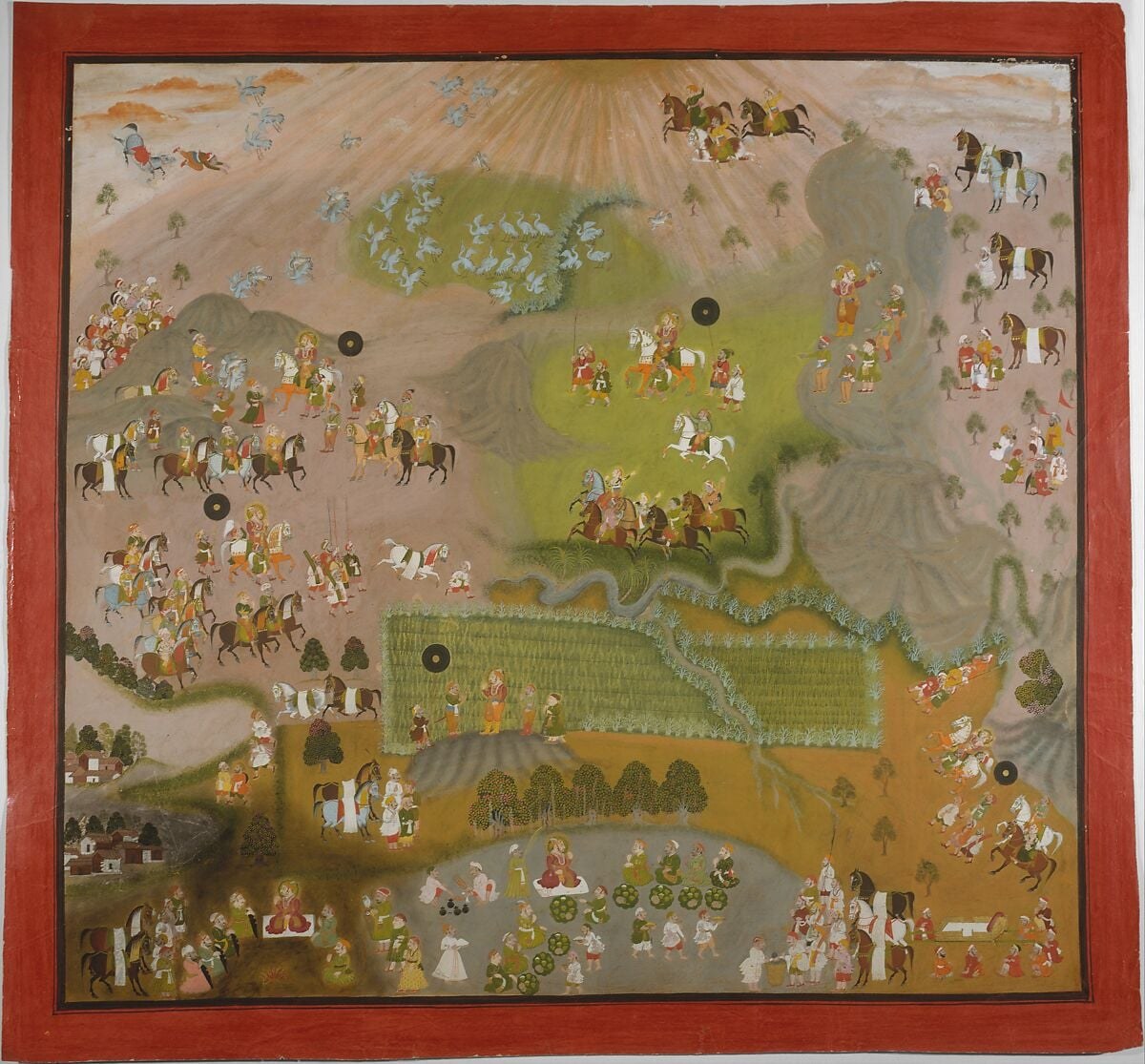
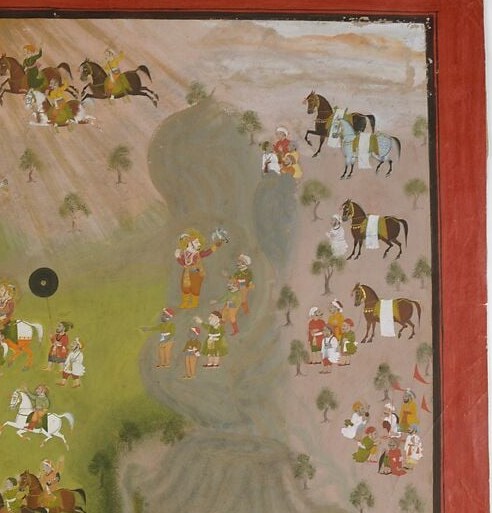
This is Maharana Jagat Singh Hawks for Cranes, a monumental hunting scene painted in Udaipur, India, in 1744 by the artists Shiva and Dayal. Only one work by these two names survives, and it lives at The Metropolitan Museum of Art. It pictures Maharana Jagat Singh II, the ruler of Mewar, on a royal hawking expedition across a landscape that reads like a jigsaw puzzle of episodes.
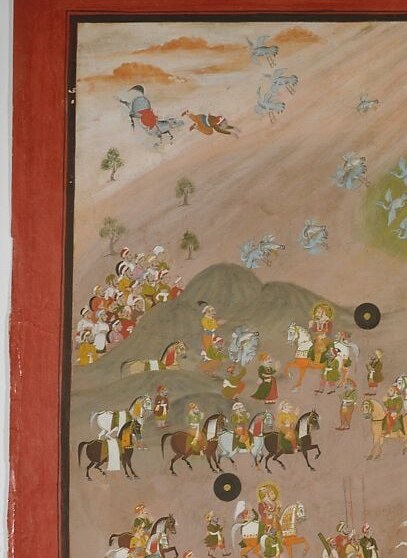
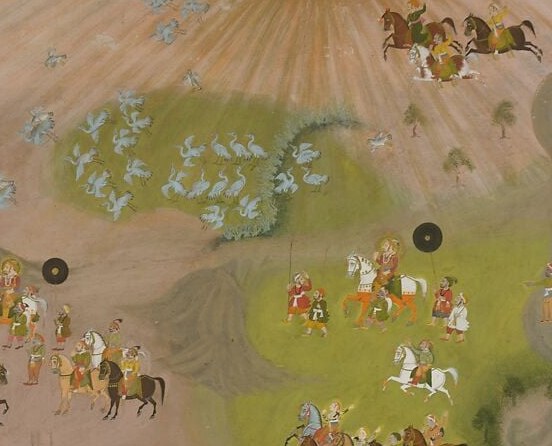
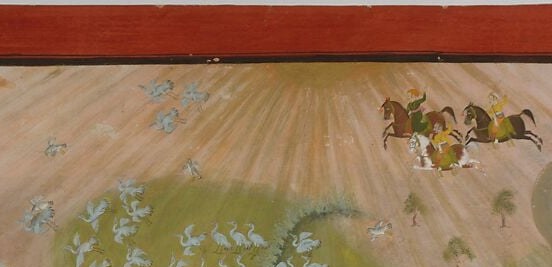
The main action is easy to spot: a falconer raises his bird for the strike, and cranes scatter into a sunburst sky. But let your eye wander to the lower right margin, where tiny figures do the unseen work: cooks, beaters, and tethered pack animals, rendered at a scale so small you could scroll right past them. Then look at the horses themselves. Each minute gold fleck on their haunches and bridles is an individual application of real gold paint, a costly, meticulous choice legible only at close range.
In the mid-18th century, the Mewar court commissioned huge panoramic hunts like this one to record aristocratic pastimes and to project power across a controlled, idealized landscape. Multiple artists shared the labour on a single picture, dividing tasks according to skill. The plunging aerial view was an innovation of the Udaipur school, possibly influenced by European maps. Shiva and Dayal’s names appear on no other known painting, making this crowded, glittering world their only surviving trace.
Next time you see a hunt scene, ask yourself where the cooks are standing.
#arthistory #indianminiature #rajputpainting
Details
Transcript
It looks like a grand royal hunt, painted in 1744. Two artists worked on this: Shiva and Dayal. The main action is right here: a falcon raised to strike. Now look at how they painted the horses. Each gold fleck is an individual dab of real gold paint. But the real story is tucked away down here. Beaters, cooks, and tethered animals: the invisible labour behind the spectacle.