On the Beach at Trouville by Eugène Louis Boudin
View the artwork: On the Beach at Trouville →
Eugène Boudin painted "On the Beach at Trouville" in 1863, capturing the summer rituals of the Second Empire bourgeoisie on the Normandy coast. It hangs in the collection of the Musée d'Orsay. Boudin was one of the first French painters to work entirely outdoors, chasing the fleeting Atlantic light that would become the entire project of Impressionism.
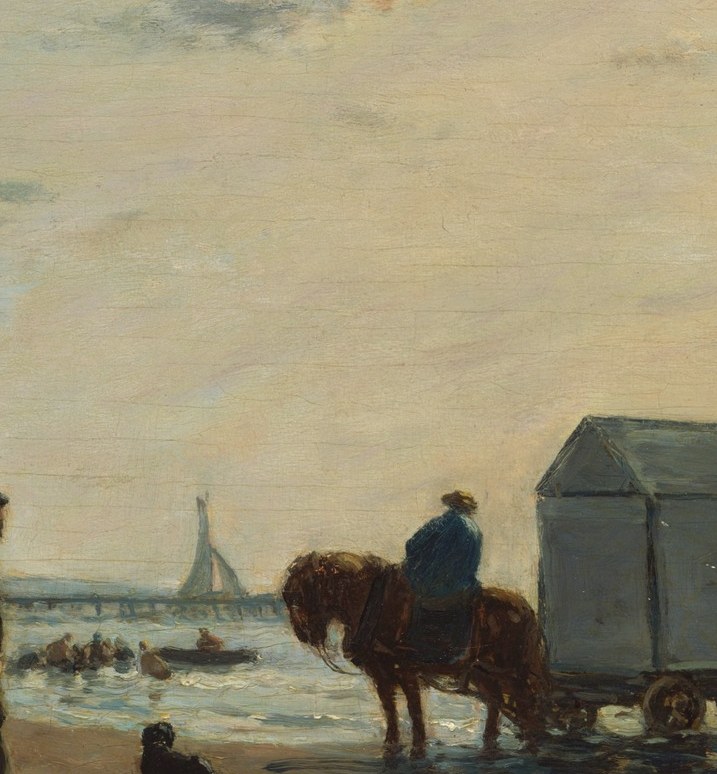
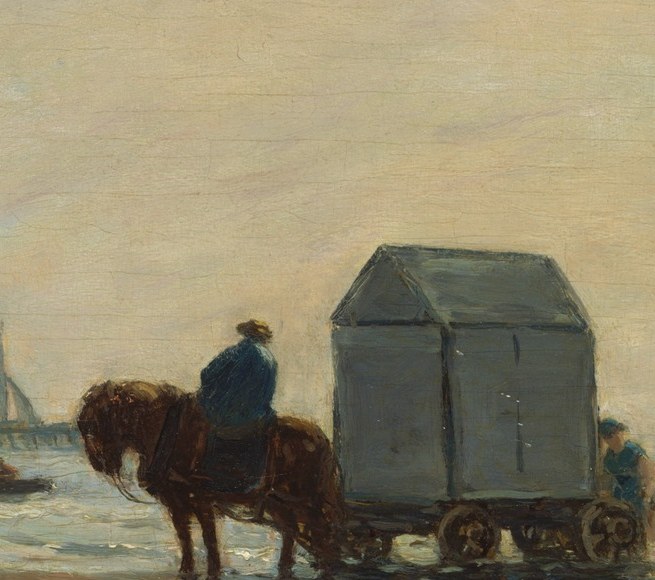
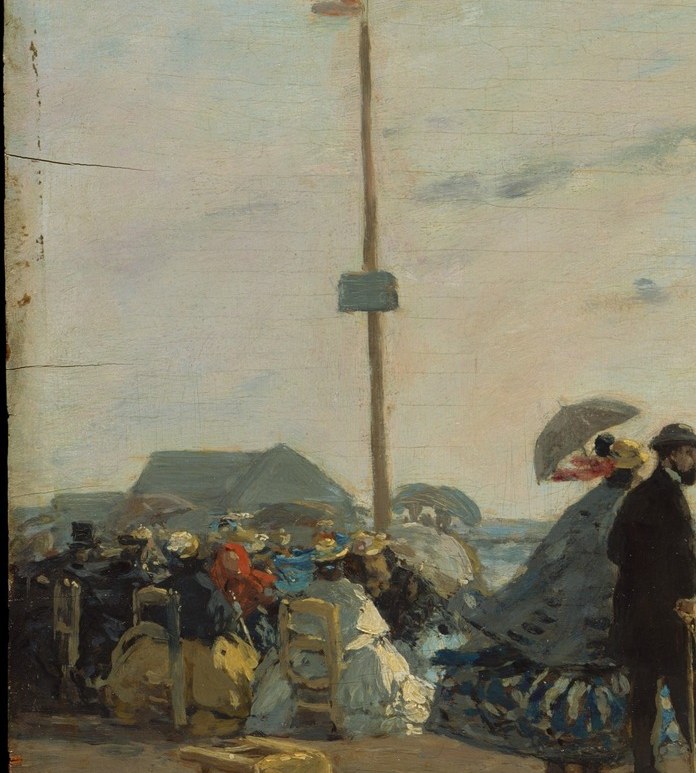
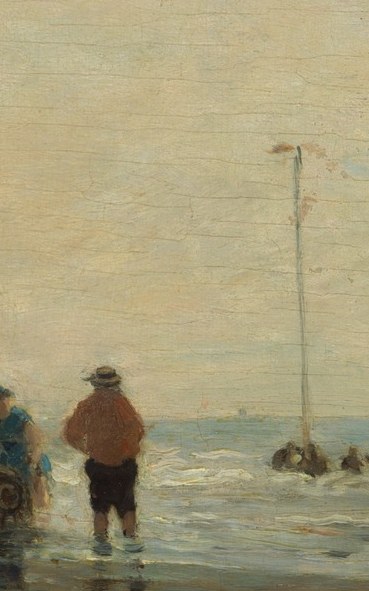
The crowd at left is the obvious subject: dark coats, parasols, a horse-drawn bathing machine. But the painting's emotional center is the solitary figure standing far right, isolated against the open sky. He has no umbrella, no companions. Boudin placed him precisely there, a full compositional weight apart from society, and let the vast wet sand and pale cloudbank do the rest.
Boudin grew up on the water, the son of a harbor pilot in Honfleur. He knew the sea as labor before he knew it as leisure. Corot called him the King of the Skies, and it was Boudin who famously pulled a young Claude Monet aside and told him to paint what he actually saw, the light, the air, the truth of a moment, not what convention demanded.
Look at that lone figure again. He isn't moving toward the crowd. The painting leaves him in his distance, and the sky holds the whole composition. Boudin understood that a beach crowded with conversation can still feel completely empty, and that sometimes the most honest portrait of leisure is the person standing just outside it.
#arthistory #eugeneboudin #impressionism
Details

Transcript
1863. Trouville was the beach where Paris showed off. Parasols, dark coats, a horse-drawn bathing machine. This dog is one of the few creatures alone and moving. But look far right. One man stands completely apart. Boudin gave him no umbrella, no companions, no carriage. The painter was called the King of the Skies. He taught Monet that light itself was a subject. And he knew a crowd can be lonelier than an empty beach.