Saint Michael and the Dragon by http://www.wikidata.org/.well-known/genid/e996a817d8d6d71b00b198dca46c353a
View the artwork: Saint Michael and the Dragon →
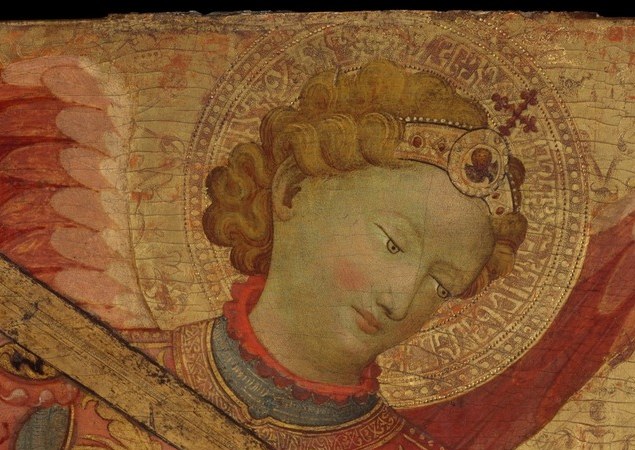
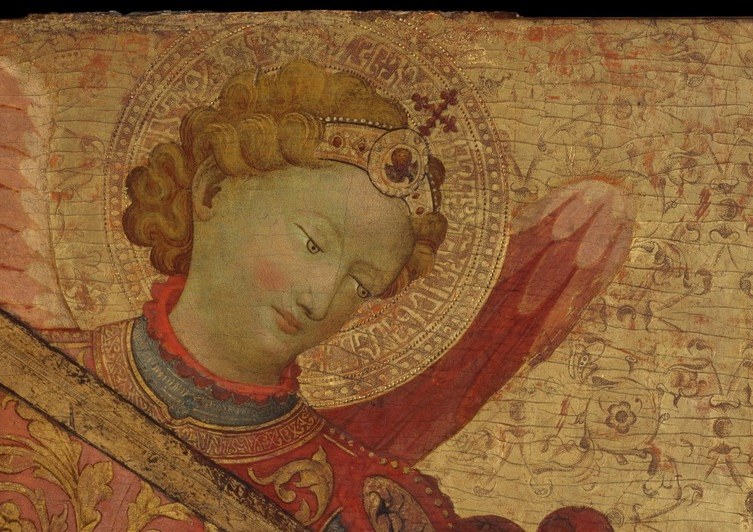
This is 'Saint Michael and the Dragon', painted around 1405 by an unknown master working in tempera on panel. The painting lives in the tradition of early 15th-century Italian religious art, a time when gold leaf and egg yolk were the highest technologies a painter had.
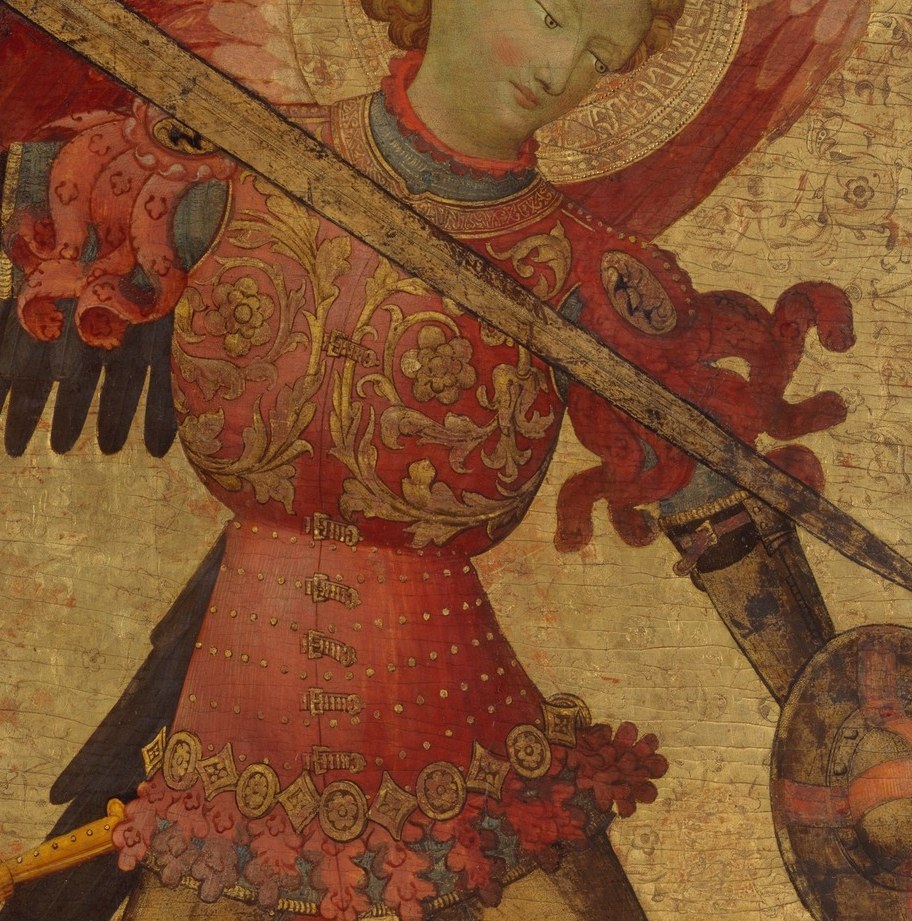
Look first at the red armor covering Michael's chest. The embossed gold decoration is not paint depicting gold, it is actual gold leaf, hammered to the thinness of light and laid by hand into fresh egg-binder. Each floral motif was placed individually, and the painter had to get it right: tempera dries in minutes and cannot be reworked.
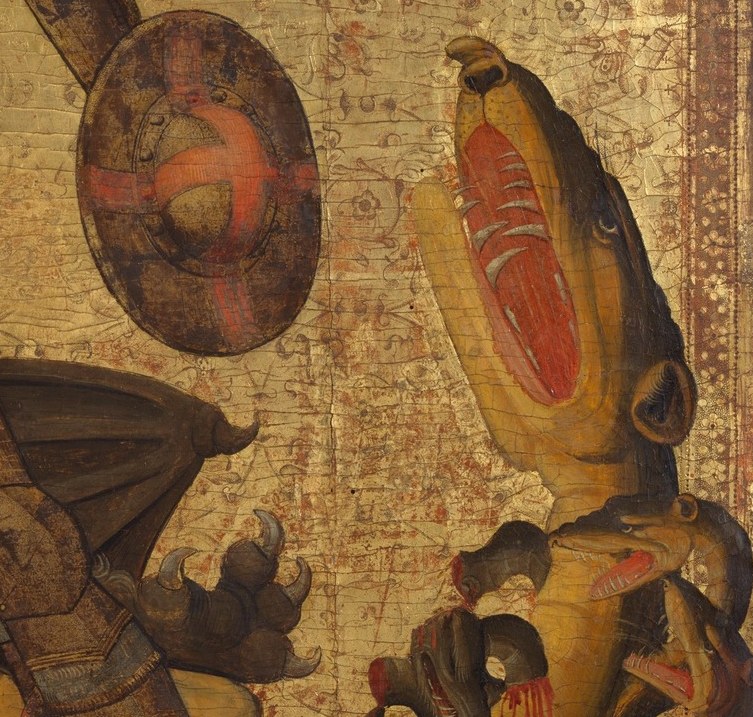
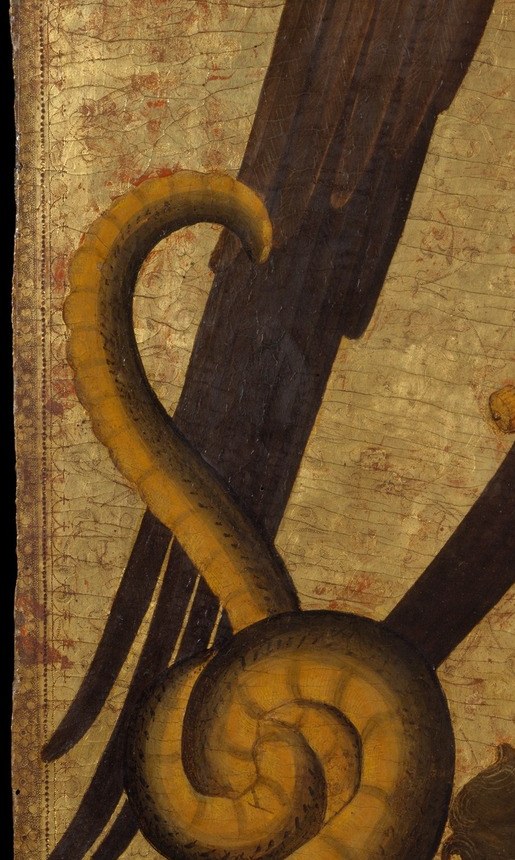
Then drop to the dragon's coiled yellow-ochre tail at the lower left. This is the same medium, but a totally different problem. To build that spiral volume without blending, the painter laid down hundreds of fine hatching lines, each one applied to bone-dry paint. The effect, from two art-historical arm lengths away, reads as a solid twisting form. Up close, you see a patient craftsman who understood exactly how far tempera could be pushed.
The artist's name is lost, but the fact of their patience is not. Next time you see an oil painting with misty edges and luminous smudges, remember this was what brilliance looked like before anyone could blend.
#arthistory #tempera #italianart
Details
Transcript
First, the whole thing hits you like a wall of gold and red. Now look at the armor on his chest. Every single gold leaf was laid one by one in egg yolk binder. Now drop down to the dragon's tail. Tempera dries hard and flat, so you cannot blend it while wet. That coil is hundreds of fine overlapping lines on bone-dry paint. No blending, just patience. Before oil paint existed, this was the most brilliant surface a painter could make. The beast's mouth still gapes. But he made it beautiful.