The Washington Family by Savage, Edward
View the artwork: The Washington Family →
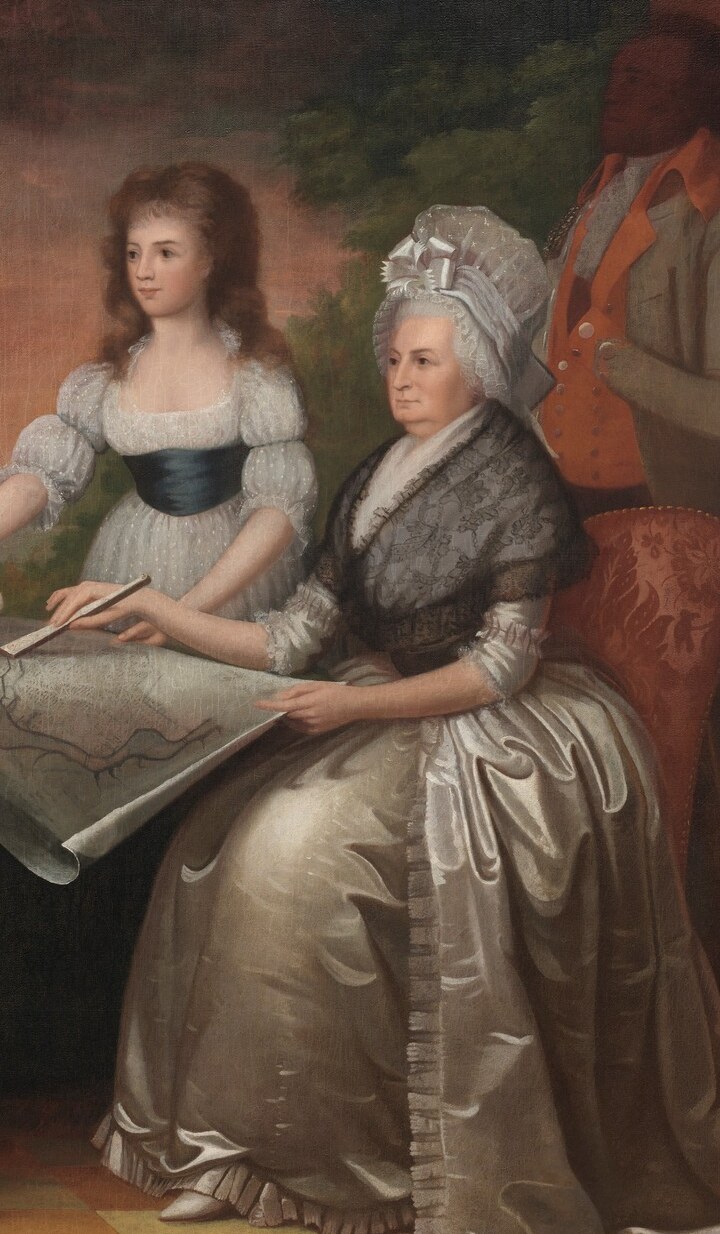
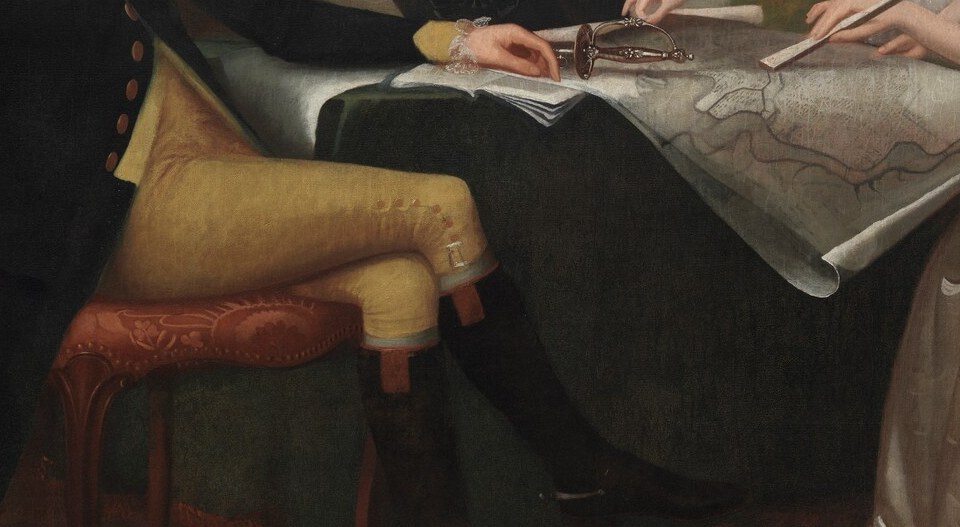
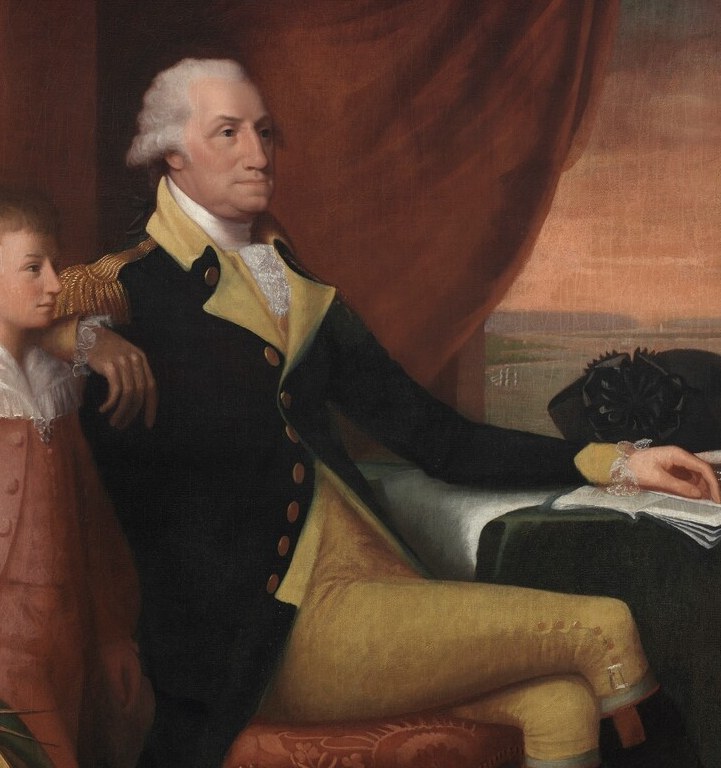
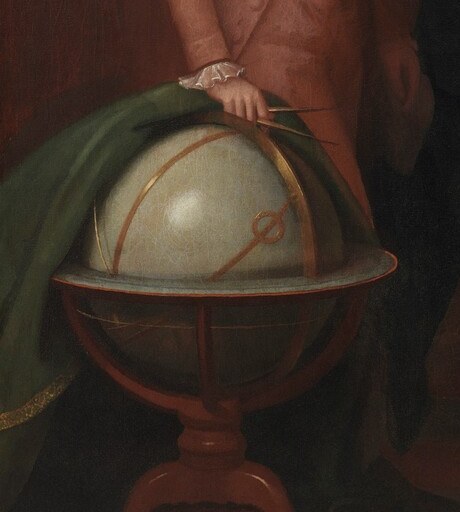
Edward Savage's The Washington Family (1789-1796) at the National Gallery of Art is nearly seven by nine feet, a life-size group portrait that presents the first president exactly as the new republic wanted to be seen. George Washington wears his Continental Army uniform, Martha rests her arm on the table, and two grandchildren complete the scene of domestic authority. But the painting holds a figure most viewers scroll past: an enslaved servant standing in the darkness at right.
His face is just visible against the red curtain. He holds a silver serving tray, and his presence places him inside the family tableau even as the lighting keeps him at its edge. He is pictured but never named in any record associated with the painting. The contrast between that deliberate inclusion and the complete archival silence tells its own story.
The setting is Mount Vernon, where more than three hundred enslaved people lived and worked during Washington's lifetime. Savage painted this enormous canvas while Washington was still in office, producing a picture meant to commemorate the first family and the founding of the federal city. The map on the table is L'Enfant's plan for Washington, D.C., a nation being drawn into existence while the labor that sustained it was kept in the shadows.
Every founding picture has its margin. This one has a young man whose name is lost. Look at him.
#arthistory #americanart #hiddenhistory
Details
Transcript
A president and his family, life-size and formal. He wears the uniform he led a revolution in. Their hands direct you to L'Enfant's plan for a new capital. But look to the right edge. At the dark curtain. A young Black man stands in the shadow. He holds a silver tray. His name was never recorded. The painter placed him here, then left him unmentioned.