Untitled by Chokha
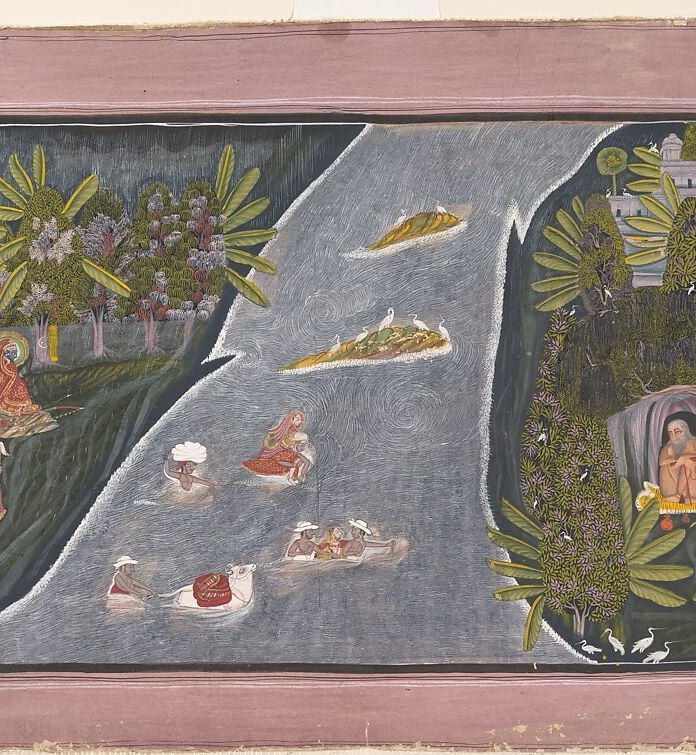
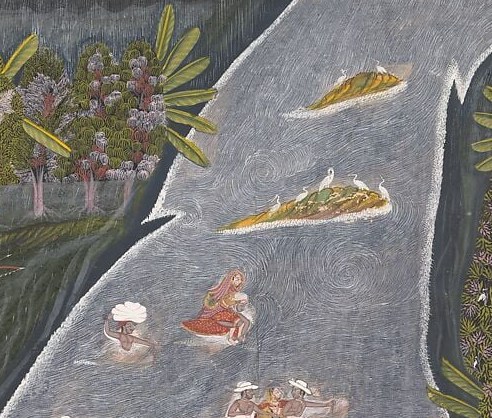
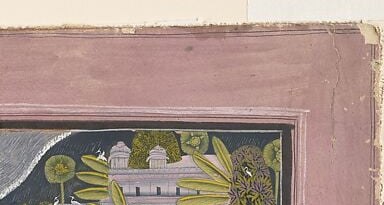
This is a painting by Chokha, titled "Untitled," from around 1820. It lives at the Metropolitan Museum of Art. What you notice first is the river. It is not blue or white but a tarnished metallic gray, the artist used actual silver pigment, and he let it pool and oxidize into something that feels like a real monsoon current, heavy with silt and sky.
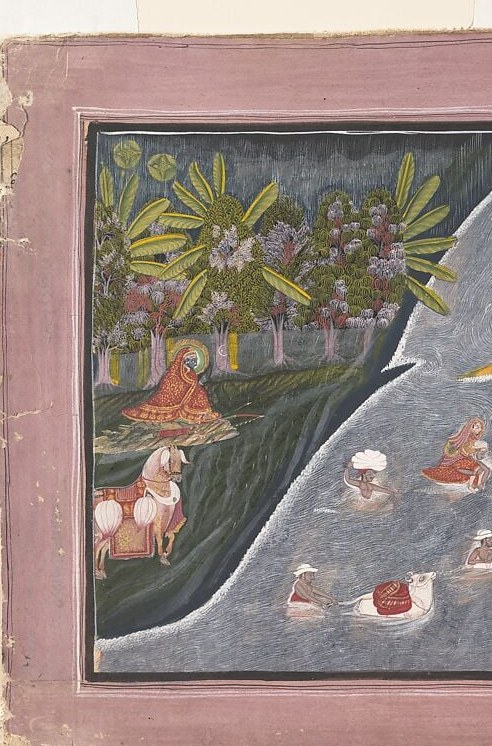
Look at the crossing. Radha, in the center, is being helped through the water by two companions. On the left bank, Krishna waits with his horse, not rescuing her, just watching. That is unusual. In most depictions, Krishna is the active savior; here, he is a patient, almost earthly lover waiting on the shore. A gopi with a cow and a man carrying folded white linens move through the same flood, grounding myth in the daily logistics of a real early-19th-century court.
Chokha worked for the Mewar court, first at Udaipur, then at Devgarh. His father Bagta was a leading painter before him. This family line produced some of the most refined Rajput painting of its era, and then the ateliers faded. Chokha’s name survived in court records, but he signed little. His work was not stolen or forged in any dramatic heist; the quieter loss is that most people scrolling past have never heard his name.
A painting made with silver, gold, and water on paper, intimate, small enough to hold, and it still moves two centuries later. If you stand in front of it at the Met, the river actually shimmers. What other detail would you stop and look at first?
#arthistory #rajputpainting #metmuseum
Details
Transcript
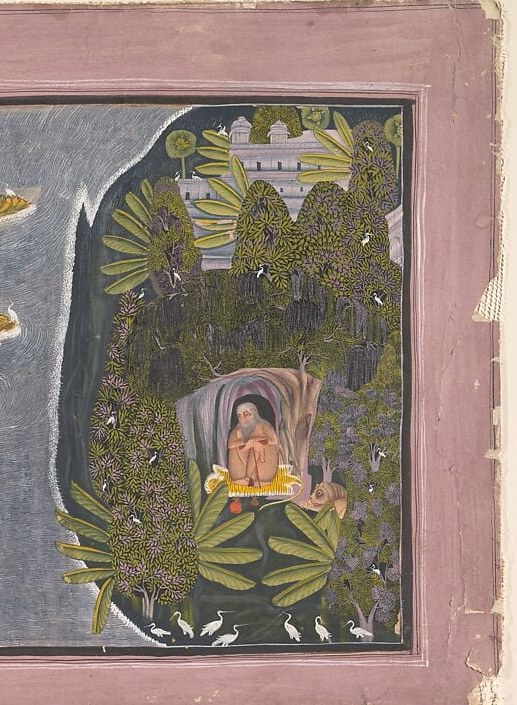
A monsoon river, painted in actual silver. The artist let the pigment pool and swirl. Look at the center: Radha is being helped across. And on the opposite bank, a sage sits with a lion. The painter was Chokha. His father was Bagta. He signed no name here. The court knew his hand.