The Departure of Saints Paula and Eustochium for the Holy Land by Giuseppe Bottani
View the artwork: The Departure of Saints Paula and Eustochium for the Holy Land →
This is Giuseppe Bottani's 'The Departure of Saints Paula and Eustochium for the Holy Land,' painted in 1761. It hangs in the Galleria Nazionale d'Arte Antica in Rome. Paula was a real Roman noblewoman who did something almost unimaginable in the late 4th century: she renounced her vast fortune, her social standing, and her home to make a pilgrimage to the Holy Land with her daughter Eustochium.
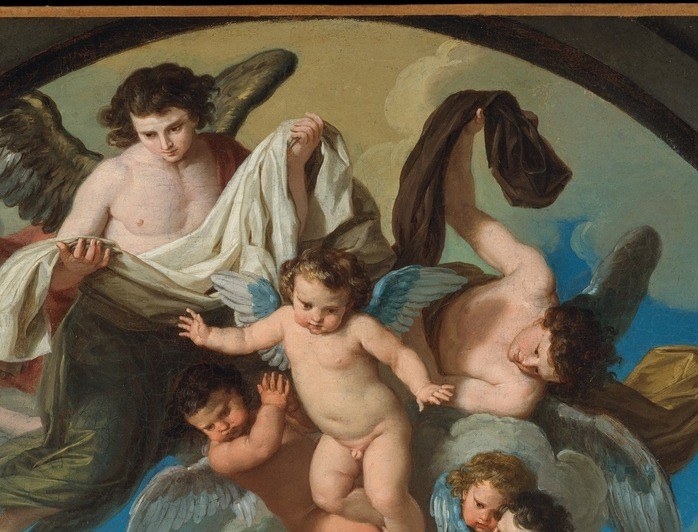
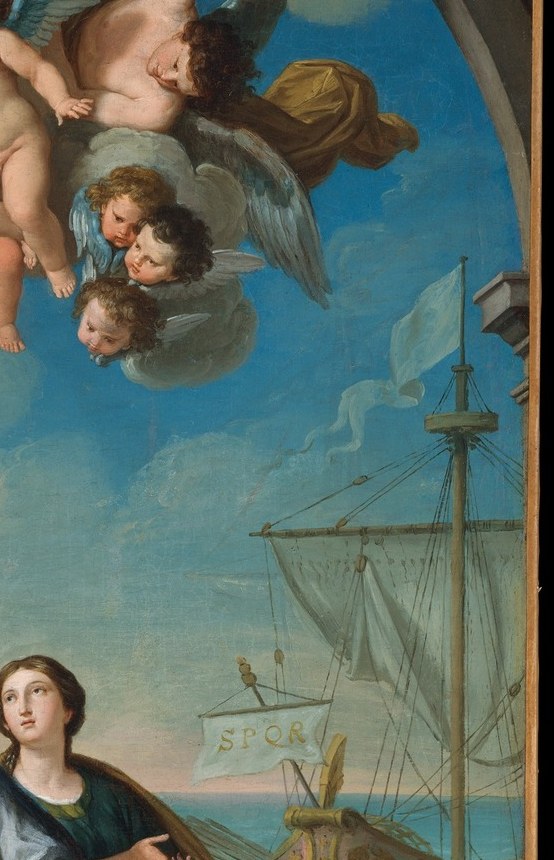
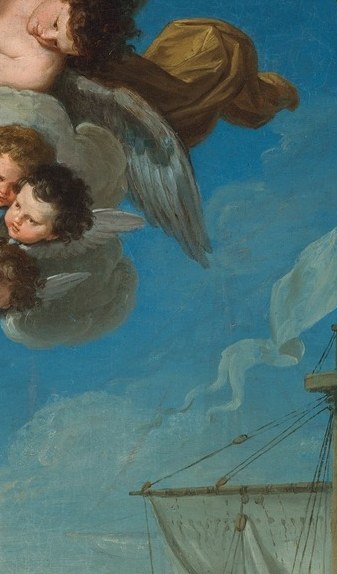
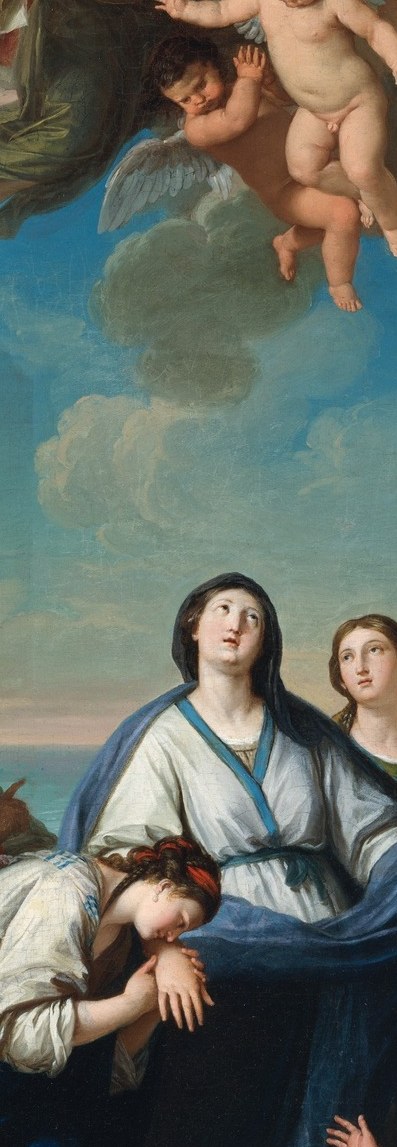
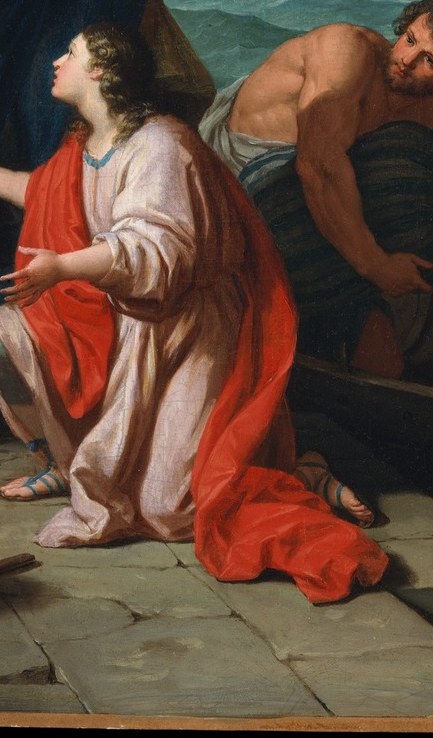
The painting places the two women at the center, calm and luminous. Their joined hands form the emotional anchor of the scene. Above them, angels descend on clouds, holding aloft a white cloth that reads as both an honorific canopy and a sign of the divine protection they believe they are following. In the distant right margin, the actual sailing ship waits on a calm, luminous sea.
But the real cost of Paula's decision is placed quietly in the shadows at the lower left. Historical accounts record that when she walked to the harbor, she left behind her youngest child, a small child who wept on the shore. Bottani includes a grieving woman holding an infant, a small but devastating detail easily missed in reproductions. The painter does not sentimentalize it. He just puts it there, at the edge, where you have to look.
It's a painting that honors a saint's resolve, while still showing what was left on the dock. When you stand in front of it, where does your eye settle first: on the angels, or on the child?
#arthistory #baroque #womeninarthistory
Details
Transcript
Rome, 385 AD. A widow does the unthinkable. Paula was one of the wealthiest women in the empire. She gave it all up, boarded a ship, and sailed for the Holy Land. Her daughter Eustochium joined her. Faith held them together. Angels descend with a white cloth, a sign of divine approval. But look to the bottom left corner. This is what it cost. Paula left her youngest child weeping on the shore.