Untitled by Ranjha|First generation after Manaku and Nainsukh
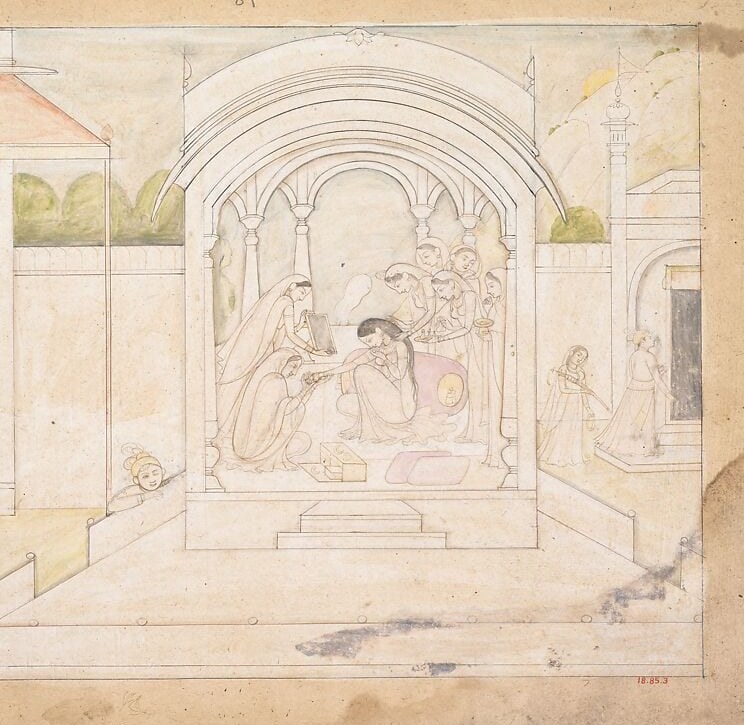
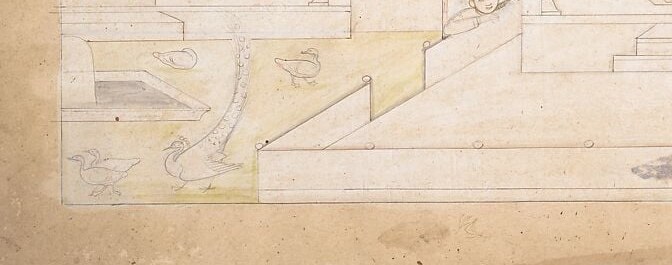
This small, untitled painting was made with ink and opaque watercolor on paper in the hill kingdom of Kangra, in what is now northern India, around 1800 to 1810. It belongs to a generation of painters working after the famed brothers Manaku and Nainsukh, who brought an acute attention to human gesture and naturalistic detail to Pahari art. Here, the subject is neither a god nor a ruler: just two servants in a garden, sharing a private word.
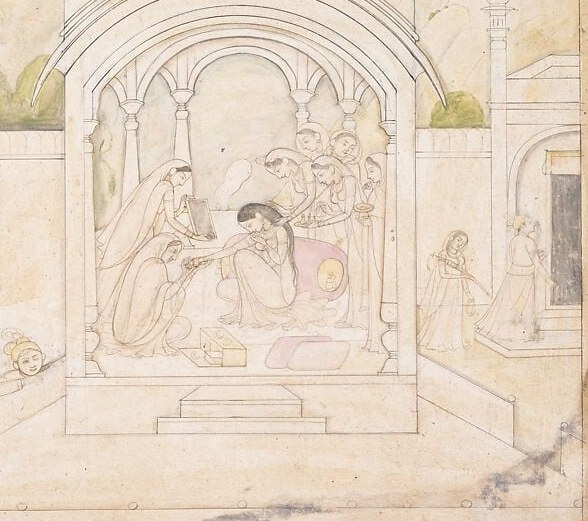
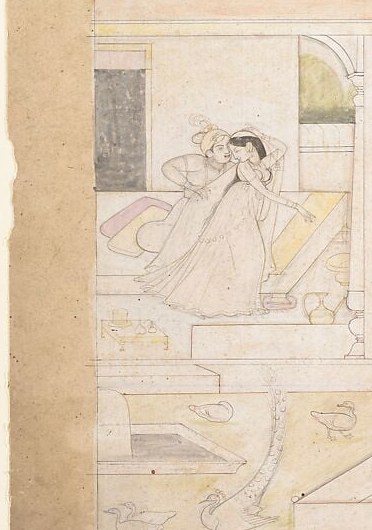
The scene is framed by a pavilion of cusped arches, drawn in pure outline without tonal modeling. That linework alone creates the illusion of receding architectural space, a hallmark of Kangra draughtsmanship. The foliage rising above the roofline tells you this is an open courtyard garden, a recurring setting for intimate narrative in Pahari painting. One figure holds a tray of sweets, in Kangra court culture, a coded signal of favor or occasion, while the other leans in close, her head inclined to deliver the secret. A third figure stands apart at the left margin, spatially excluded from the exchange.
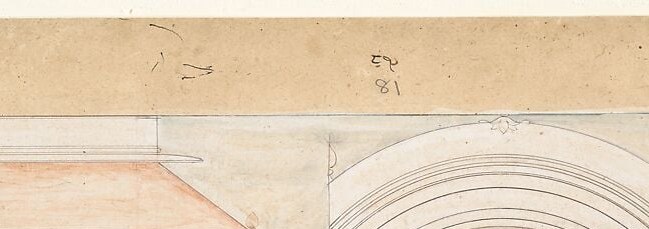
The painter's technique involved thin glazes of transparent pigment, visible especially in the garden's flowers, which take on a luminous, stained-glass quality. The painting's upper margin is largely blank, and no inscription has been identified there, which itself tells us something about its transmission: it may never have been formally catalogued in a court collection.
We don't know what she whispered. The painting holds the moment anyway.
#arthistory #indianminiature #kangrapainting
Details
Transcript
Not every Indian miniature is about gods. This one is from Kangra, around 1800. The painter worked after the great Manaku and Nainsukh. Look at the arches: pure outline, no shading, and full depth. These two figures are the whole story. She leans in close. He receives the whisper. In Kangra painting, a tray of sweets means an occasion. A solitary figure at the margin waits outside the secret.