Woman Playing a Guitar by Simon Vouet
View the artwork: Woman Playing a Guitar →
Simon Vouet's *Woman Playing a Guitar* (c. 1618) made a career but left a mystery. Now at the Metropolitan Museum of Art, this early work launched a French painter who would become the most powerful artist in Paris.
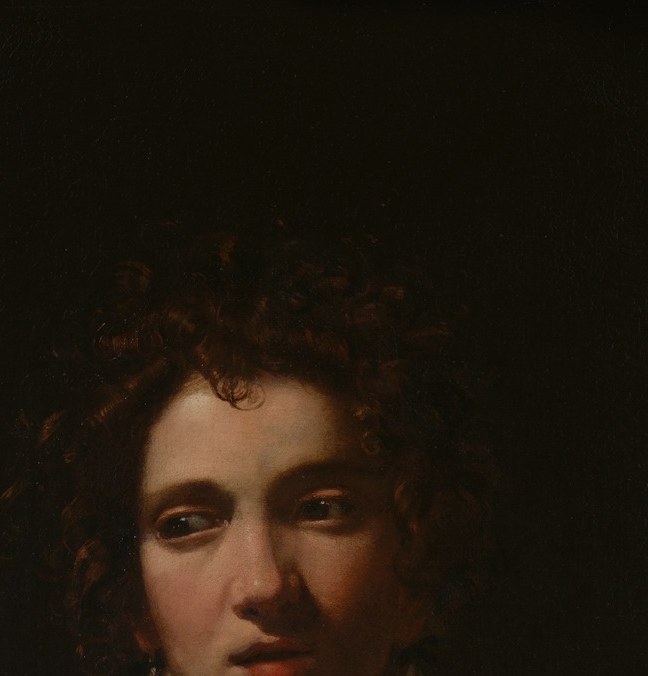
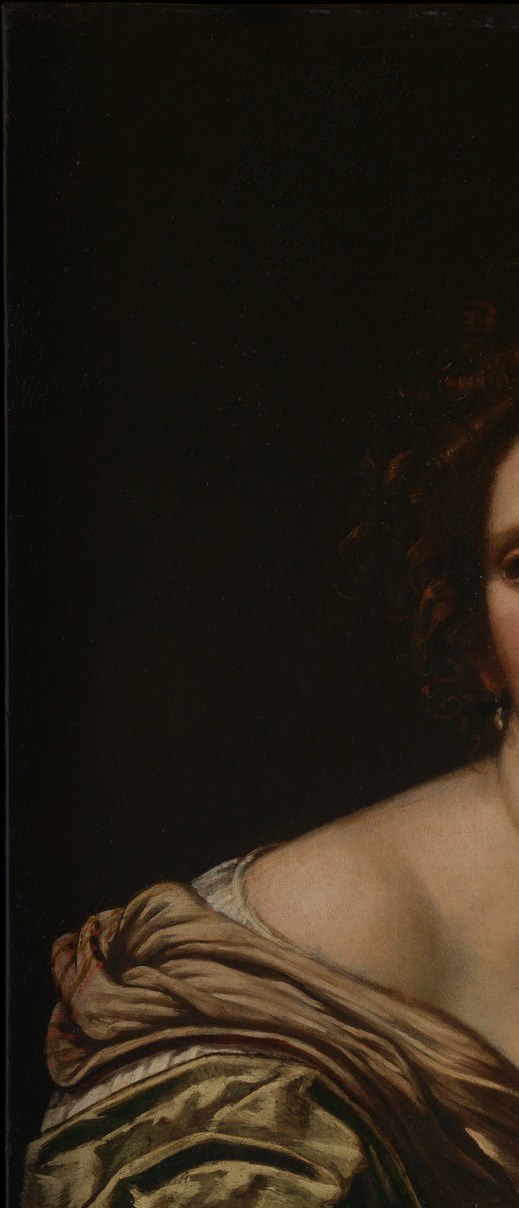
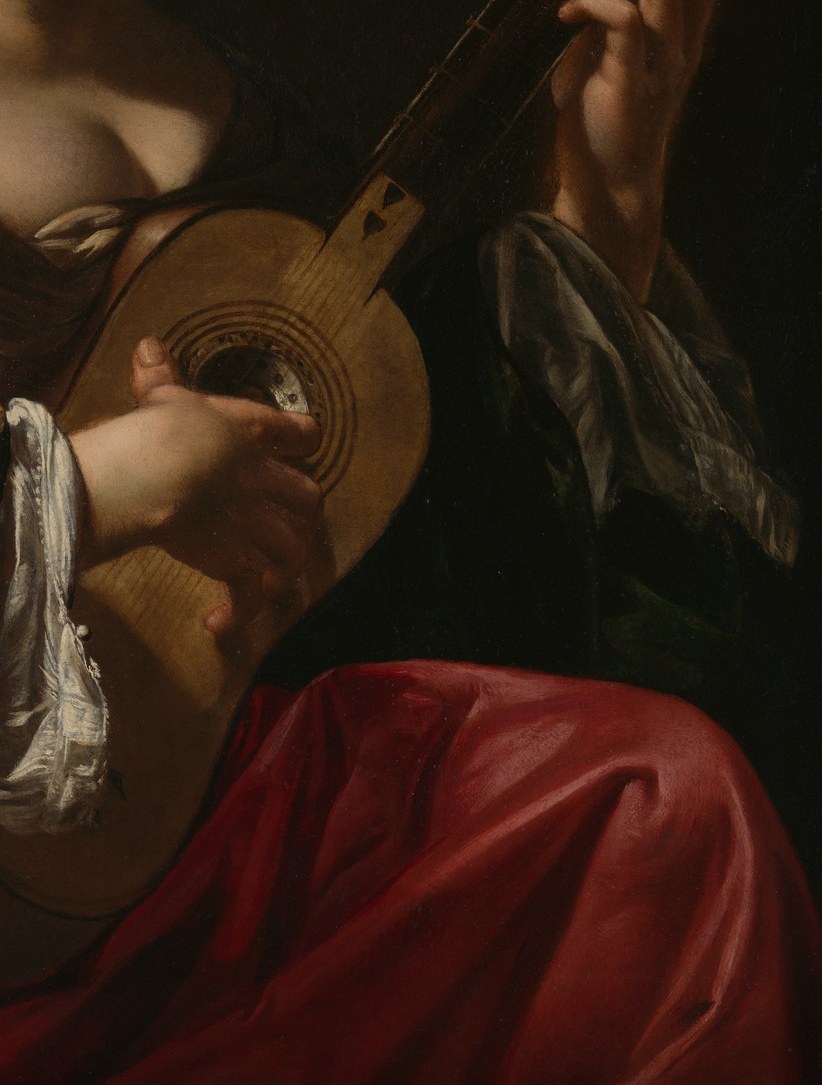
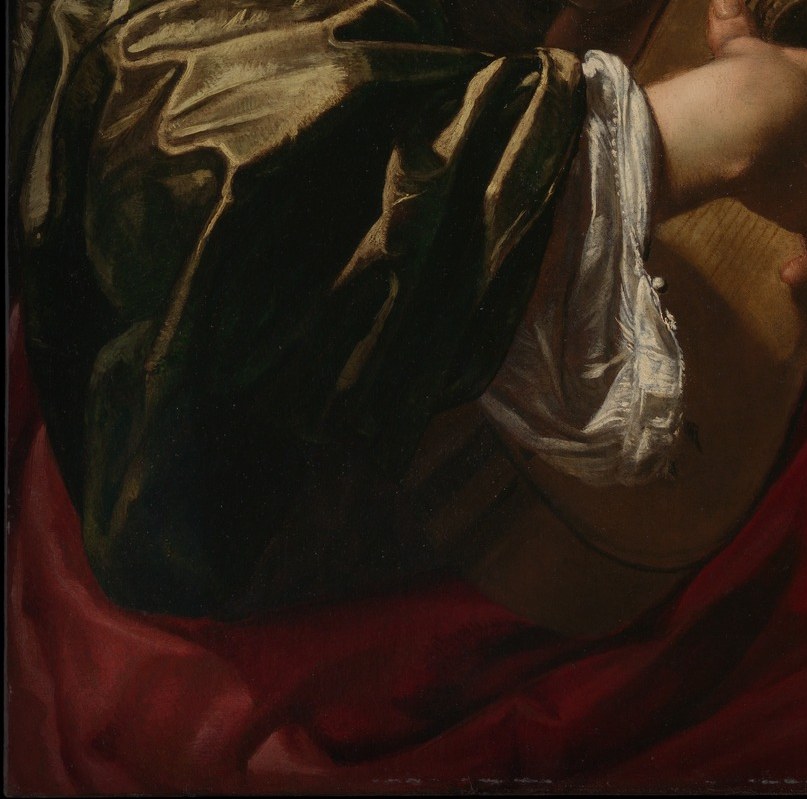
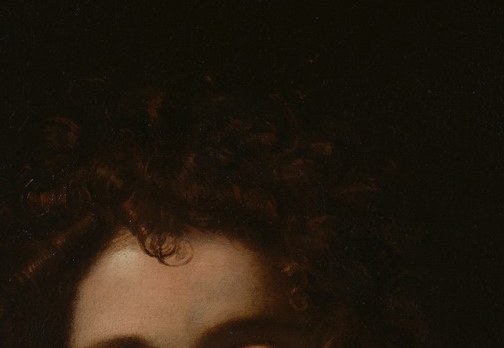
Look at the eyes. She does not meet your gaze. Vouet catches her in a private, unguarded moment, her fingers frozen mid-pluck on the strings. The light falls hard on her face, her bare shoulder, her hands. Everything else drops into near-black shadow. This is tenebrism, the Roman style Vouet absorbed directly from Caravaggio's circle, and he wields it here to eliminate all setting. There is no room, no window, no context. Only the woman and the music exist.
Vouet painted this in Rome around 1618, young and unknown, competing for commissions in a city obsessed with dramatic realism. The painting worked. His reputation spread, and within a decade Louis XIII summoned him back to France, named him Premier peintre du Roi, and handed him the keys to the kingdom. Vouet and his workshop would go on to decorate the palaces and churches of Cardinal Richelieu and the French elite, importing the Italian Baroque to Paris almost single-handedly.
The identity of the woman remains unknown. A patron's wife? A model? She holds Vouet's ambition in her hands, and he gave her the dignity of privacy. The mystery is part of the painting's pull. What do you think: was she someone specific, or an ideal?
#arthistory #simonvouet #baroque
Details
Transcript
She looks away, lost in the music. This is 1618. Simon Vouet is 28, broke, and fighting for attention in Rome. He paints her like a Caravaggio: deep shadow, one strong light. Her fingers are caught mid-pluck. He freezes a single moment of sound. This painting got him summoned back to France. Louis XIII made him First Painter to the King. But we still don't know who she is.