The Annunciation by Girolamo Mazzola Bedoli
View the artwork: The Annunciation →
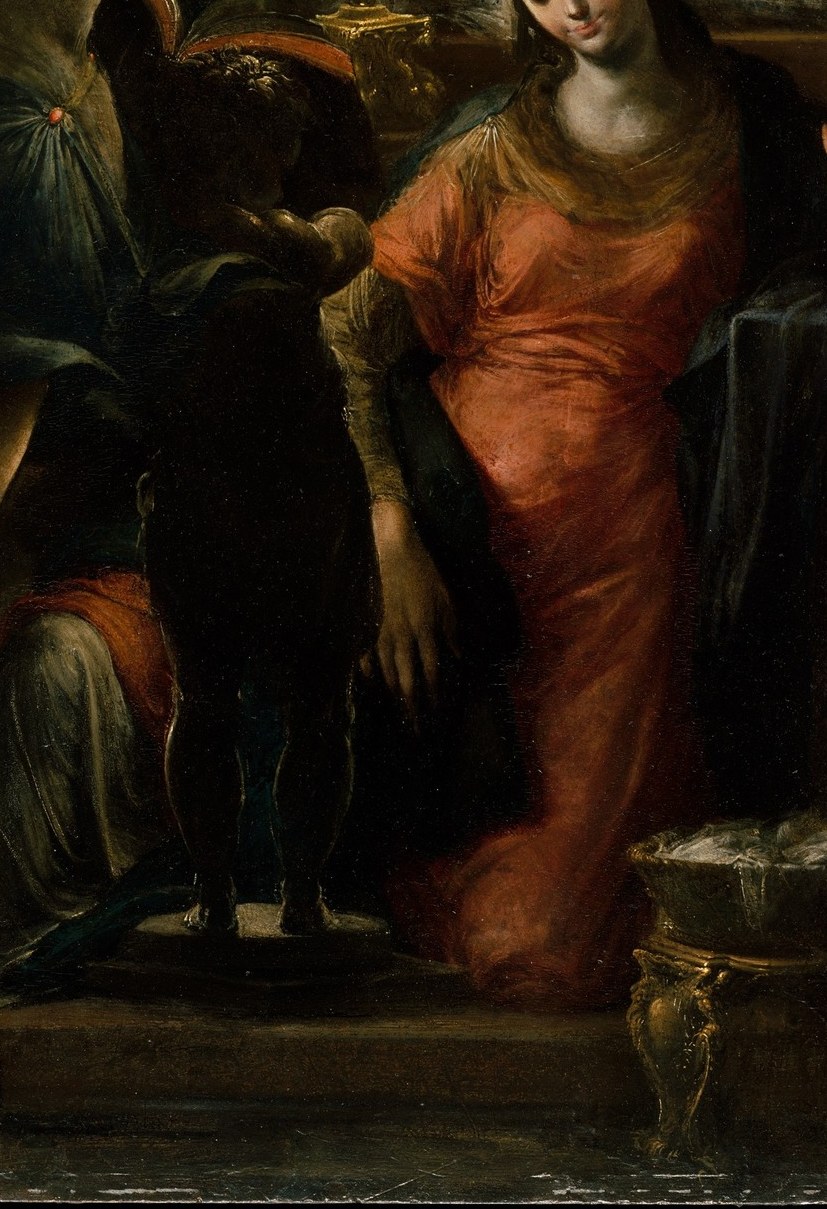
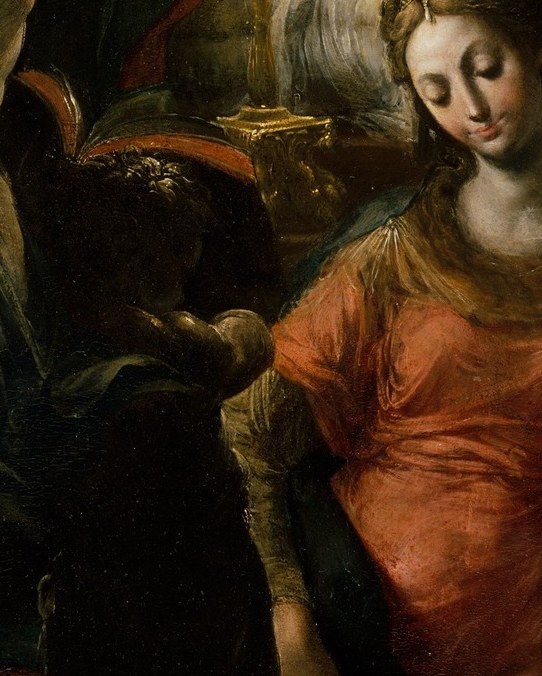
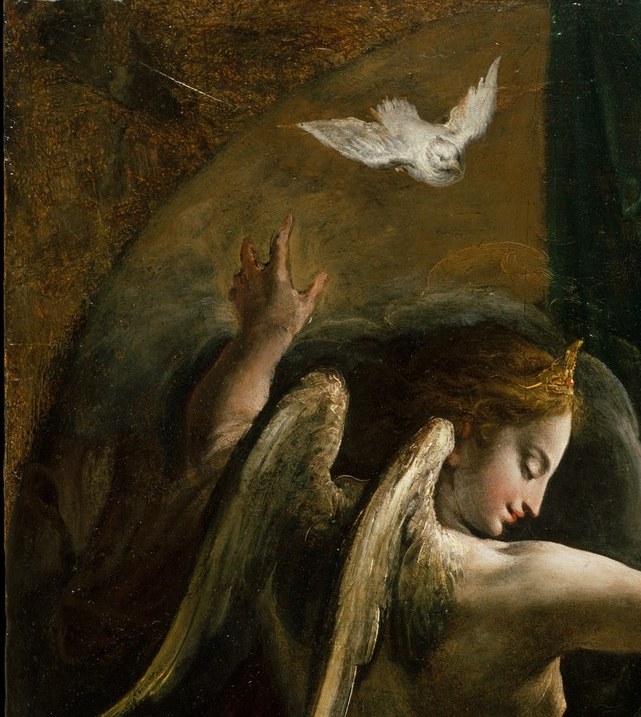
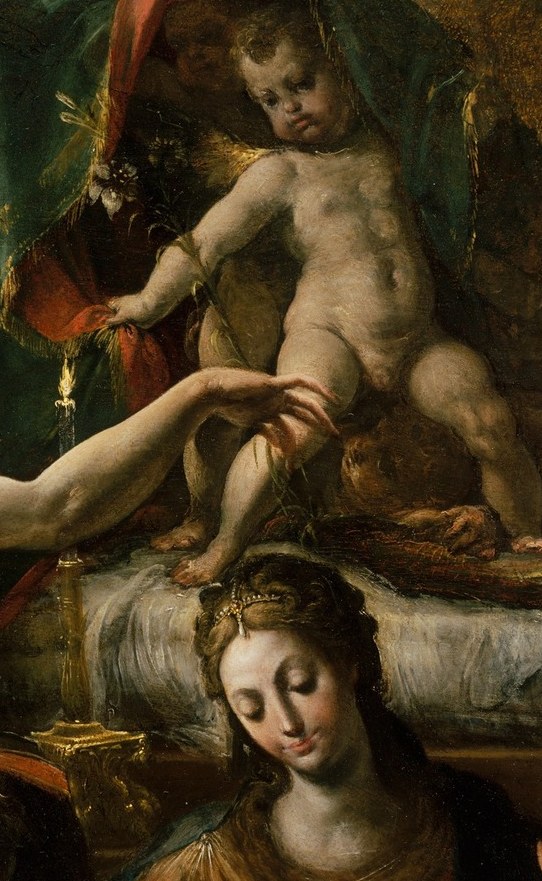
A single candle lights the whole scene, and that candle is the secret to finding everything else. In Girolamo Mazzola Bedoli's The Annunciation, painted around 1560, the artist used a tiny flame held by a winged putto to carve his figures out of near-total darkness. The painting hangs today in the Museo di Capodimonte in Naples, and at first glance it reads as a standard telling of the biblical moment: Gabriel arrives, Mary accepts, the dove descends.
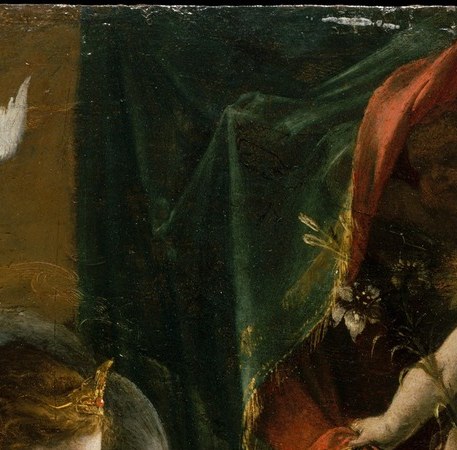
But wait. Let your eye drift past the main trio, into the architectural void on the right side. Out of the shadow, a second angelic face resolves. It is not a sketch or a pentimento bleeding through; it is a fully realized figure, an attendant who has been standing in the dark for four hundred years while the candle draws all the attention to Gabriel and Mary.
Bedoli was the cousin and pupil of Parmigianino, and like his teacher he loved elongated forms and refined, almost courtly elegance. But here he does something psychologically clever. By hiding a witness in the architecture, he reminds the viewer that the Annunciation is a private moment with cosmic consequences: the unseen is always watching.
Next time you stand before a shadowy Renaissance interior, let your eyes adjust. The painter may have left a presence in the dark, waiting for someone to really look.
#arthistory #renaissanceart #hiddeninplainsight
Details
Transcript
The angel kneels. The candle burns. The dove descends. A familiar Annunciation, painted around 1560. Now look past Gabriel, into the deep shadow. A second celestial figure was always there. Bedoli gave the scene a hidden witness.