Landscape with a Peasant and His Flock by Eugène Verboeckhoven
View the artwork: Landscape with a Peasant and His Flock →
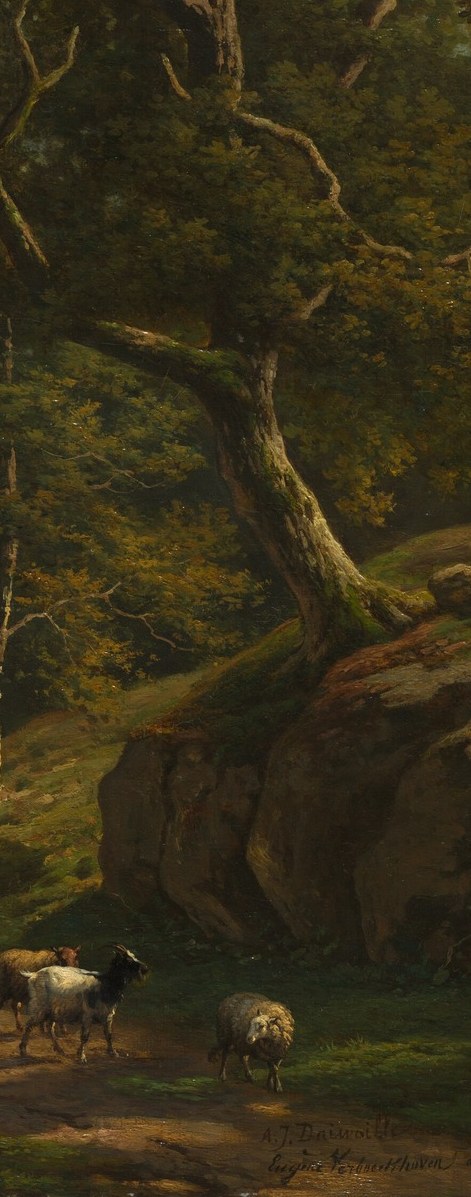
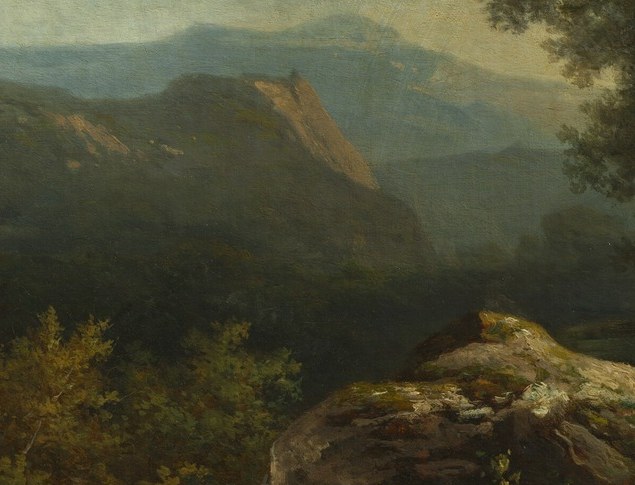
This is 'Landscape with a Peasant and His Flock,' painted in 1854 by two men: Eugène Verboeckhoven and Alexander Daiwaille. The canvas is a product of artistic specialization, a business arrangement that made Verboeckhoven one of the most commercially successful animal painters in 19th-century Europe. He signed the work explicitly for the animals, crediting himself in the lower right corner.
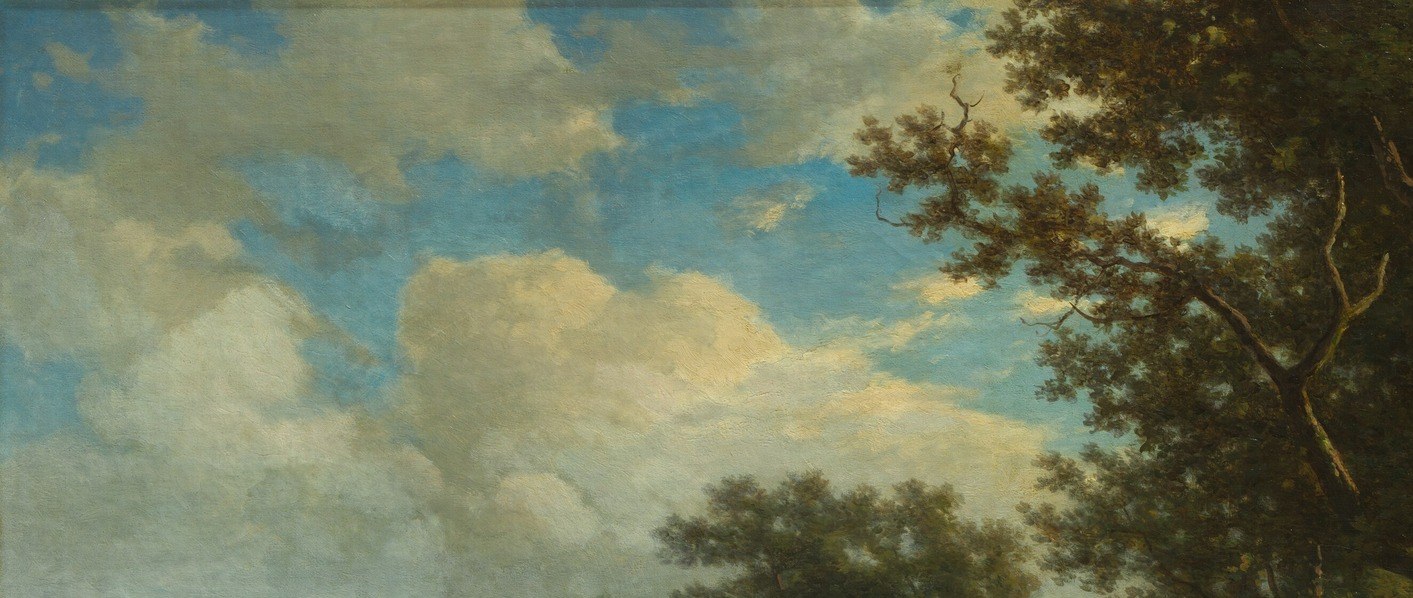
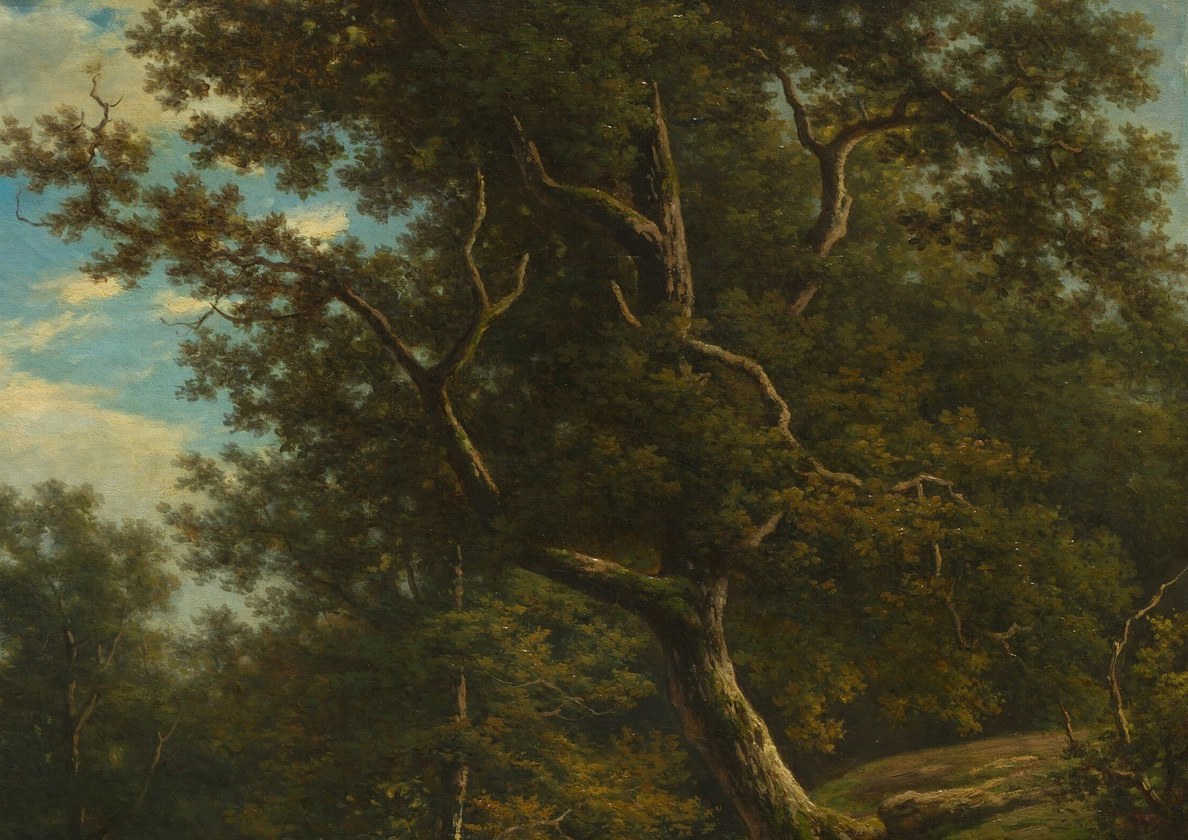
Look closely at that signature area. The faint reddish-brown inscription reads 'Eugène Verboeckhoven animaux,' a rare explicit declaration of divided labor written directly onto the canvas. Above it sits Daiwaille's name, marking him as the landscape hand. The arrangement is the visual key to the whole work: the gnarled oak trunk and luminous cloud cover belong to one artist, while the carefully described sheep, cow, and calf are branded goods from another.
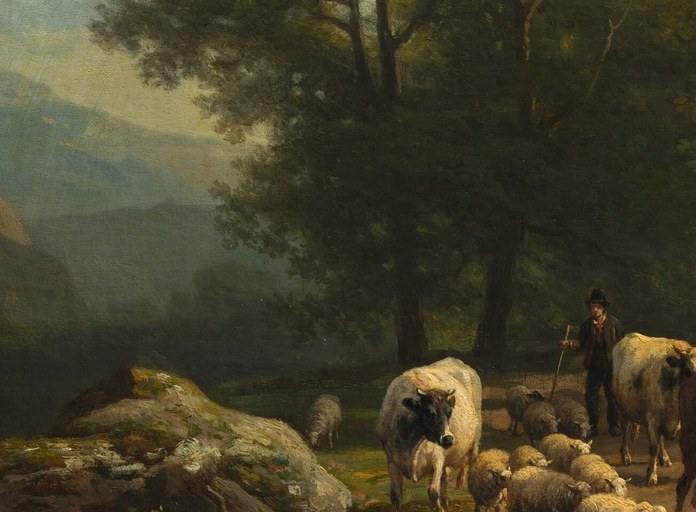
Verboeckhoven built his reputation on hundreds of on-the-spot animal sketches. He could render the dappled hide of a cow or the layered wool of a flock with a precision that commanded premium prices in London, Paris, and St. Petersburg. The animals in this composition are not merely painted; they are inserted assets, strategically placed to lead your eye from the foreground livestock toward a peasant figure and a distant ruin that is easy to miss on first glance.
The painting belonged to Cleveland collector William Nash, who gifted it to the Cleveland Museum of Art in 1966. Today it sits as object number 1966.384 in their permanent collection, a small but telling document of how the Romantic art market worked: landscape set the stage, but livestock paid the bills.
#arthistory #eugeneverboeckhoven #19thcenturyart
Details
Transcript
In 1854, one man painted this landscape. But the animals inside it are what made this canvas expensive. Look at the lower right corner. There are two signatures. One of them actually reads: 'Verboeckhoven, animals.' Verboeckhoven was Europe's most expensive animal painter. His livestock commanded luxury prices in London, Paris, and St. Petersburg. He worked from hundreds of field sketches to get each woolly fleece exactly right. The landscape was painted by Alexander Daiwaille, who never charged the same.