Wheat Fields by Jacob van Ruisdael
View the artwork: Wheat Fields →
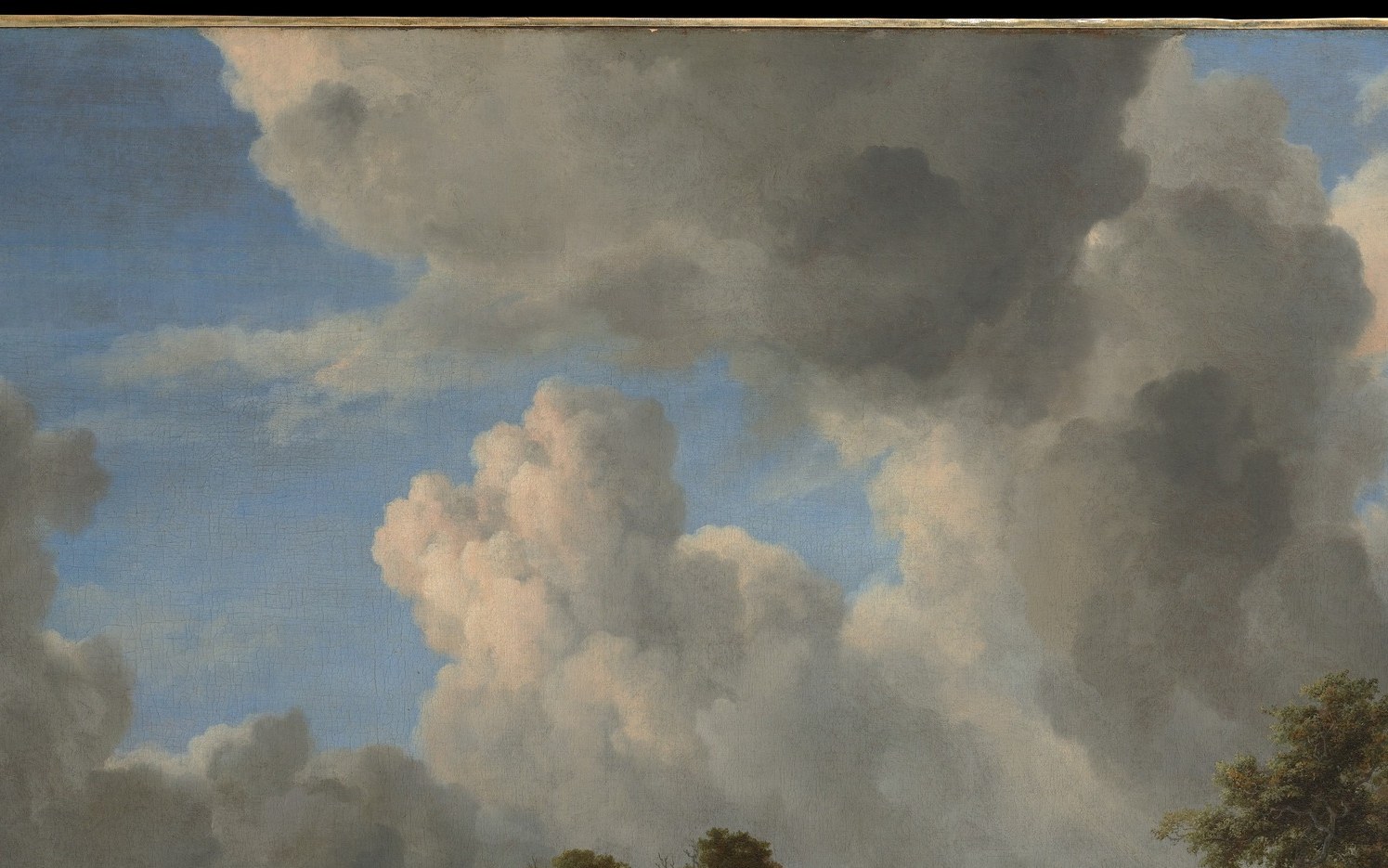
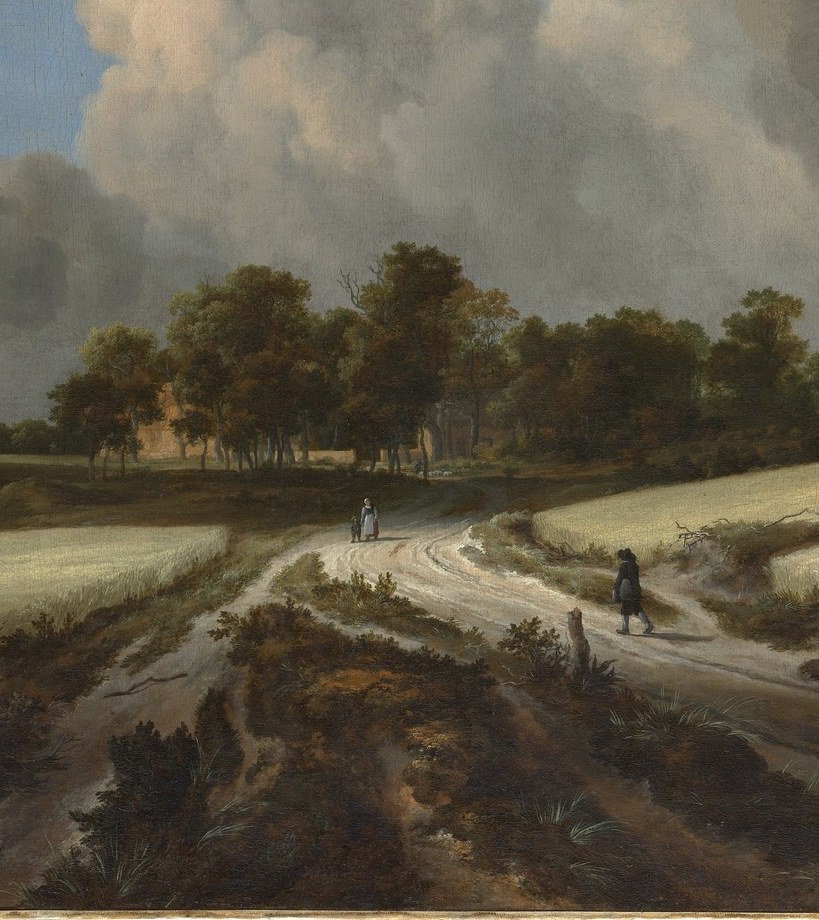
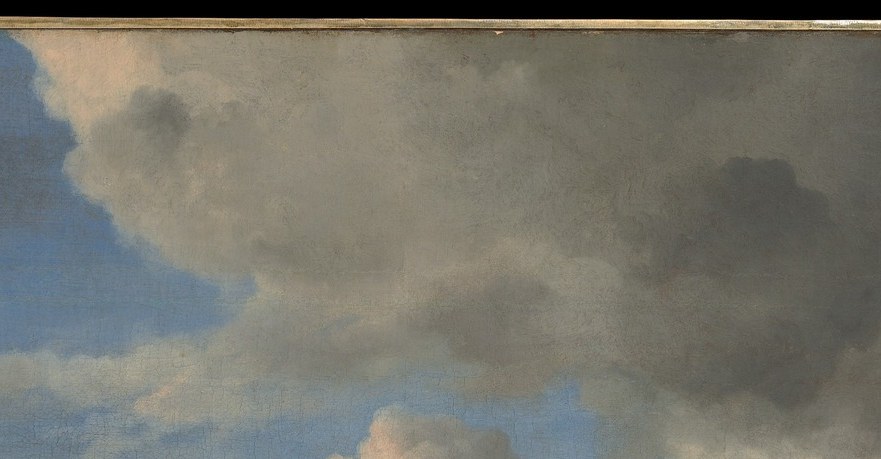
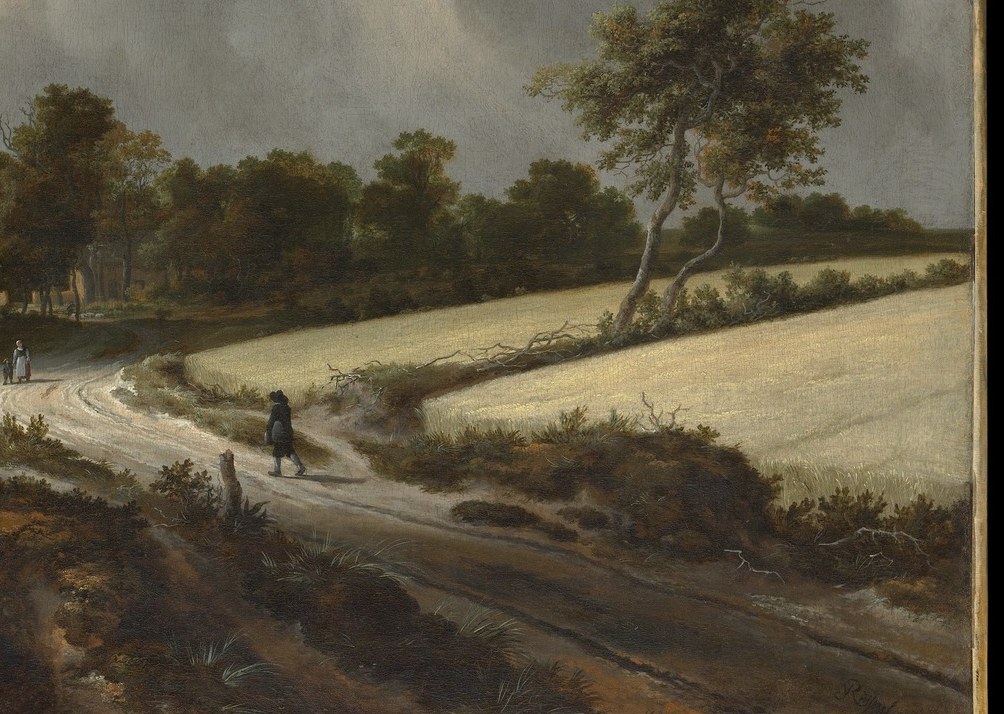
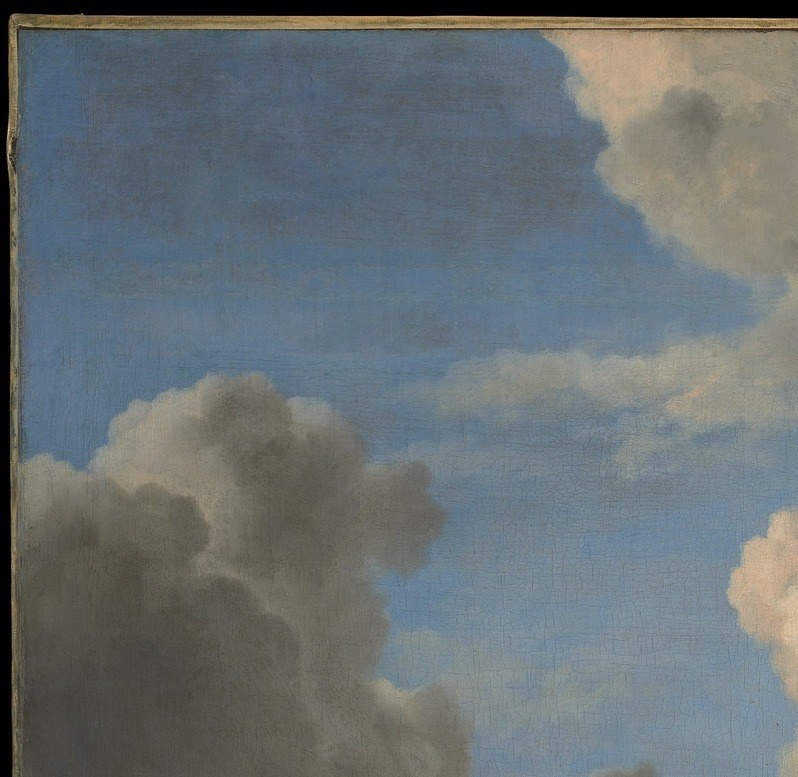
Jacob van Ruisdael's Wheat Fields (c. 1670) is a serene vision of the Dutch countryside. The sky is the painting's true subject, its monumental cumulus clouds shifting from brilliant white to dark steel grey. The Metropolitan Museum of Art holds this work, which exemplifies the quiet drama of the artist's mature landscape style.
Walk yourself slowly through the composition. The pale dirt road pulls you diagonally into the scene, just past a tiny cluster of figures whose presence reveals how small people are against this field and sky. A golden wheat field shimmers on the right, while heavy shadow fills the scrubby vegetation along the left edge. The sunlit break in the clouds above is the painting's emotional peak: a theatrical shaft of light Ruisdael orchestrates like a stage director.
Ruisdael, the greatest landscapist of the Dutch Golden Age, died in poverty around 1682. But his works have since become some of the most admired and most desirable in existence. Dutch landscapes like this one have been a prime target for art thieves for centuries: small enough to smuggle, easy to resell, and universally loved. The serene face of this painting hides a turbulent history shared by the genre.
There is a deep human need to own a beautiful view. What landscape would you risk everything to hang on your wall?
#arthistory #dutchgoldenage #ruisdael
Details
Transcript
A wheat field under a big Dutch sky. It looks so peaceful. But this kind of painting was the number one target for art thieves. Small and easy to sell, Dutch landscapes have been stolen for centuries. Look how Ruisdael makes the sky the real subject here. He sets the horizon low so light and weather dominate everything. The darkness pushing in from the left is never far away. Ruisdael himself died in poverty. A landscape like this now is priceless.