Virgin and Child with Angels by Bernard Van Orley
View the artwork: Virgin and Child with Angels →
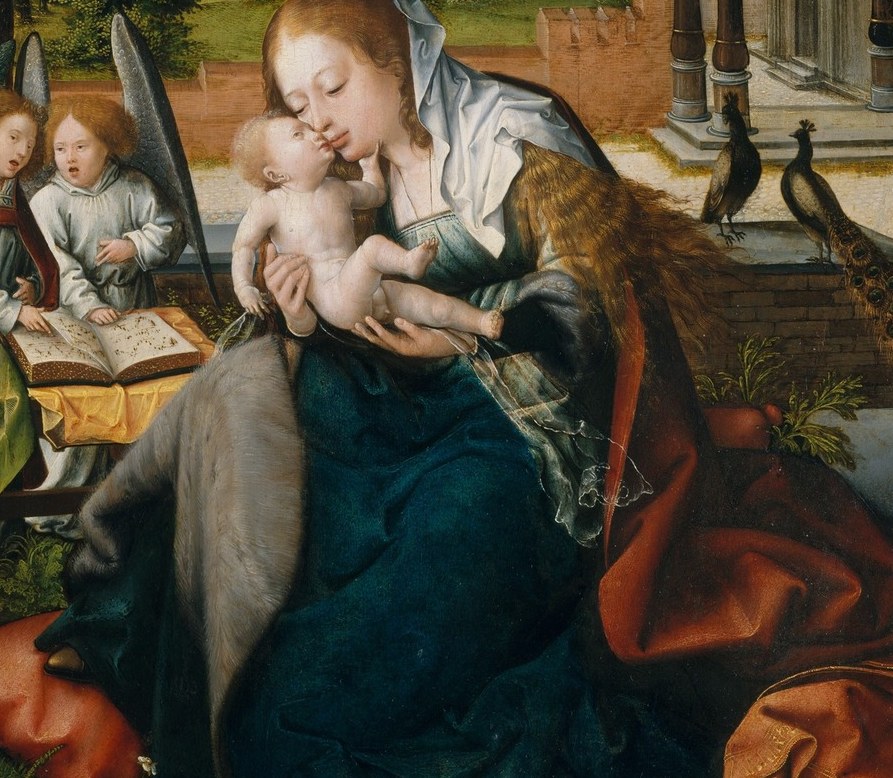
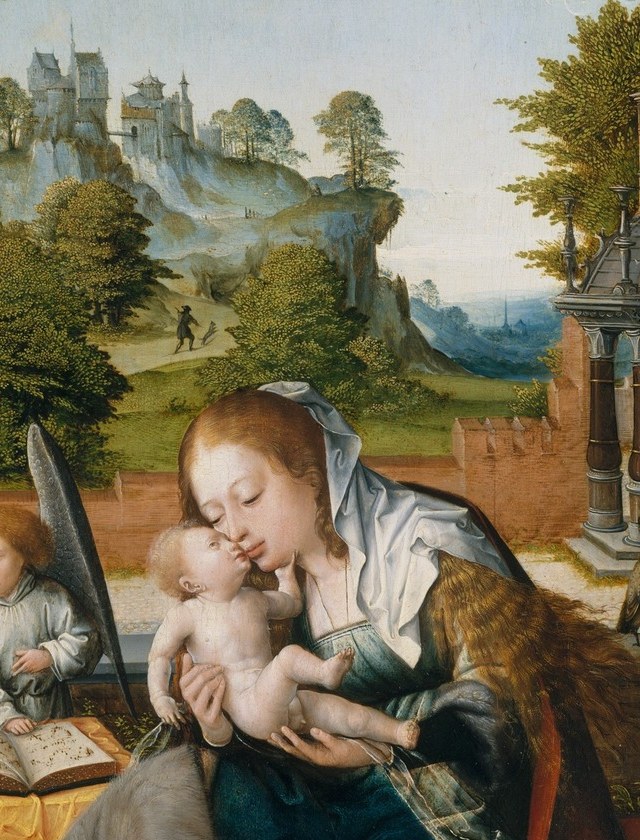
Bernard Van Orley's "Virgin and Child with Angels" (1518) is a Flemish devotional painting built like a code. Every object carries a theological meaning that a 16th-century viewer in Brussels would have recognized immediately.
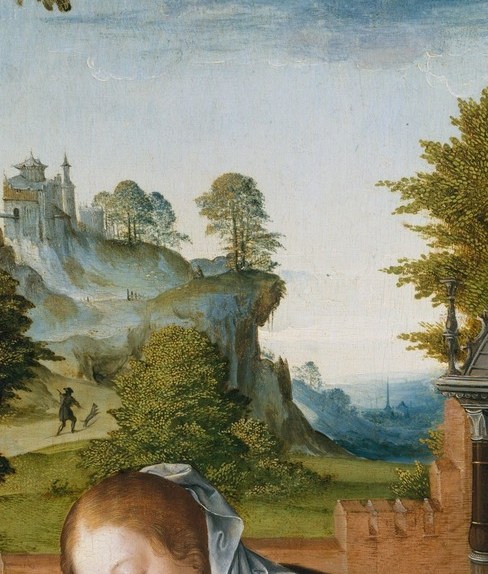
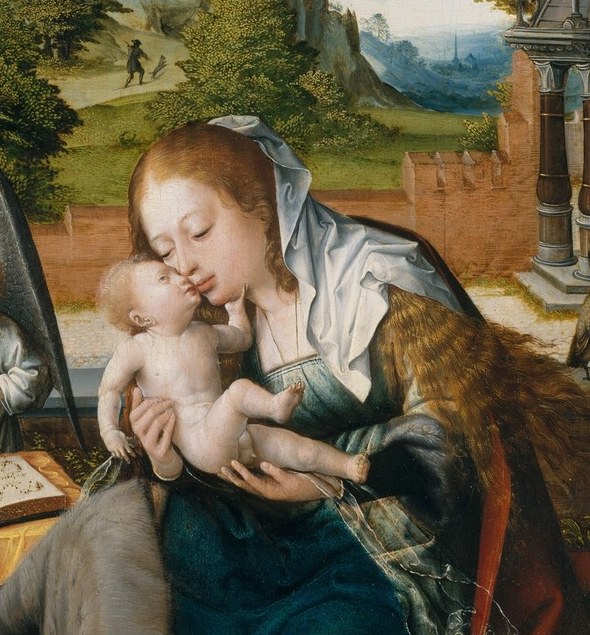
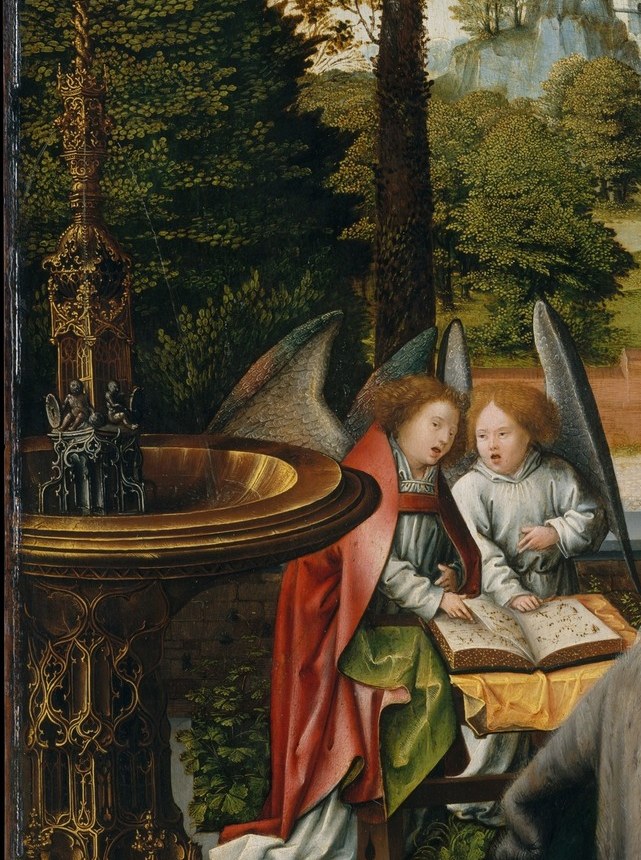
Look first at her clothing. The deep blue of her garment signifies heavenly purity; the vivid red draped across her lap signals the future suffering of Christ. Behind her, the fountain is a Marian symbol called the "fons vitae," or fountain of life, casting her as the source of spiritual sustenance. The tall dark trees create a "hortus conclusus", an enclosed garden, a medieval metaphor for Mary's perpetual virginity.
Van Orley never traveled to Italy, but he absorbed Raphael's influence through prints circulating in the Habsburg courts. He served as court artist to Margaret of Austria and later Mary of Hungary, running a large workshop that designed paintings, tapestries, and stained glass. This panel likely came from that busy Brussels studio, where assistants executed much of the physical painting from the master's designs.
A mother holding her child, dressed in a prophecy of his death. The painting asks you to see both things at once.
#arthistory #flemishart #northernrenaissance
Details
Transcript
She wears red and blue, the two colors of Mary. Blue for her purity, red for the coming Passion. The fountain means she is the source of living water. The dark trees enclose her. A perfect, closed garden. The angel holds a book of prophecy, already open. All these symbols together mean one thing: she knows.