Christ in the Wilderness by Moretto da Brescia
View the artwork: Christ in the Wilderness →
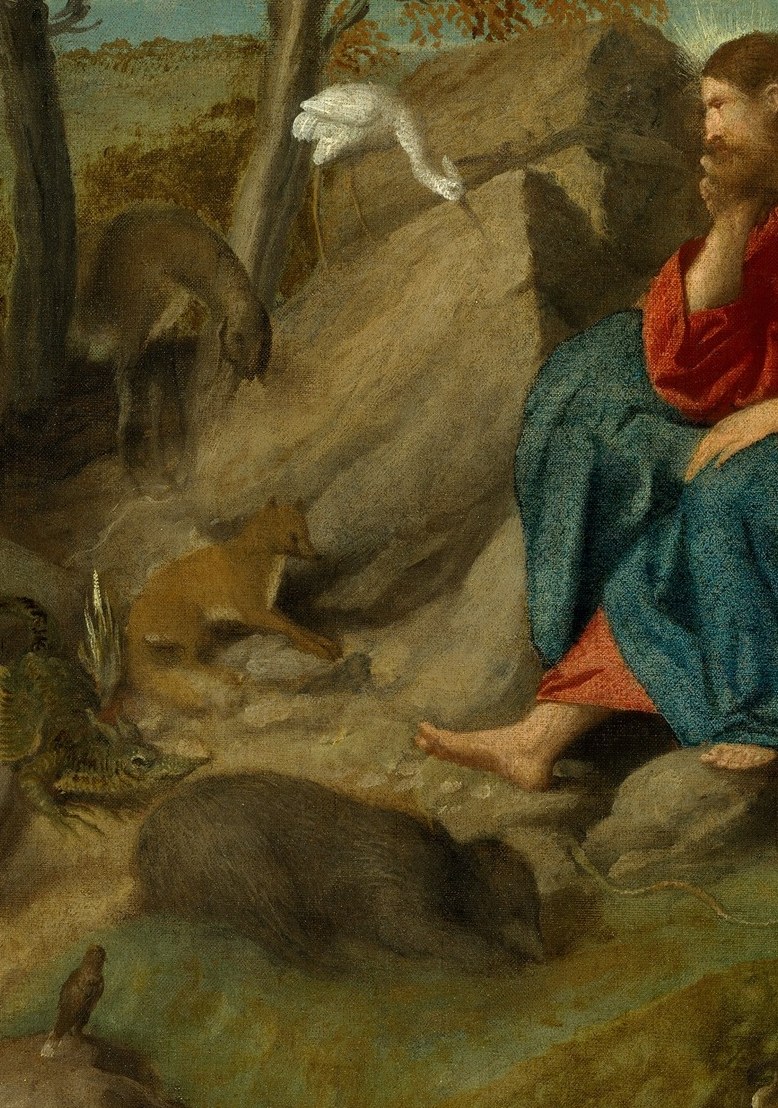
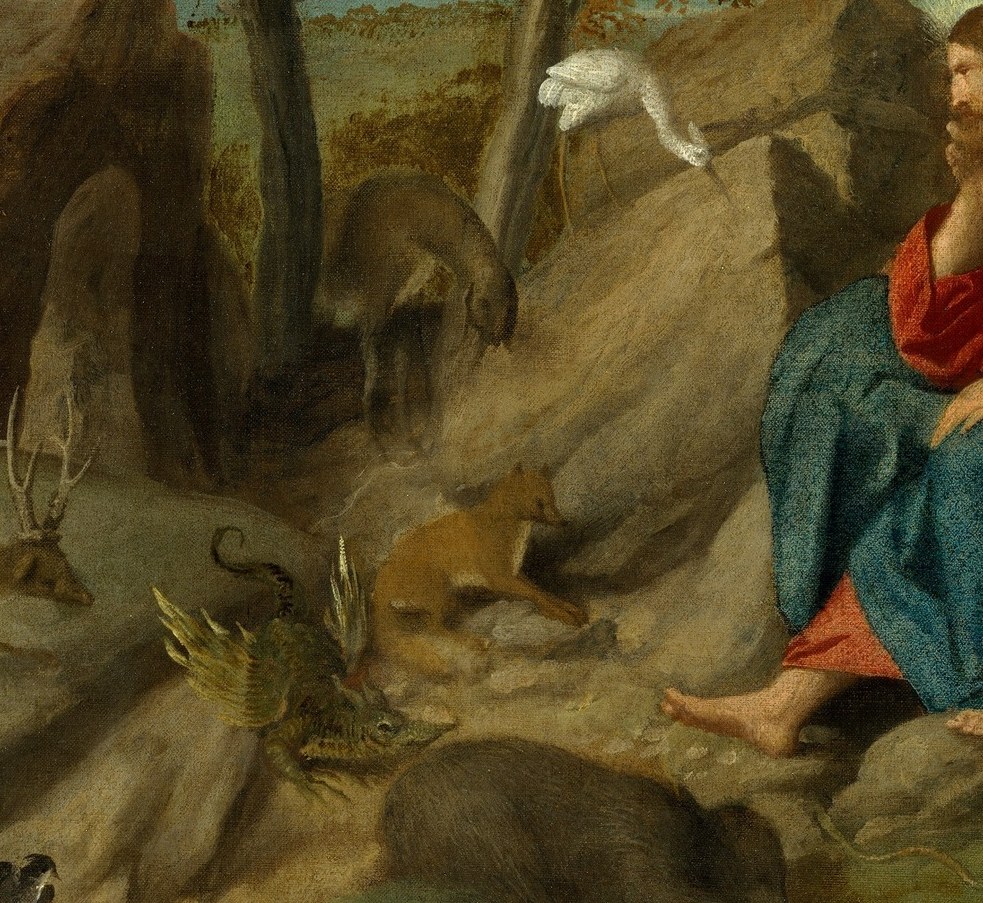
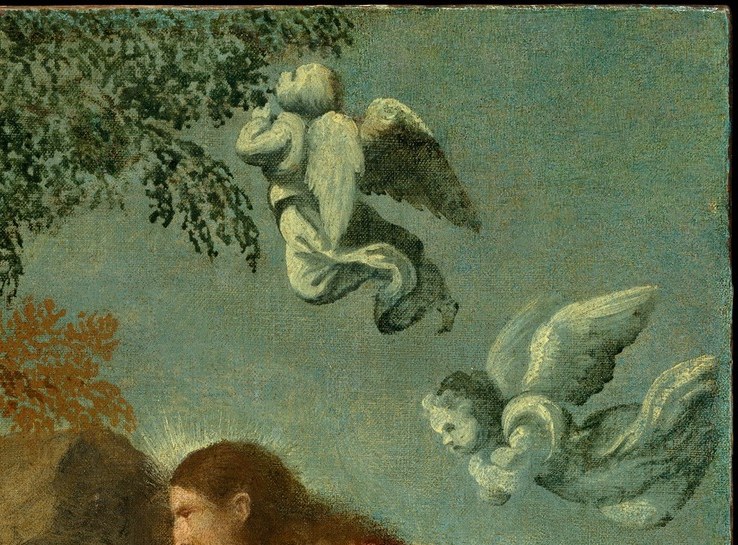
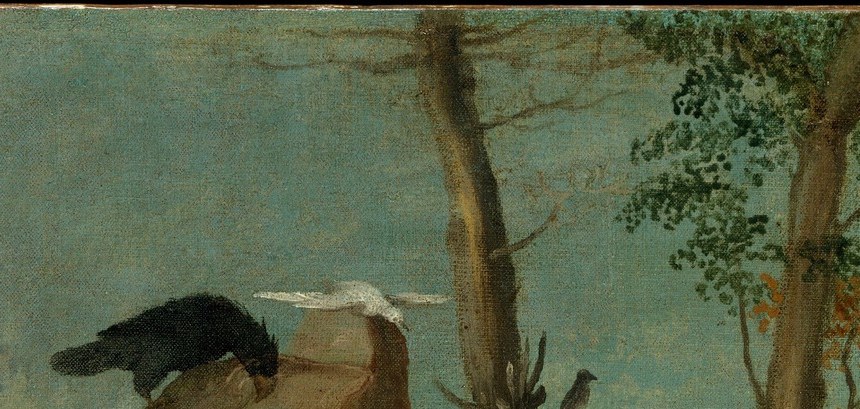
In the 1980s, conservators at the Metropolitan Museum of Art made a remarkable discovery. Moretto da Brescia's *Christ in the Wilderness*, dated to around 1515-20, was hiding a secret. Later hands had painted over celestial figures at the left and top of the canvas. The reason for the overpainting, scholars now believe, is that the painting is a fragment, cut from the background of a larger altarpiece and sold as a standalone work.
Look at the upper left portion of the painting, where the silvery sky breaks through the rocky crags. The faint, luminous forms of ministering angels are visible there, restored to the composition after centuries hidden beneath a crude disguise. The truncated edges had been camouflaged to make the fragment look intentional, a common practice when larger works were broken up for the art market.
The irony is that the sawed-off fragment outlived whatever larger scheme it once belonged to. Perhaps it was saved because of that central face. Christ is shown not rebuking Satan in a dramatic confrontation but in solitary prayer, hands clasped, a faint halo just barely readable around his head. The forty-day fast is compressed into this single contemplative pose.
Moretto da Brescia, born Alessandro Bonvicino, was a master of the Venetian school known for a silvery, restrained light and a preference for interiority over spectacle. The Met acquired the work in 1911 through the Rogers Fund. What was once hidden is now on full display, a fragment that accidentally became a complete devotional image. When is a partial painting more powerful than a whole one?
#arthistory #morettodabrescia #renaissance
Details
Transcript
In 1980, conservators at the Met made a strange discovery. Look closely at the upper left and top edge. Someone had painted over the angels to hide a rough cut. Scholars realized the truth: this is a fragment. Sawn from a larger altarpiece and sold for profit. But the fragment itself survived because of Christ's face. His expression is not triumphant. It is interior, solitary anguish.