Sunday at the Church of Saint-Philippe-du-Roule, Paris by Jean Béraud
View the artwork: Sunday at the Church of Saint-Philippe-du-Roule, Paris →
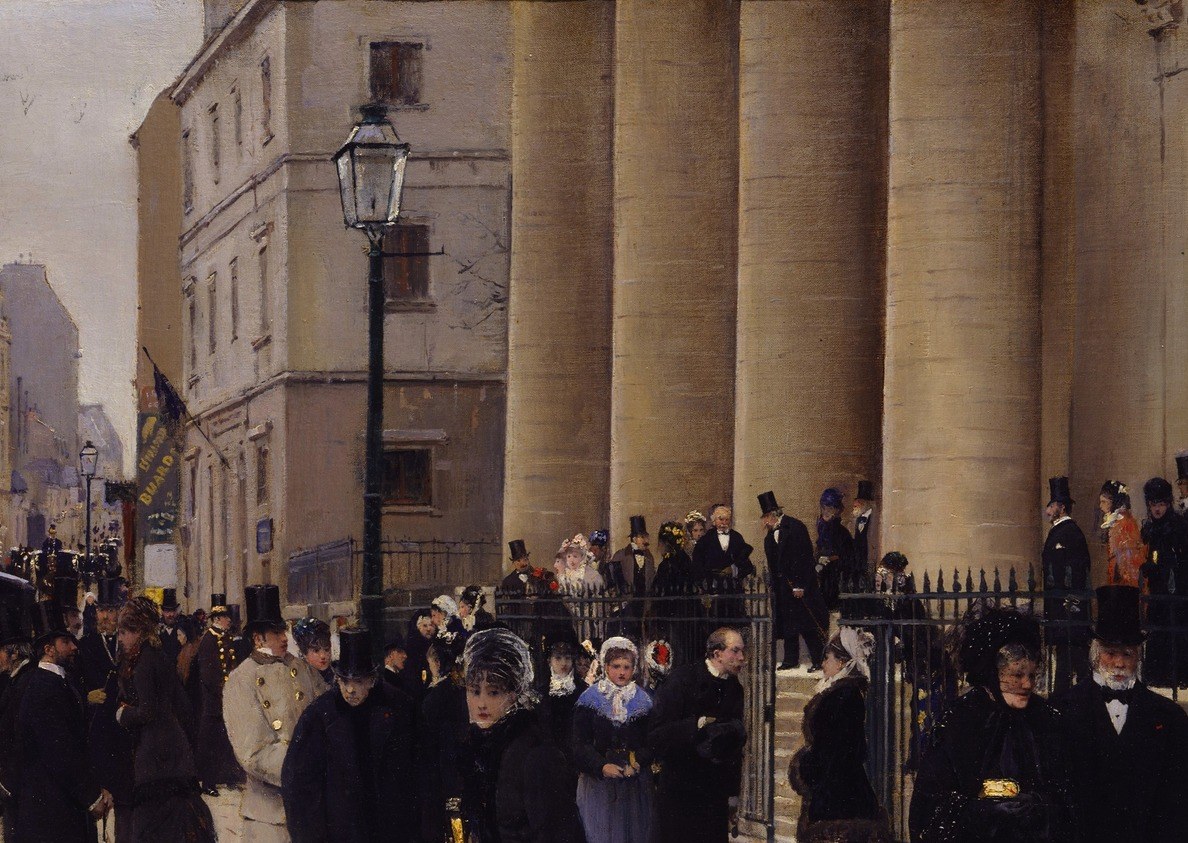
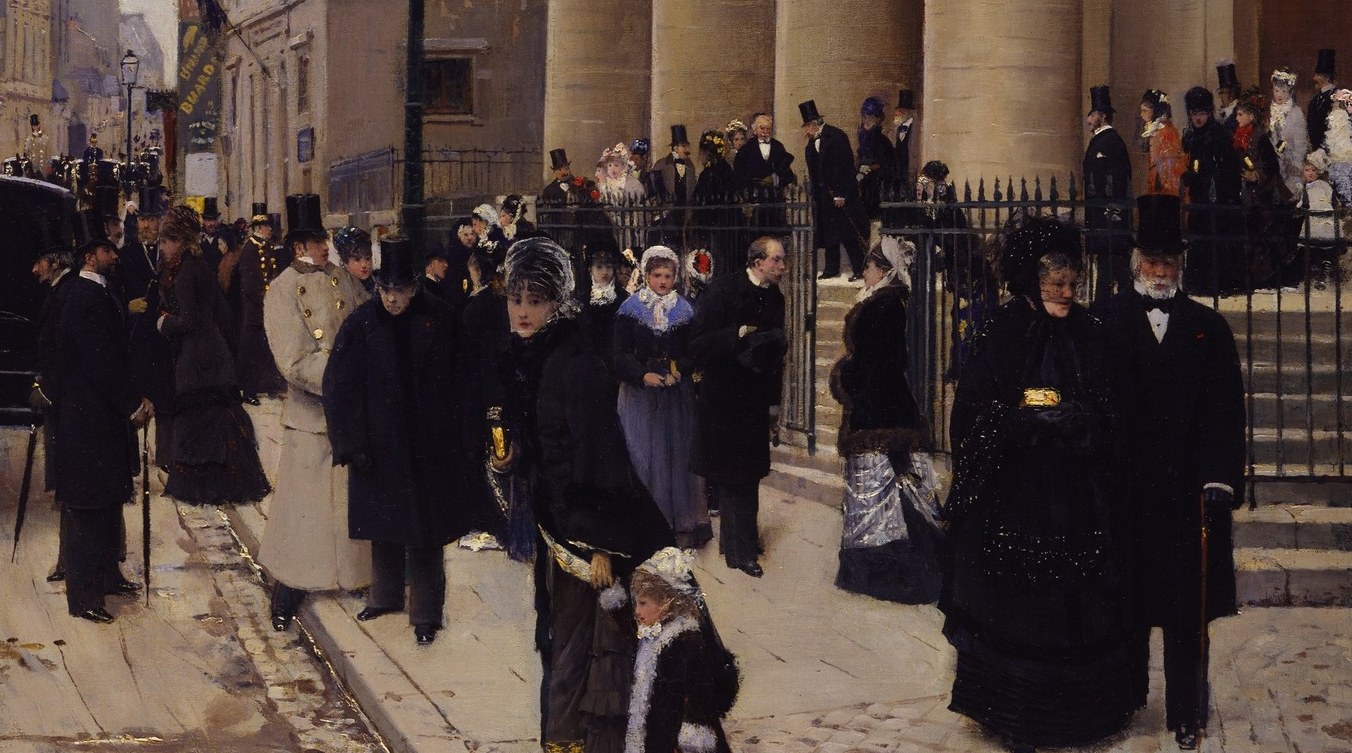
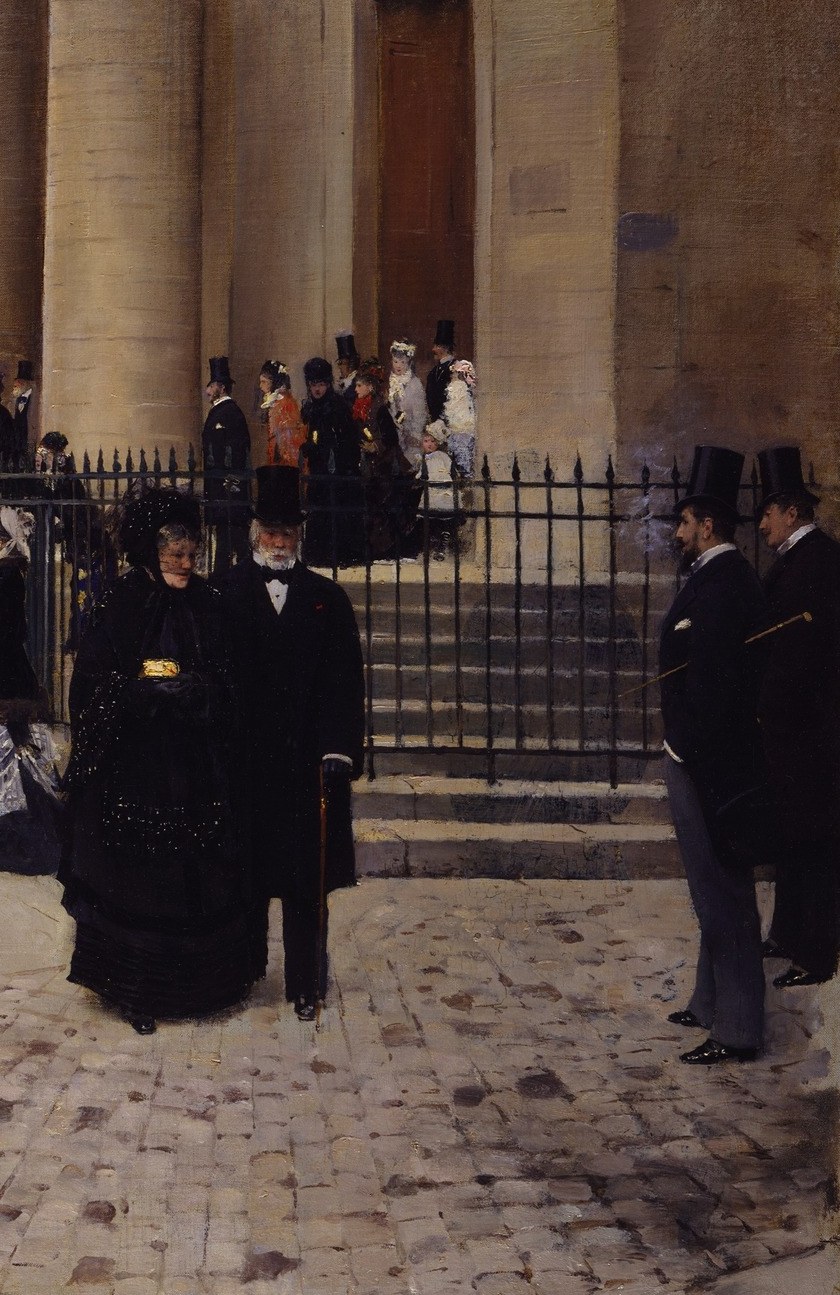
This is Jean Béraud's 'Sunday at the Church of Saint-Philippe-du-Roule, Paris,' painted in 1877 and now held in the Musée Carnavalet. It is less a religious painting than a sociological document: a near-photographic record of how the Parisian bourgeoisie dressed, gathered, and performed their Sunday ritual during the Belle Époque.
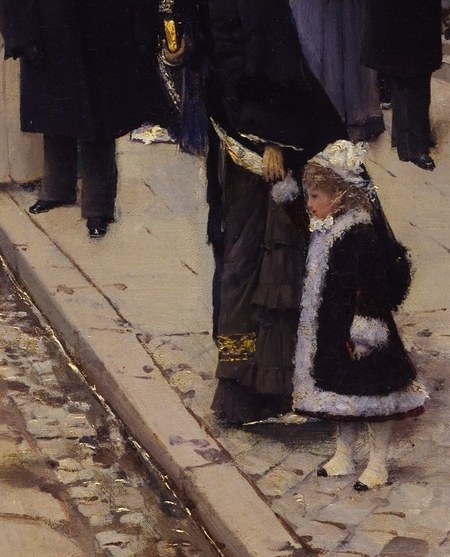
Look first at the sea of black. Sunday dress was a uniform, and Béraud captures it with subtle differentiation, every figure has a distinct posture and social cluster despite the shared darkness. Then find the child in the white bonnet near the center. That single flash of pure white in a field of mourning-dark coats is no accident; it is a deliberate counterpoint, innocence set against rigid adult propriety. Notice too the horse-drawn carriage waiting left. These parishioners were driven to mass, not walking, a quiet class marker tucked into the margin.
Béraud was a meticulous chronicler of everyday Parisian life, known for his scenes of the Champs Elysées, cafés, and the banks of the Seine. Here, he turns that ethnographic eye on the Church of Saint-Philippe-du-Roule, a neoclassical temple in the 8th arrondissement. The overcast winter light unifies the whole scene: shadows are soft, dark fabrics absorb rather than reflect, and the wet cobblestones carry the specific, tactile feel of a Parisian street after rain.
What fascinates about this painting is its restraint. It does not celebrate or critique. It simply witnesses, the lingering on the steps, the gossip, the carriage, the child. What do you think the people on those steps are talking about?
#arthistory #jeanberaud #belleépoque
Details

Transcript
Paris, 1877. The end of Sunday mass. A congregation in black spills out onto the wet cobblestones. Fur collars and top hats mark the well-off parishioners. Their carriage waits left. They do not walk home. But one small figure breaks the uniform darkness. A child in white. Pure contrast to the adult ritual. Béraud painted Parisian life with anthropological precision.