Storm-Tossed Frigate by Chambers, Thomas
View the artwork: Storm-Tossed Frigate →
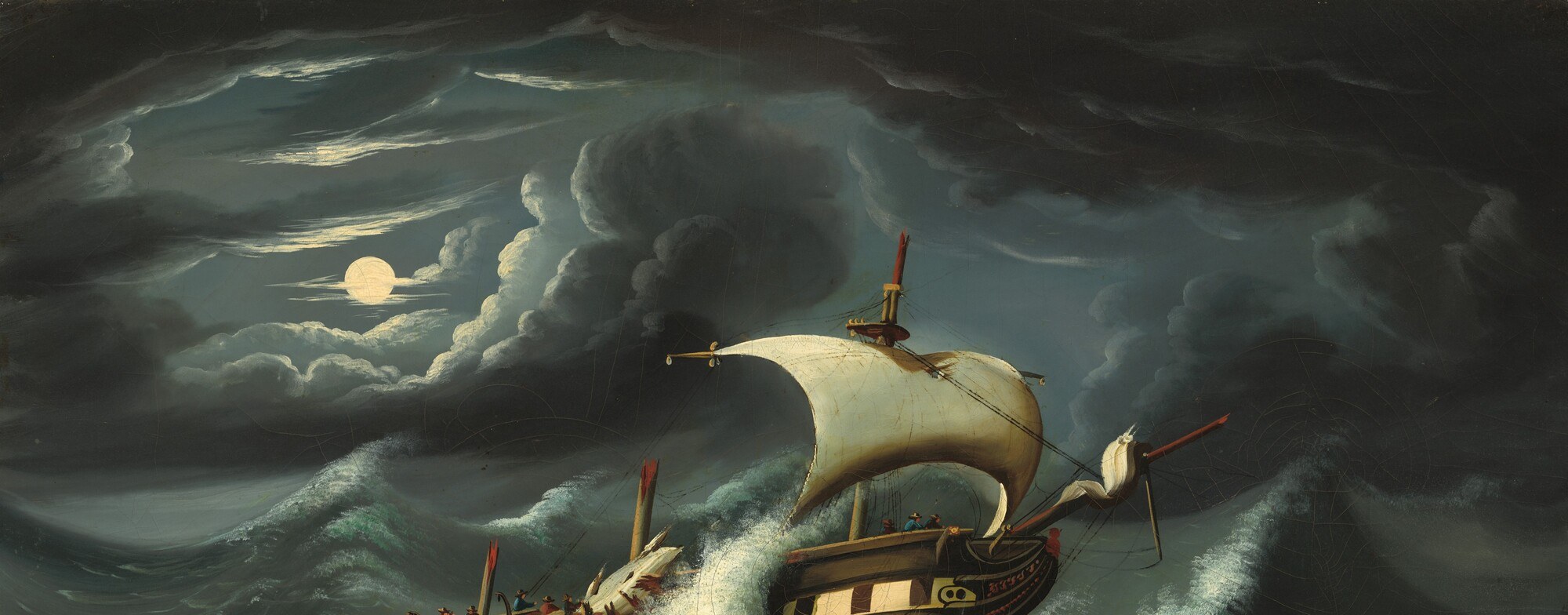
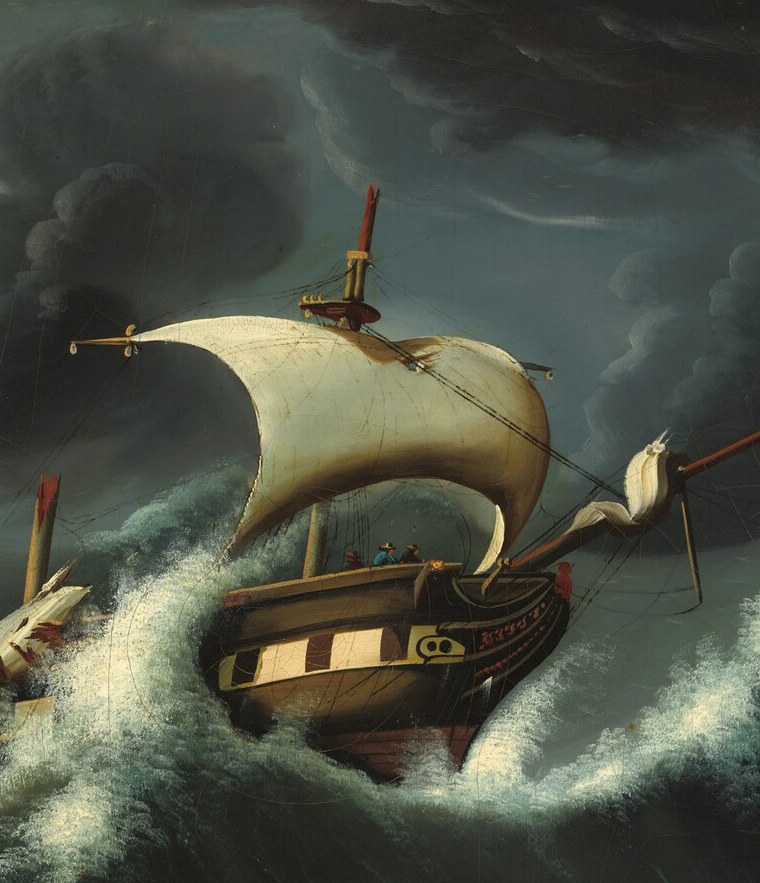
This is "Storm-Tossed Frigate" by Thomas Chambers, painted in the mid-19th century and housed today at the National Gallery of Art. It looks at first like a straightforward Romantic shipwreck scene, but the paint itself tells a stranger story.
Chambers grew up in Whitby, England, the son of a merchant sailor, and learned to paint from his older brother George, a respected marine artist. He emigrated to New Orleans in 1832 and spent decades working as a traveling decorative painter along the American East Coast. He never joined the academies. He painted signs, cabinet pictures, and theatrical backdrops.
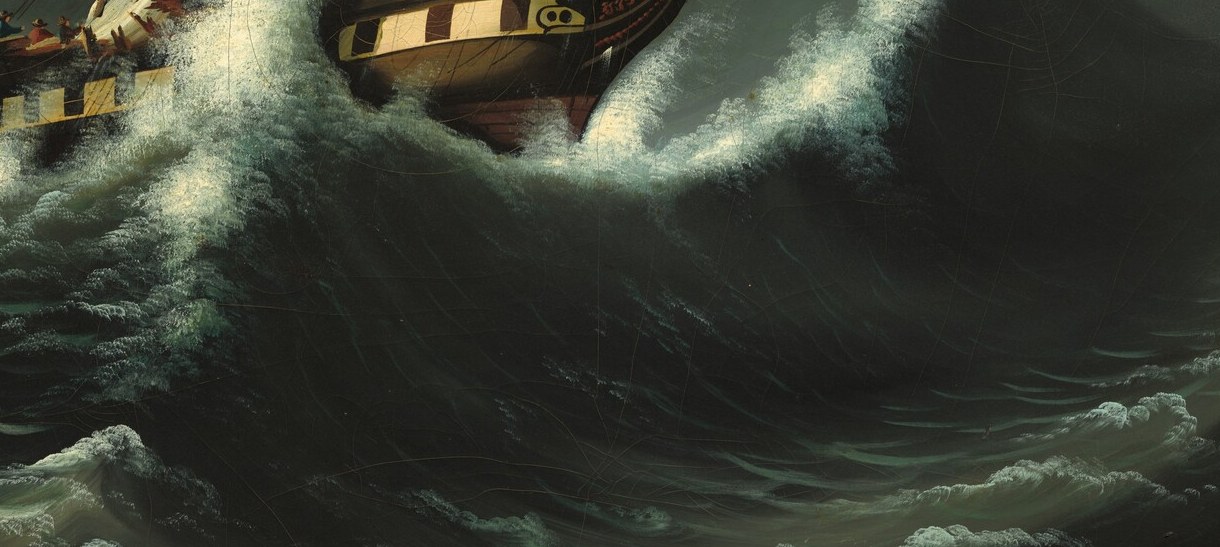
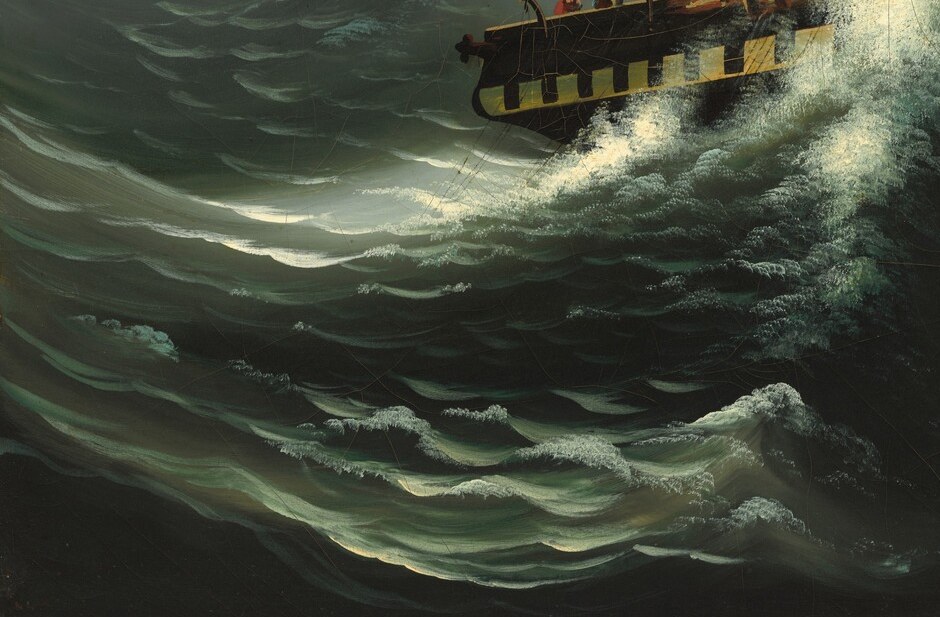
That background explains the flat color and stylized forms. Watch how he builds the storm clouds as thick sculptural scrolls, and how the wave crests repeat like ornamental flourishes. He isn't interested in naturalism. The silver corridor of moonlight on the left is the only calm passage, and even it reads as a painted cutout.
Chambers vanished from American records after 1866 and died in his hometown poorhouse in 1869. In the 20th century, curators rediscovered his work and recognized something startling: his bold pattern-making and rejection of atmospheric depth anticipated modernist abstraction by decades. A folk painter on the margins had beaten the avant-garde to its own idea.
What do you notice first in his waves, the violence, or the design?
#arthistory #americanfolkart #thomaschambers
Details
Transcript
A frigate fights a storm. That's a maritime cliché. But look at how the clouds are painted. They're not mist. They're thick, carved curls. Chambers trained as a decorative sign painter, not an academic. Seen up close, the wave crests are rhythmic scrolls. In the 20th century, critics called him 'America's first modern.' He died penniless in an English poorhouse. His eye for flat pattern outlived every academy.