The Adoration of the Magi by http://www.wikidata.org/.well-known/genid/d61f5d3ac6feb9095e6e1ac50202af29
View the artwork: The Adoration of the Magi →
The Adoration of the Magi, painted around 1500 in the workshop of Gerard David, hangs today in the National Gallery, London. Its power is not in spectacle but in silence. Five figures crowd a dim stone room, yet the painting feels utterly still, a held breath between the arrival of kings and the recognition of something that will outlast their kingdoms.
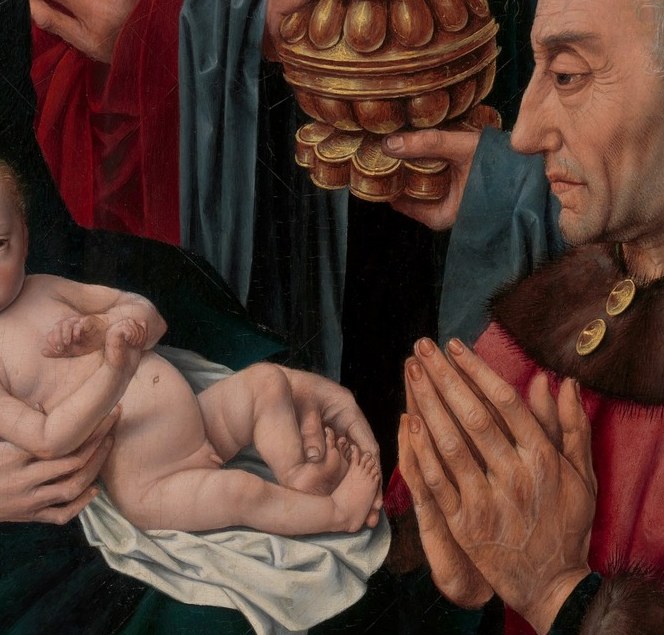
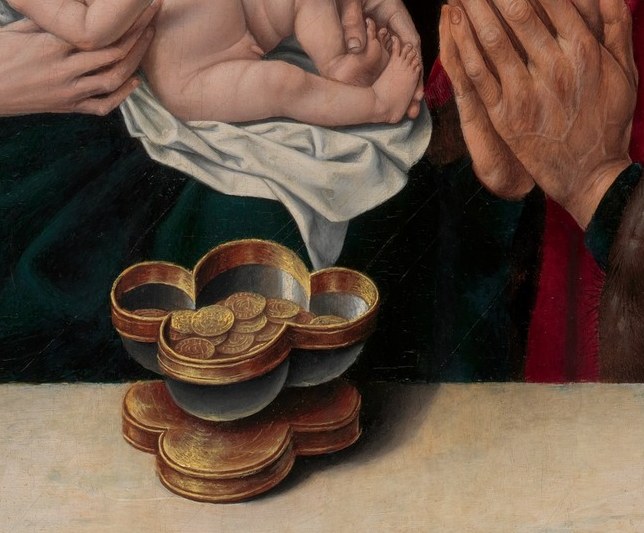
Let your eye go first to the kneeling Magus. His face is the most detailed in the painting: deep-set eyes, lined skin, a long white beard. This is a man near the end of his life. His hands are pressed together directly above the golden chalice, the gift of myrrh, an embalming perfume used for burial. The visual rhyme between his clasped hands and the vessel below ties devotion to death. He knows the baby he kneels before will not become an earthly king.
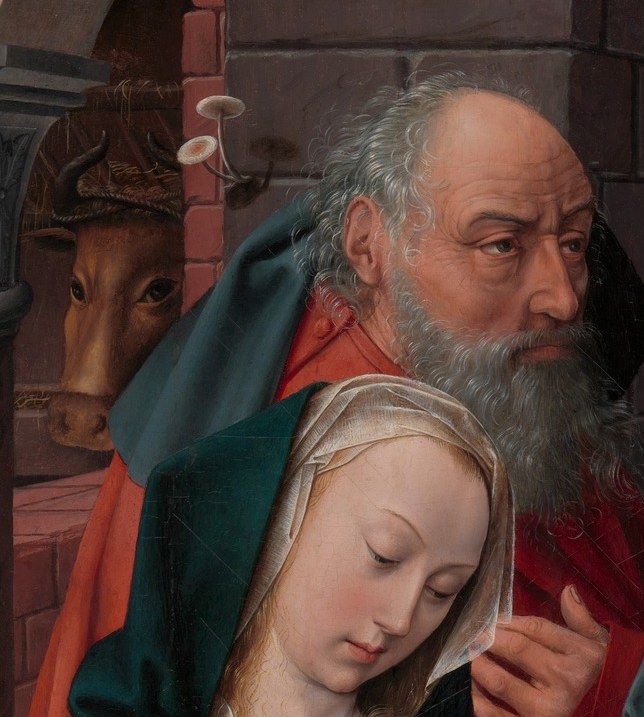
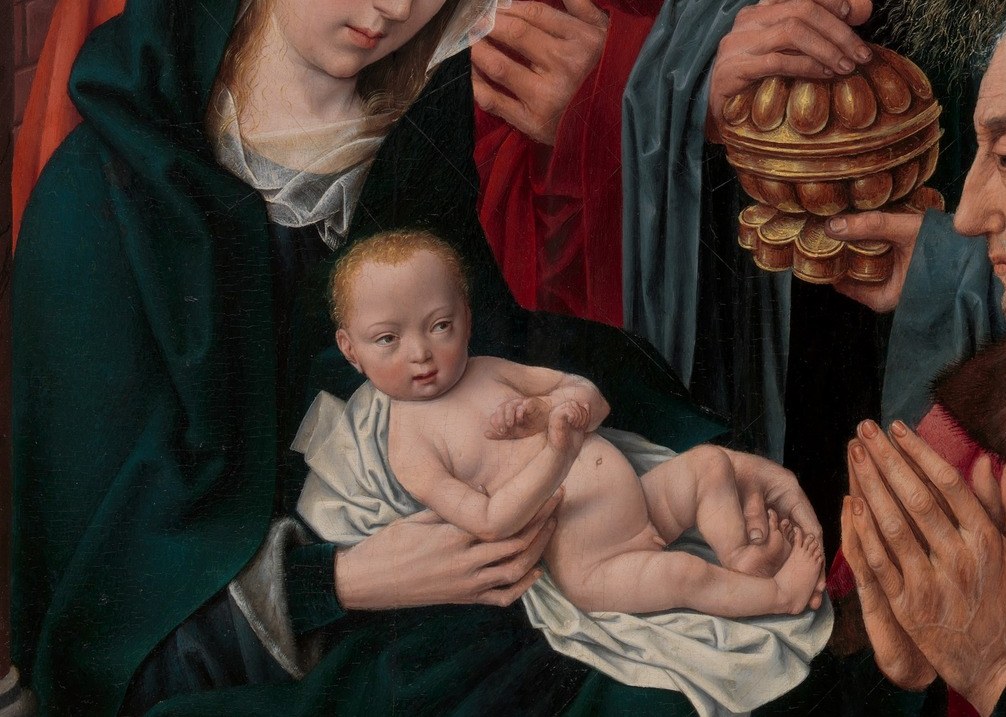
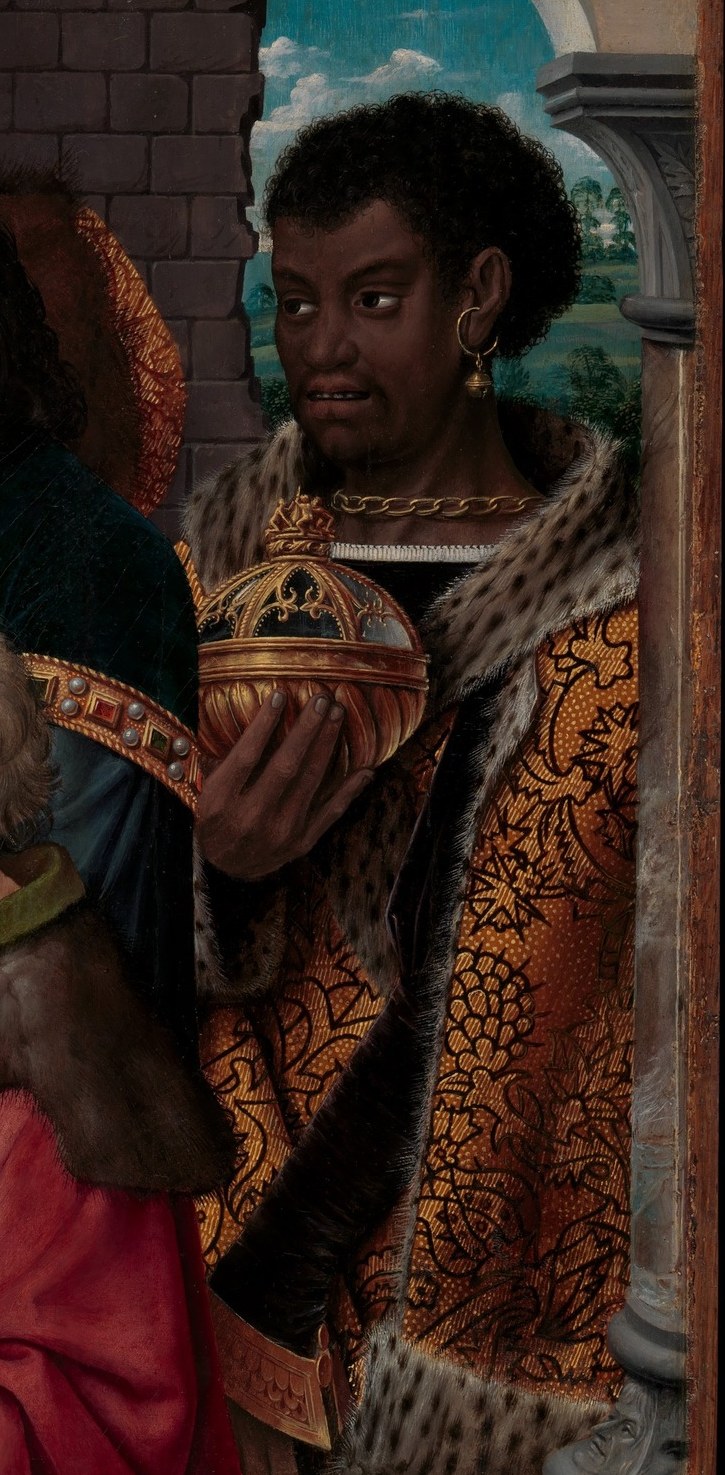
The Christ child lies on a crisp white cloth, exposed and vulnerable. The cloth isolates him in the dark composition like a spotlight. Above him, Mary’s face holds a downward gaze that is both maternal and spiritually awed. A second Magus holds a gilded orb symbolic of earthly power; a third, the Moorish king, wears a richly patterned robe representing the corners of the known world. Behind Mary, nearly invisible in the shadows, a bearded figure, likely Joseph, watches.
Gerard David’s workshop in Bruges produced devotional paintings known for this quiet, reflective tone. The subdued palette and chiaroscuro lighting pull you into the interior, away from the luminous green landscape visible through the stone arch. That landscape, the wider world, is out there. In here, an old man has just understood that all his power is borrowed.
#arthistory #gerarddavid #earlynetherlandish
Details
Transcript
Look at his face. This man has ruled for decades. Now he presses his hands together like a child. He brought a chalice of myrrh, a burial perfume. He knows who this infant will grow up to be. And he knows what that will cost.