Untitled by Chokha
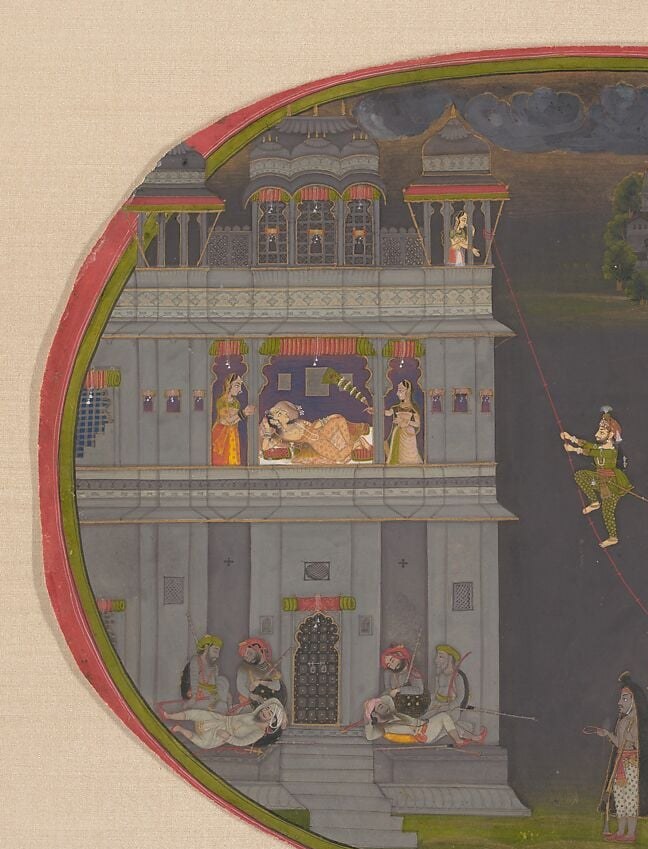
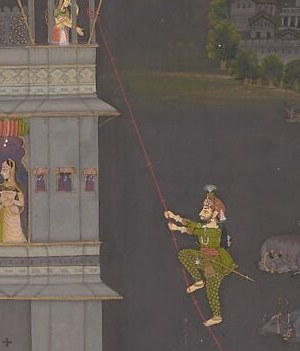
This is an untitled painting by the Indian artist Chokha, made around 1800-1810. It shows a daring nocturnal tryst: a nobleman scales a rope to reach his beloved on a palace balcony. The painting is just 29 by 38 centimeters, yet it contains a whole sleeping world. It is now in the Metropolitan Museum of Art, a key example of early nineteenth-century Rajput narrative painting.
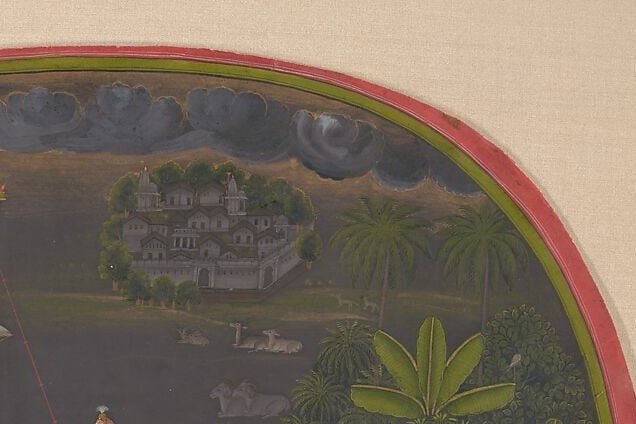
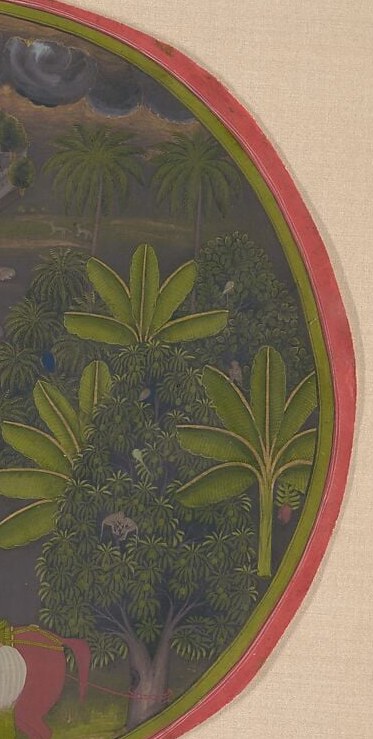
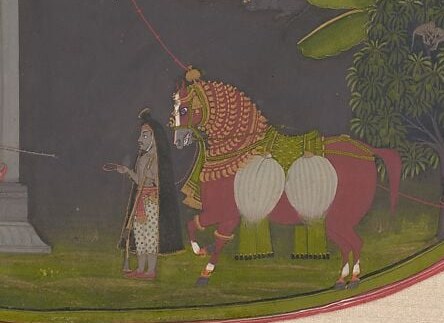
Find the peacocks. They are roosting in the bright green tree on the right. In classical Sanskrit court poetry, peacocks returning to their nests signals the deepest hour of night. The guards slumped at the palace base complete the irony: the men paid to stop an intruder are the first to miss him. Every sleeping creature, from the monkeys to the cows, makes the lovers' wakefulness feel more electric and transgressive.
Chokha trained in the large royal workshops of Udaipur under Maharana Bhim Singh. Later, he followed his father Bagta to Devgarh and became the principal court painter to Rawat Gokul Das II. His real innovation here was the night itself. Setting a romantic scene in near-total darkness was a startling break from the bright, flat color fields of traditional Mewar painting. He used thick, churning black watercolor clouds to push the background away, so the gold-clad climber and the bright figures on the balcony hit the eye with almost physical force.
Painters in the European Baroque had long used dark grounds to make highlights glow. Chokha found the same truth on his own terms. The next time you see a film where a single lamp isolates the hero in a sea of black, you might be looking at the same problem he solved with ink and opaque watercolor on a small sheet of paper.
#arthistory #indianart #rajputpainting
Details
Transcript
An entire palace, asleep. Guards, cows, even the peacocks in the trees. The painter has buried them in a night so black, it was radical for Indian art. Look at the one thing he wanted you to see first. Gold against churning black clouds. A single thread of desire pulling your eye straight up to the bright figure waiting above. Chokha didn't just paint a story. He invented a new way to light one.