Lady and Gentleman on Horseback by Cuyp, Aelbert
View the artwork: Lady and Gentleman on Horseback →
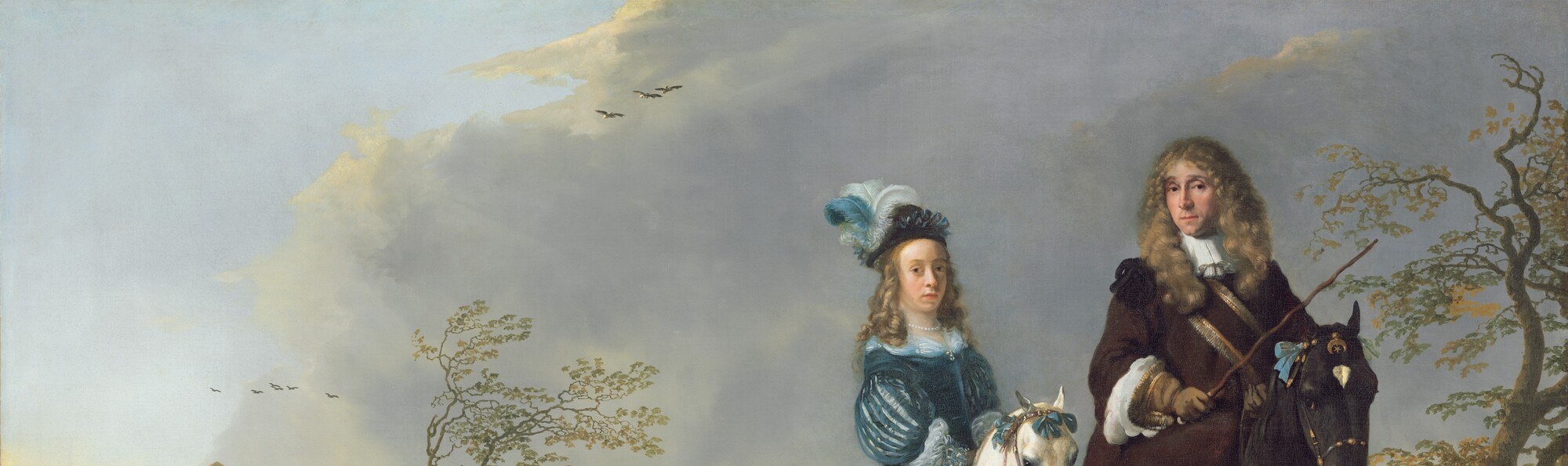
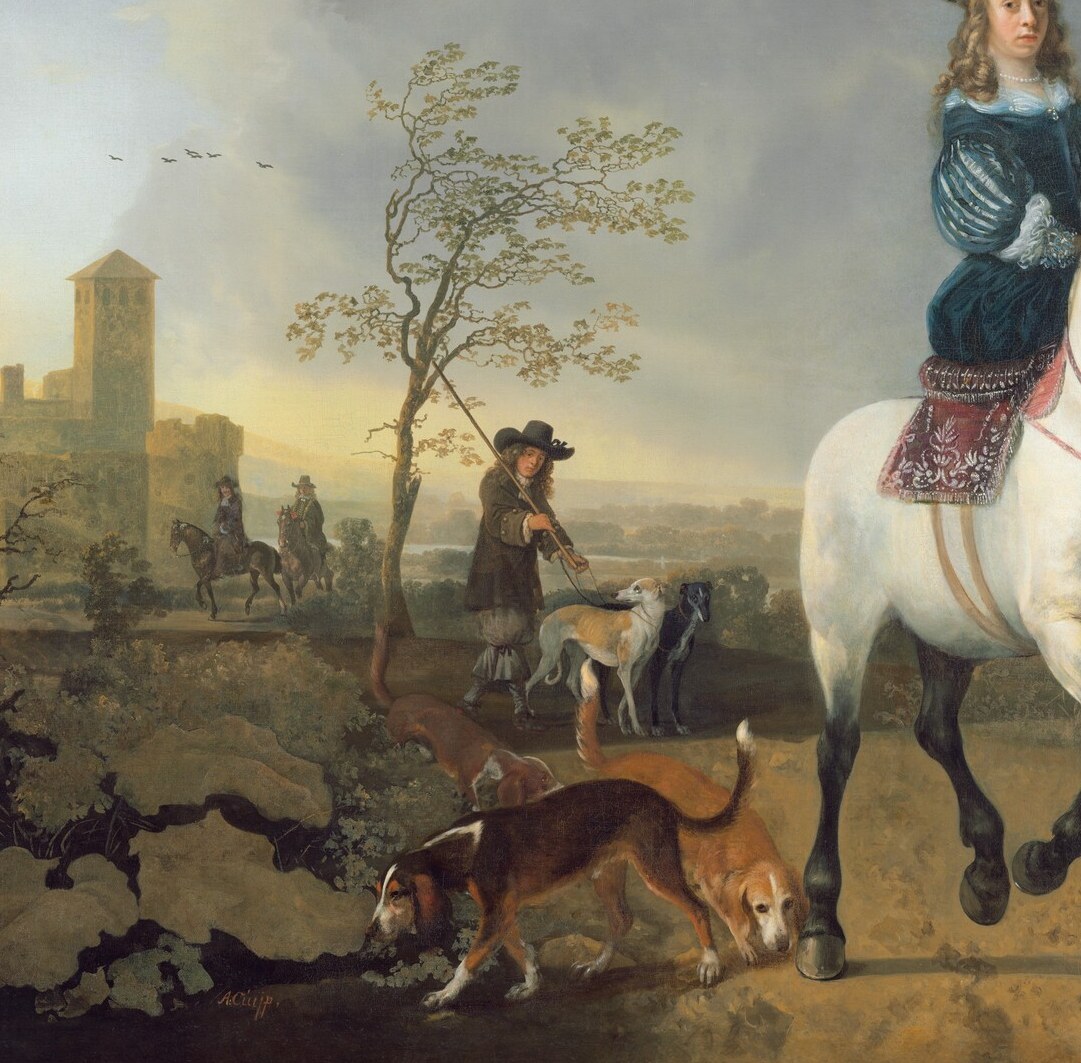
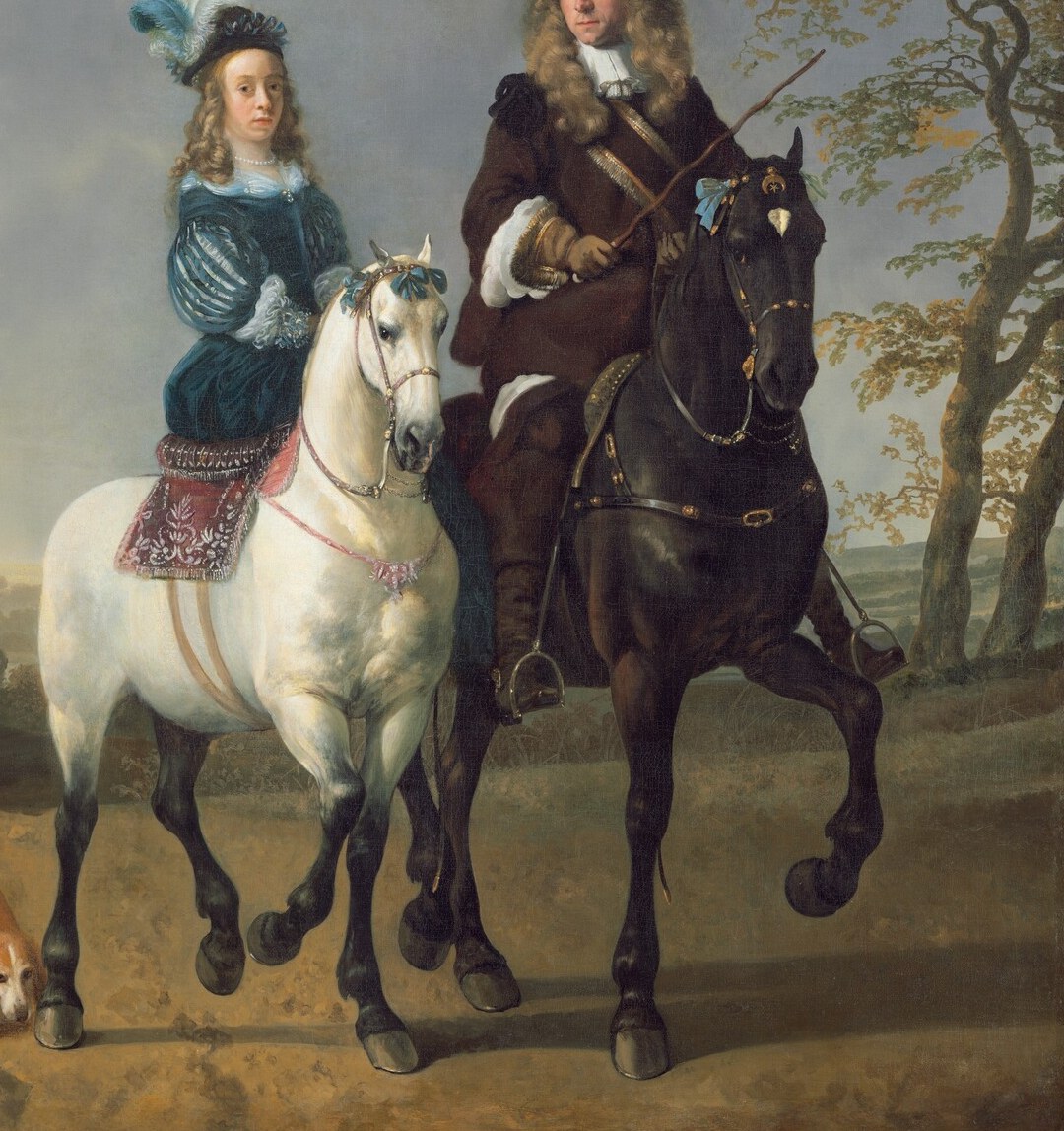
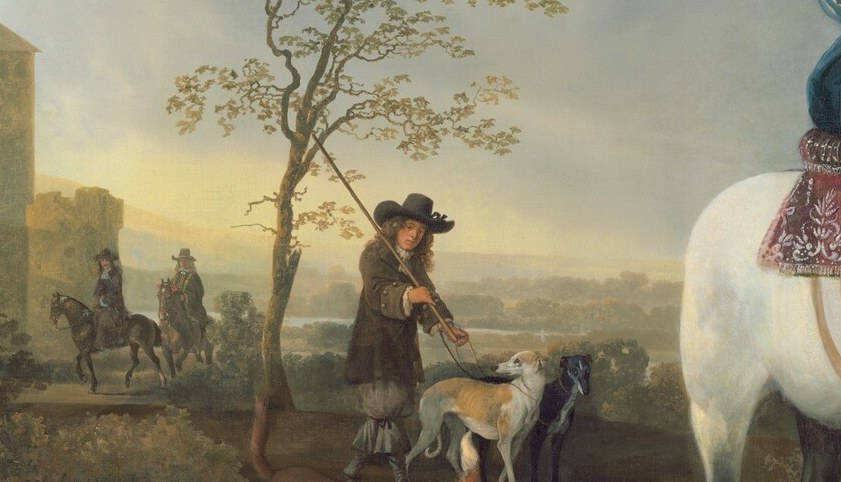
Aelbert Cuyp's "Lady and Gentleman on Horseback" is a portrait that refused to stand still. Painted around 1655, it shows an elite Dutch couple mounted for a hunt, their wealth telegraphed by a pale horse and sumptuous tack. But the real story is what happened next, both on the canvas and in the world beyond it.
Look closely at the gentleman's wide-brimmed hat and the lady's blue silk riding jacket. These are not original. Decades after the first sitting, Cuyp himself repainted their costumes to match the fashions of the 1660s. The canvas is a rare document of an artist revising his own work to keep his clients looking current, a quiet collaboration between a painter and a changing world.
The painting's survival is its own saga. It stayed in the Netherlands for over a century, but in the Napoleonic era it was looted by Napoleon's brother-in-law, Joachim Murat. Smuggled to Britain and sold into private hands, it eventually crossed the Atlantic and ended up with the American collector Peter A.B. Widener. His son gifted it to the National Gallery of Art in Washington, D.C., where it hangs today.
It is a portrait shaped as much by theft and exile as by oil and canvas. What do you imagine the sitters would make of its journey?
#arthistory #aelbertcuyp #dutchgoldenage
Details
Transcript
They pose with the composure of aristocrats. She rides a pale horse worth a small fortune. His wide hat was added years after the paint dried. Her blue riding jacket is a fashion update from the 1660s. The painter revised his own canvas to keep them current. A century later, Napoleon's brother-in-law seized it. It was smuggled to Britain, then crossed to America. It survived wars and thieves to hang in Washington.