Untitled by Nainsukh
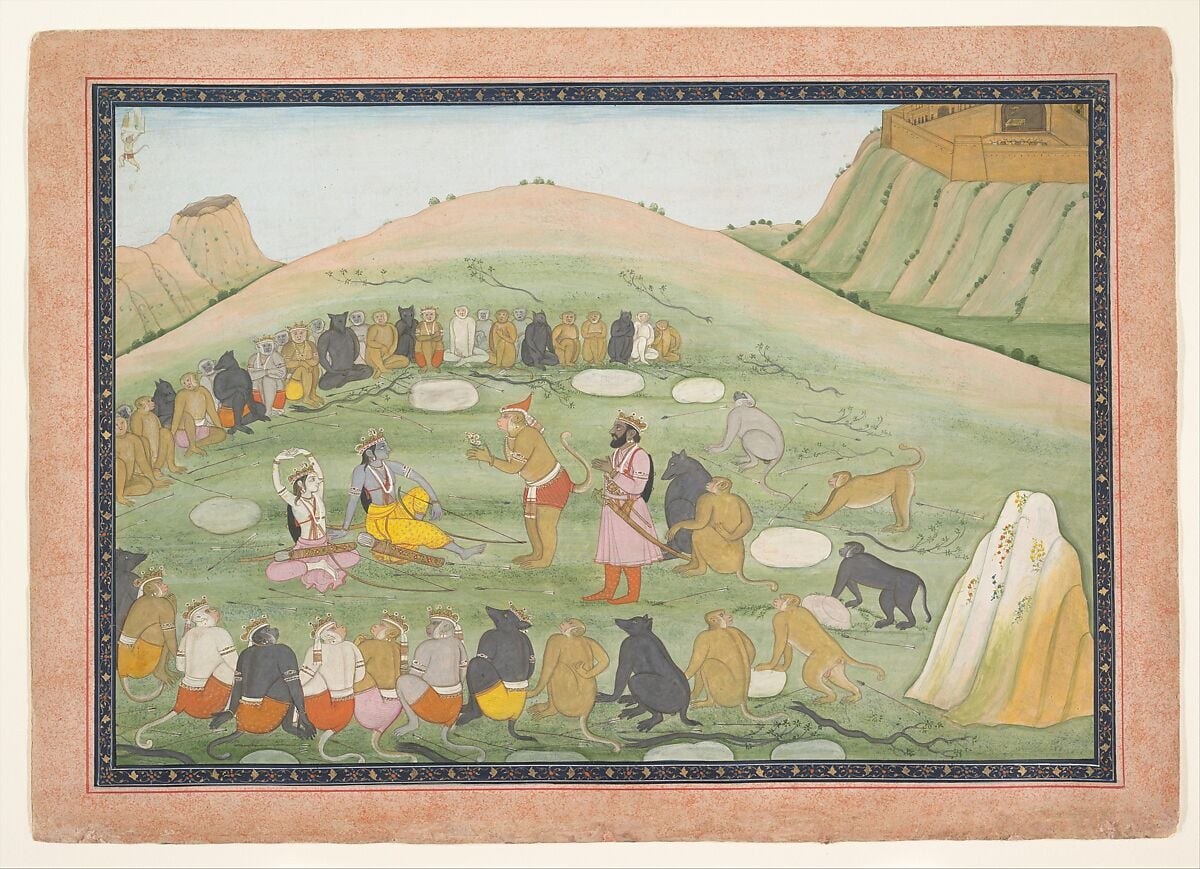
This is an untitled manuscript leaf painted in opaque watercolor by Nainsukh, the most celebrated Pahari painter of the 18th century, around 1740. It looks at first like a simple forest encounter, a hunter drawing his bow on a standing bear while a woman and child look on. But Nainsukh was never that straightforward.
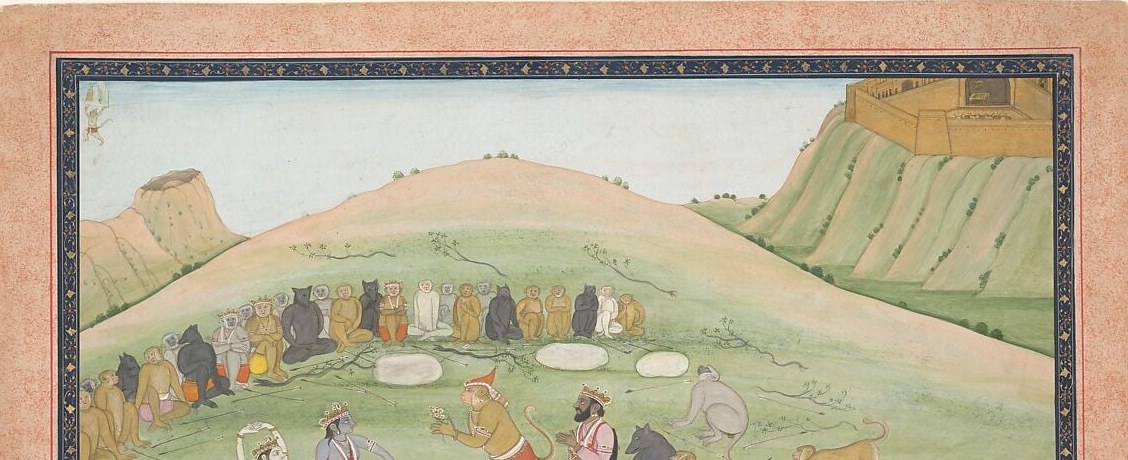
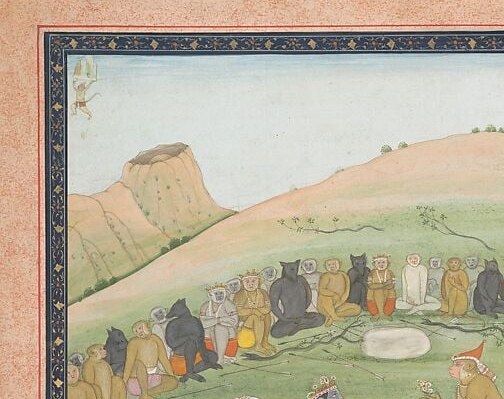
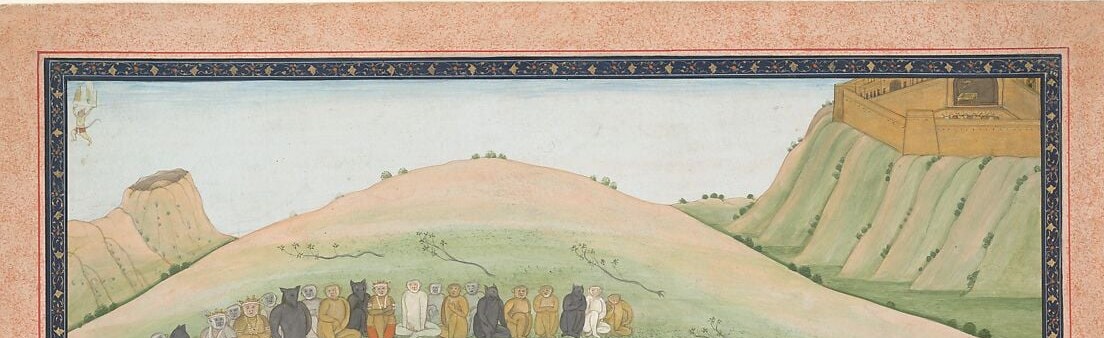
Look at the hillside behind them. The dark forms are not only bears. Monkeys move among them, distinct and deliberate. The combination of monkey and bear armies in one image is a key signifier in Pahari painting for the Ramayana, where Hanuman's monkey clan allies with Jambavan's bears. The distant hilltop figures are not incidental scenery; they are the rest of an army stretching into the horizon.
Nainsukh was active in the Guler court from about 1735 to 1778. He transformed Pahari painting by bringing intimate naturalism into scenes that earlier painters treated as flat symbols. Here, the soft brushstrokes on the bear's fur show that attention, but the overall composition, the stacked green hills and teal dotted border, tells you this leaf was bound inside a royal manuscript, not made for a wall.
Take another look at the figure in bright yellow gold at the center. In Pahari color grammar, that robe signals divine or royal status. The whole scene shifts when you see it: not a skirmish, but a mythic muster, hidden in plain sight for nearly three centuries.
#arthistory #indianminiature #paharipainting
Details
Transcript
At first glance, a tense moment in a forest. A man draws his bow on a bear that stands like a soldier. But look past the green rolling hills. Monkeys gather on the hillside with the bears. Monkeys and bears together point to one story: the Ramayana. This is not a hunt. It is the muster of a mythic army. Nainsukh painted this leaf for a royal manuscript around 1740. He hid an epic in the details.