Pomegranates and Other Fruit in a Landscape by Abraham Brueghel
View the artwork: Pomegranates and Other Fruit in a Landscape →
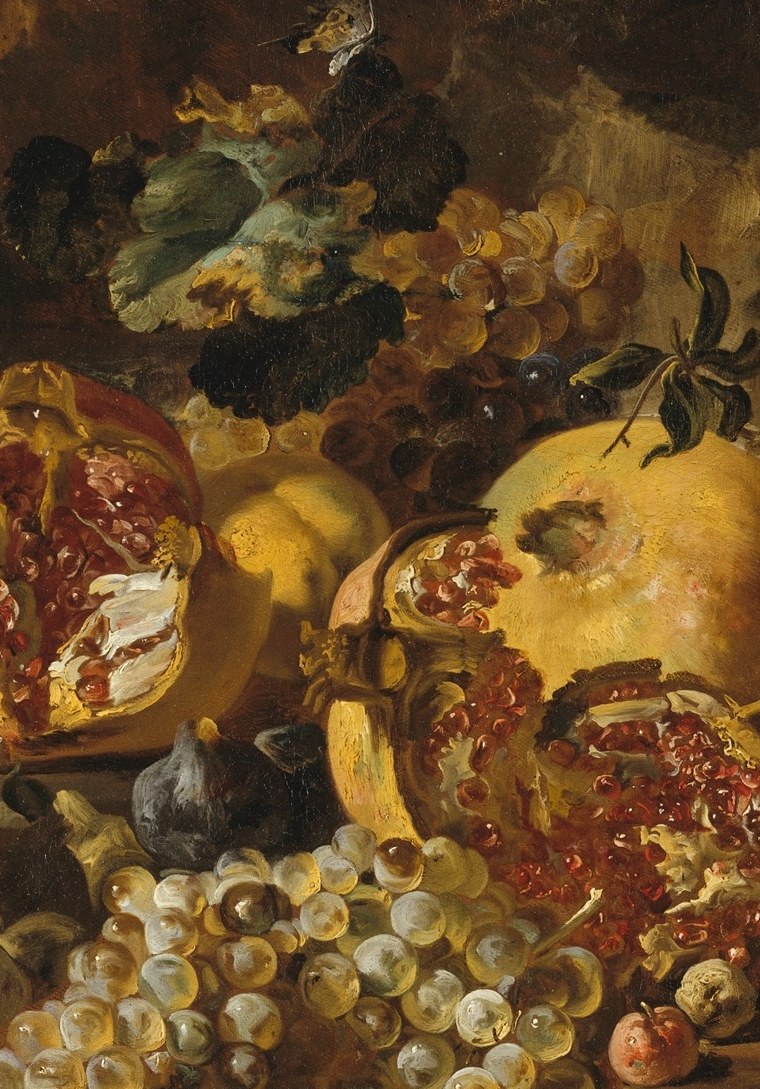
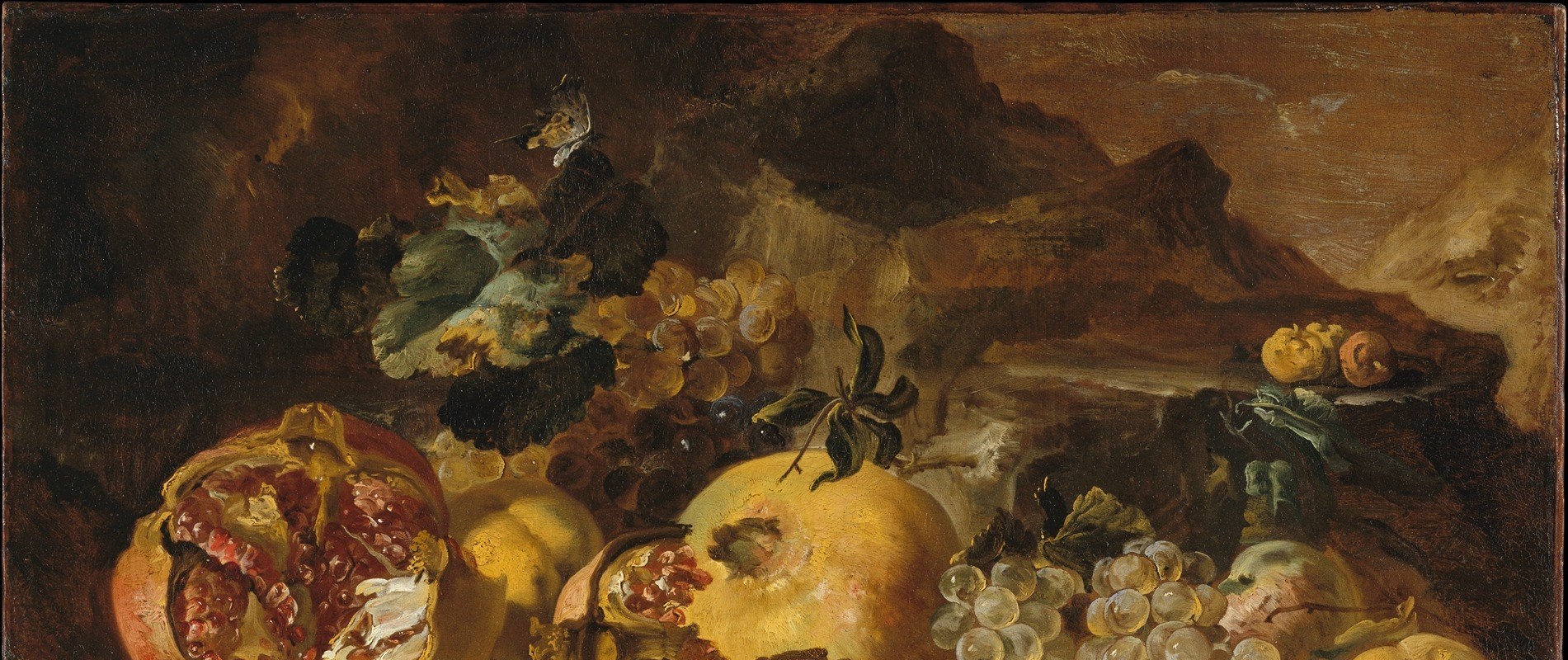
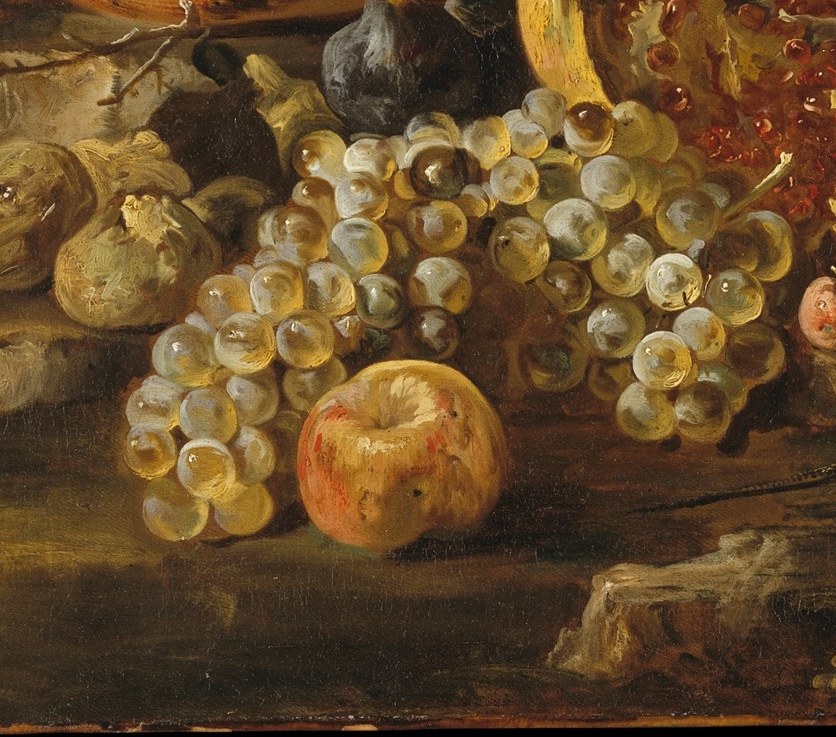
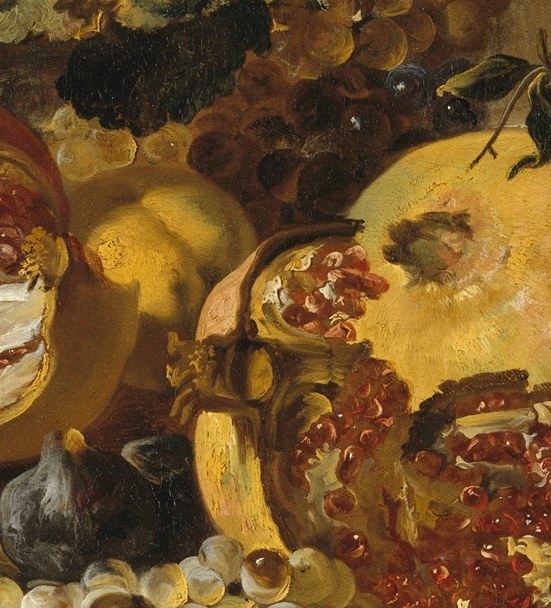
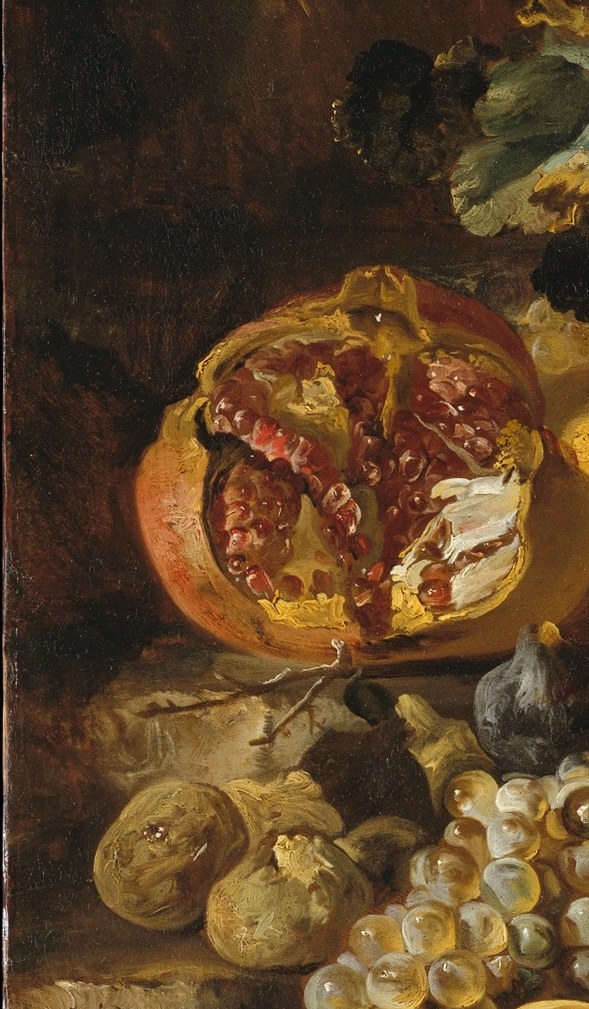
A small flock of birds is hiding in the shadowy upper-left corner of Abraham Brueghel's "Pomegranates and Other Fruit in a Landscape" (1650). They are easy to miss. The foreground is a parade of luxury: a split pomegranate, luminous white grapes, citron, and velvety peaches, all painted with the meticulous texture that made the Brueghel family famous.
But look past the fruit, into the rocky backdrop. The dark landscape isn't just scenery, it's inhabited. Those tiny birds activate the whole painting, pulling it out of the studio and into a living outdoor world. Brueghel, who left Antwerp for Italy as a young man, helped pioneer the decorative Baroque still life. Here, he gives us abundance and wilderness in a single frame.
By 1650, a painting like this was a status symbol. The citron and pomegranate were expensive imports, and the skill required to render their surfaces, rough rind, translucent grape skin, a ruby cavern of seeds, was a luxury in its own right. The scattered white blossoms at the base add a quiet memento mori: flowers blooming even as the fruit ripens toward decay.
Next time you stand before a still life, scan the shadows. The painter may have left you something moving.
#arthistory #abrahambrueghel #stilllife
Details
Transcript
Start with the fruit. It is almost too much. Abraham Brueghel came from a dynasty of painters. He moved to Italy and mastered the decorative Baroque. But look behind the feast, into the upper left. Deep in the shadow of the rock, there are birds. This is not a studio set. The world is alive behind the fruit.